


Local officials and land developers keen to learn from the UK's experience in urban regeneration projects attended a conference yesterday.
"We don't have enough experience in major urban redevelopment here in Taiwan. That is why we're having this conference to learn from the UK, which has enjoyed success in this field and developed its expertise," Construction and Planning Agency director-general Charles Lin (
Lin said that the conference, co-organized by the agency and the British Trade and Cultural Office in Taipei (BTCO), would bring valuable knowledge and experience to the participants.
"Urban regeneration is not easy and it can be expensive. But it's an important task for any modern country," BTCO Director Michael Reilly said, adding that he was glad that up to 10 regions had been selected to undertake urban transformation.
With a series of successful examples in the US and the UK as inspiration, Taiwan will pour billions of NT dollars into urban regeneration projects starting at the end of year, including the renovation of railway stations in Hsinchu, Keelung, Chiayi and Kaohsiung, as well as improvements to Taipei's Huakuang Community near National Taiwan Democracy Memorial Hall, Lin said.
During the industrial revolution and following World War II, many large scale, cheap housing projects were built in Britain without taking into consideration cultural and social aspects of a community, said Rupert Robinson, board codirector of the British Urban Regeneration Association (BURA).
This is why urban renewal was necessary, he said.
Urban renewal requires revamping or removing buildings and relocating residents, he said, adding this required cooperation between the government, developers and residents.
Reaching a consensus with the community is extremely important, said Shawn Riley, also a BURA codirector.
"Developers and the government had to tell the residents exactly which part of town needed to be regenerated first and what the town would be like in phase one, two and three, so they had a clear picture of what the future would be," Riley said.
The government was also expected to improve infrastructure with the goal of facilitating the area's economic growth and to attract private investment to ensure a well-structured financing plan, Robinson said.
In Taiwan, the government should be very careful with the role it plays during the process because resources are limited, Lin said.
"We have to make it right, not spread it out," he said.
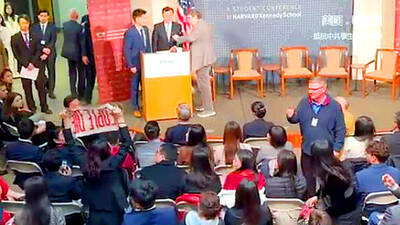
A group of Taiwanese-American and Tibetan-American students at Harvard University on Saturday disrupted Chinese Ambassador to the US Xie Feng’s (謝鋒) speech at the school, accusing him of being responsible for numerous human rights violations. Four students — two Taiwanese Americans and two from Tibet — held up banners inside a conference hall where Xie was delivering a speech at the opening ceremony of the Harvard Kennedy School China Conference 2024. In a video clip provided by the Coalition of Students Resisting the CCP (Chinese Communist Party), Taiwanese-American Cosette Wu (吳亭樺) and Tibetan-American Tsering Yangchen are seen holding banners that together read:

UNAWARE: Many people sit for long hours every day and eat unhealthy foods, putting them at greater risk of developing one of the ‘three highs,’ an expert said More than 30 percent of adults aged 40 or older who underwent a government-funded health exam were unaware they had at least one of the “three highs” — high blood pressure, high blood lipids or high blood sugar, the Health Promotion Administration (HPA) said yesterday. Among adults aged 40 or older who said they did not have any of the “three highs” before taking the health exam, more than 30 percent were found to have at least one of them, Adult Preventive Health Examination Service data from 2022 showed. People with long-term medical conditions such as hypertension or diabetes usually do not
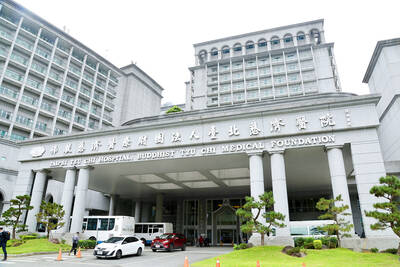
POLICE INVESTIGATING: A man said he quit his job as a nurse at Taipei Tzu Chi Hospital as he had been ‘disgusted’ by the behavior of his colleagues A man yesterday morning wrote online that he had witnessed nurses taking photographs and touching anesthetized patients inappropriately in Taipei Tzu Chi Hospital’s operating theaters. The man surnamed Huang (黃) wrote on the Professional Technology Temple bulletin board that during his six-month stint as a nurse at the hospital, he had seen nurses taking pictures of patients, including of their private parts, after they were anesthetized. Some nurses had also touched patients inappropriately and children were among those photographed, he said. Huang said this “disgusted” him “so much” that “he felt the need to reveal these unethical acts in the operating theater
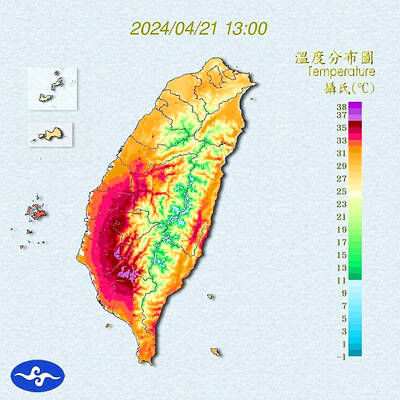
Heat advisories were in effect for nine administrative regions yesterday afternoon as warm southwesterly winds pushed temperatures above 38°C in parts of southern Taiwan, the Central Weather Administration (CWA) said. As of 3:30pm yesterday, Tainan’s Yujing District (玉井) had recorded the day’s highest temperature of 39.7°C, though the measurement will not be included in Taiwan’s official heat records since Yujing is an automatic rather than manually operated weather station, the CWA said. Highs recorded in other areas were 38.7°C in Kaohsiung’s Neimen District (內門), 38.2°C in Chiayi City and 38.1°C in Pingtung’s Sandimen Township (三地門), CWA data showed. The spell of scorching


 RSS
RSS