


Chinese Nationalist Party (KMT) presidential candidate Ma Ying-jeou (馬英九) unveiled his "i-Taiwan 12 projects" economy platform yesterday, promising NT$2.65 trillion (US$81 billion) in government investment over the next eight years to boost the nation's economy by expanding domestic demand.
Pledging to put the economy "on the front burner" if elected, Ma said the government would fund projects to attract NT$1.34 trillion in private investment, adding that the investments would boost GDP by more than NT$4 trillion over the next eight years and provide employment for 120,000 people.
"My economic policies consist of more than opening up [the country] for more Chinese tourists and cross-strait direct links. Expanding domestic demand is also crucial and for the government to invest in the nation shows love for Taiwan," Ma told a press conference yesterday morning.

PHOTO: FANG PIN-CHAO, TAIPEI TIMES
The "i-Taiwan 12 projects" include building and linking rapid transit networks in cities and counties across the country, turning Kaohsiung into a tariff-free port and eco-park, turning Taichung into a center for maritime and air logistics in the Asian-Pacific region, turning Taiwan Taoyuan International Airport into an "air city," developing cultural and creative industries, creating industrial innovation corridors, carrying out urban regeneration, revitalizing rural Taiwan, reviving coastal zones, building 60,000 hectares of new forests to meet sustainable development goals, improving infrastructure designed to prevent flooding and fighting water pollution, and improving the nation's waste water sewage system.
The "i" stands for "infrastructure, investment, information, innovation, intelligence and international," Ma's camp said.
Ma and his running mate Vincent Siew (
When asked how the projects would be funded, Ma said taxes and revenue generated by the projects would cover the investment costs. Ma also vowed not to raise taxes in the next eight years if elected.
"We need tax revenue to invest in the projects, so we probably won't cut taxes, either," he said.
Later in the day, in an address to the US, European, New Zealand and Australian chambers of commerce, Ma accused the government of neglecting Taiwan's economic development over the past seven years, pursuing unstable policies and running an unstable government. Ma pledged to improve the investment environment for foreign companies by normalizing cross-strait economic relations and allowing cross-strait direct flights.
Ma cited the American Chamber of Commerce as evidence, saying its members had decreased from 900 to 700 over the past seven years as a result of shrinking markets and opportunities in Taiwan as a regional springboard.
In addition to opening up cross-strait direct links, Ma promised to establish "twin golden flight circles" among airports in Taiwan, Tokyo's Haneda Airport, Seoul's Gimpo Airport and Shanghai's Hongqiao Airport.
Ma also promised to revise the cap on investment in China, but added that his administration would not open up the agricultural market to Chinese products or open the labor market to China.
"We have to make up for what was lost during the last eight years and leap forward. All we need is a new leader, who will lead Taiwan to peace and prosperity," he said at the Howard Plaza Hotel.
The European Chamber of Commerce later issued a statement saying "it is very pleased" with Ma's "comprehensive outline of his economic platform."
The statement expressed support for Kaohsiung becoming a tariff-free port with direct shipping links to China and for the the Taiwan Taoyuan International Airport "air city."
The statement said however that Ma had not presented a clear tax roadmap and tax environment or elaborated on how he would improve the flow of human talent to Taiwan and reduce greenhouse gas emissions. It also said Ma did not touch on issues such as how he would step up intellectual property rights protection.
Additional reporting by staff writer
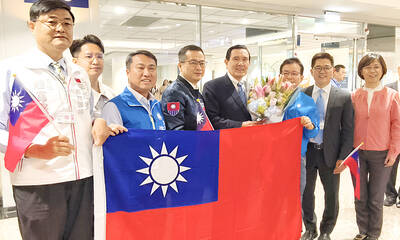
Former president Ma Ying-jeou’s (馬英九) mention of Taiwan’s official name during a meeting with Chinese President Xi Jinping (習近平) on Wednesday was likely a deliberate political play, academics said. “As I see it, it was intentional,” National Chengchi University Graduate Institute of East Asian Studies professor Wang Hsin-hsien (王信賢) said of Ma’s initial use of the “Republic of China” (ROC) to refer to the wider concept of “the Chinese nation.” Ma quickly corrected himself, and his office later described his use of the two similar-sounding yet politically distinct terms as “purely a gaffe.” Given Ma was reading from a script, the supposed slipup
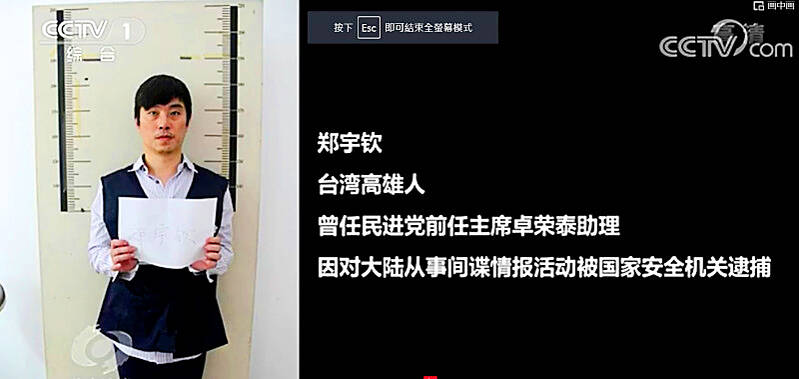
Former Czech Republic-based Taiwanese researcher Cheng Yu-chin (鄭宇欽) has been sentenced to seven years in prison on espionage-related charges, China’s Ministry of State Security announced yesterday. China said Cheng was a spy for Taiwan who “masqueraded as a professor” and that he was previously an assistant to former Cabinet secretary-general Cho Jung-tai (卓榮泰). President-elect William Lai (賴清德) on Wednesday last week announced Cho would be his premier when Lai is inaugurated next month. Today is China’s “National Security Education Day.” The Chinese ministry yesterday released a video online showing arrests over the past 10 years of people alleged to be
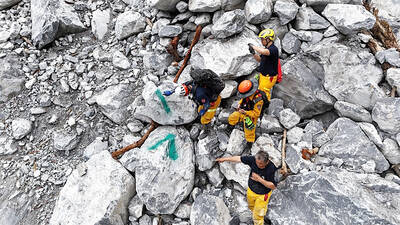
The bodies of two individuals were recovered and three additional bodies were discovered on the Shakadang Trail (砂卡礑) in Taroko National Park, eight days after the devastating earthquake in Hualien County, search-and-rescue personnel said. The rescuers reported that they retrieved the bodies of a man and a girl, suspected to be the father and daughter from the Yu (游) family, 500m from the entrance of the trail on Wednesday. The rescue team added that despite the discovery of the two bodies on Friday last week, they had been unable to retrieve them until Wednesday due to the heavy equipment needed to lift
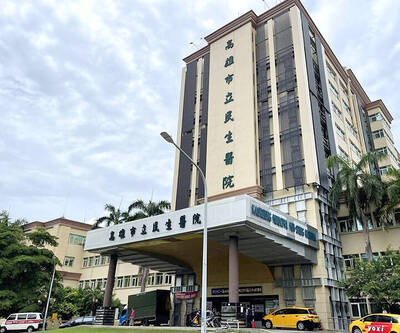
MIX-UP: Kaohsiung Municipal Min-Sheng Hospital director Yen Chia-chi was suspended from his duties after surgeons operated on the wrong patient last week The Kaohsiung Department of Health yesterday fined Kaohsiung Municipal Min-Sheng Hospital NT$500,0000 for misidentifying two patients and consequently causing one of them to undergo the wrong surgery last week. The hospital’s director Yen Chia-chi (顏家祺) was suspended from his duties. The surgeon who was scheduled to operate on the patient was given a major demerit and is subject to subsequent disciplinary actions. Demerits were given to the anesthesiologist, the nurse in the operation room, the nurse in the ward and the worker who helped transfer the patient from the ward to the operation room for having failed to verify the patient’s identity. Meanwhile, the


 RSS
RSS