


The Directorate General of Highways (DGH) said yesterday that the nation's vehicle registration department will soon begin to send out notifications in sealed envelopes because of concerns personal information may be leaked during the delivery process.
Currently, notifications, including fuel surcharge bills, rulings on traffic violations and liability insurance bills, are printed in a triplicate form on perforated paper.
Personal information, such as the recipient's name, address, and personal ID number are listed in one of the forms. Once folded inside, the wider side of letter is sealed with adhesive. The narrower sides on the left and right of the letter, however, are not sealed when they are delivered.
DGH director general James Chen (
"Since mail delivery personnel cannot simply drop this mail in the mailboxes, it is unlikely that personal information could be leaked to any other individual," he said.
Nevertheless, the directorate has decided that notifications containing personal information will all be sent in envelops. Meanwhile, the last four digits of the personal ID number will be replaced by star signs.
Chen made the announcement after the United Daily News yesterday reported that a Taipei resident complained that his ID number and other important information were revealed because of the poorly designed delivery forms.
Because of this specific incident, Chen yesterday ordered vehicle registration departments nationwide to halt the delivery of notifications and begin to put them inside sealed envelopes before they could be sent.
The news also became the center of discussion at the legislature's Transportation Committee yesterday.
People First Party Legislator Lee Hung-chun (李鴻鈞) said that based on the Personal Protection Law (個人資料保護法), those whose information was accidentally disclosed by government organizations were entitled to ask for compensation of up to NT$100,000.
"Given the hundreds of thousands of notifications ... the accumulated compensation could be an enormous amount," Lee said.
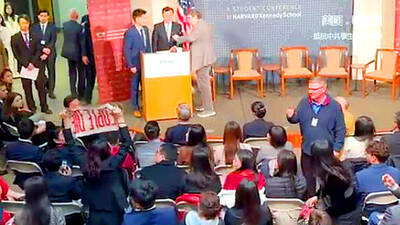
A group of Taiwanese-American and Tibetan-American students at Harvard University on Saturday disrupted Chinese Ambassador to the US Xie Feng’s (謝鋒) speech at the school, accusing him of being responsible for numerous human rights violations. Four students — two Taiwanese Americans and two from Tibet — held up banners inside a conference hall where Xie was delivering a speech at the opening ceremony of the Harvard Kennedy School China Conference 2024. In a video clip provided by the Coalition of Students Resisting the CCP (Chinese Communist Party), Taiwanese-American Cosette Wu (吳亭樺) and Tibetan-American Tsering Yangchen are seen holding banners that together read:

UNAWARE: Many people sit for long hours every day and eat unhealthy foods, putting them at greater risk of developing one of the ‘three highs,’ an expert said More than 30 percent of adults aged 40 or older who underwent a government-funded health exam were unaware they had at least one of the “three highs” — high blood pressure, high blood lipids or high blood sugar, the Health Promotion Administration (HPA) said yesterday. Among adults aged 40 or older who said they did not have any of the “three highs” before taking the health exam, more than 30 percent were found to have at least one of them, Adult Preventive Health Examination Service data from 2022 showed. People with long-term medical conditions such as hypertension or diabetes usually do not
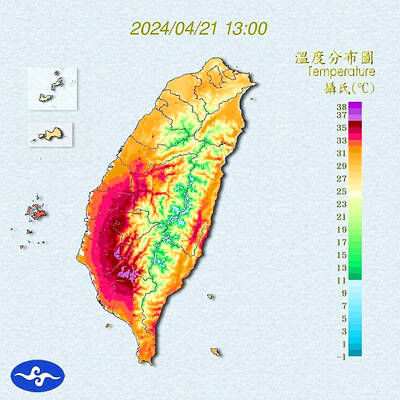
Heat advisories were in effect for nine administrative regions yesterday afternoon as warm southwesterly winds pushed temperatures above 38°C in parts of southern Taiwan, the Central Weather Administration (CWA) said. As of 3:30pm yesterday, Tainan’s Yujing District (玉井) had recorded the day’s highest temperature of 39.7°C, though the measurement will not be included in Taiwan’s official heat records since Yujing is an automatic rather than manually operated weather station, the CWA said. Highs recorded in other areas were 38.7°C in Kaohsiung’s Neimen District (內門), 38.2°C in Chiayi City and 38.1°C in Pingtung’s Sandimen Township (三地門), CWA data showed. The spell of scorching
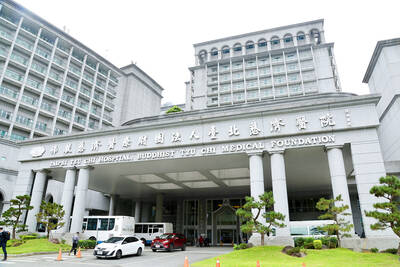
POLICE INVESTIGATING: A man said he quit his job as a nurse at Taipei Tzu Chi Hospital as he had been ‘disgusted’ by the behavior of his colleagues A man yesterday morning wrote online that he had witnessed nurses taking photographs and touching anesthetized patients inappropriately in Taipei Tzu Chi Hospital’s operating theaters. The man surnamed Huang (黃) wrote on the Professional Technology Temple bulletin board that during his six-month stint as a nurse at the hospital, he had seen nurses taking pictures of patients, including of their private parts, after they were anesthetized. Some nurses had also touched patients inappropriately and children were among those photographed, he said. Huang said this “disgusted” him “so much” that “he felt the need to reveal these unethical acts in the operating theater


 RSS
RSS