


Democratic Progressive Party (DPP) presidential candidate Frank Hsieh (
While Hsieh is expected to gain access to high-level administration officials, his visit will be relatively low-key, with few public events. Sources say that Hsieh prefers not to make many public appearances and has sought to limit the number of such events.
Taiwan-watchers in Washington are certain to try to compare Hsieh's four-day visit to the enthusiastic reception that Chinese Nationalist Party (KMT) presidential candidate Ma Ying-jeou (馬英九) received when he came here in March last year as the then newly-elected KMT chairman.
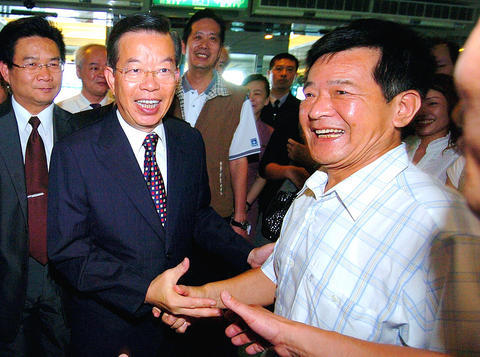
PHOTO: CHU PEI-HSIUNG, TAIPEI TIMES
The Bush administration was planning to treat Hsieh as well as it treated Ma, Representative to Washington Joseph Wu (
"As far as I know, the US government has the full intention to make similar arrangements for Frank Hsieh as they did for Ma," Wu told reporters.
The US "feels that Hsieh might be the next president of Taiwan," he said.
"US officials seem to be treating him as someone they are interested in talking to because he is the candidate for the ruling party and he has a fair chance of being elected," Wu said.
When Ma visited, he was seen by many as a virtual shoo-in to become Taiwan's next president, although he was not yet a candidate, and people concerned with Taiwan and China affairs were eager to fete him and find out what he thought.
He reportedly met such officials as then deputy secretary of state Robert Zoellick, deputy national security advisor J.D. Crouch and assistant defense secretary Peter Rodman.
All three have since left their positions, making precise comparisons with Hsieh's visit difficult.
But Ma's trip came before he made what some people considered to be several mistakes in his KMT leadership, and before his indictment in February on corruption charges.
However, Hsieh's showing in the race for Taipei mayor last year and his victory in the DPP presidential primary over such front-runners as former premier Su Tseng-chang (蘇貞昌) have boosted his profile in Washington.
Few in the US capital are willing to predict which way next March's presidential election will go. Nor does the administration have a favorite, sources say.
Some observers credit Ma's entree into the halls of power last year to his KMT chairmanship, as well as his presidential prospects. Washington wanted the KMT to stop blocking the purchase of major arms systems from the US, and hoped to convince Ma to get the Legislative Yuan to approve the long-delayed package.
US officials are now said to be disappointed that he failed to do so.
By one measure, however, the two men are even -- Hsieh will stay in Omni Shoreham, just as Ma did.
So far, there are only three public events on Hsieh's Washington schedule.
He will be greeted by more than 900 Taiwanese-Americans from throughout the US at a gala dinner on Sunday evening after arriving from New York that afternoon.
On Monday afternoon, he will give a speech and hold a press conference at the National Press Club. On Wednesday afternoon, Hsieh will be honored at a congressional reception on Capitol Hill sponsored by the Formosan Association for Public Affairs.
He apparently will have no major events at any of the city's major think tanks, apparently at his own request.
In contrast, Ma made a highly publicized speech at the conservative American Enterprise Institute.
In that address he presented his five-point program for cross-strait relations centered on a long-term peace agreement with Beijing to "formally terminate the state of hostility across the Taiwan Strait."
It is uncertain just who among top-level administration officials Hsieh will meet in Washington.
Staff at the the Taipei Economic and Cultural Representative Office (TECRO) has put together a list of top officials with whom Hsieh should request meetings and passed it on to DPP Legislator Hsiao Bi-khim (蕭美琴), leader of the team organizing the Hsieh visit, a source said.
However, Deputy Secretary of State John Negroponte, who would be an obvious US choice, will be out of town during Hsieh's visit. In his absence, some observers feel Hsieh would meet with Undersecretary for Political Affairs Nicholas Burns.
With Crouch gone, it was unclear whether Hsieh will meet with National Security Advisor Stephen Hadley or top Asia specialist Dennis Wilder.
At the Pentagon, Richard Lawless, the long-time top Asia official, has retired, as has Rodman.
In any event, the visit is seen as "a real test" for Hsieh, according to one Taiwanese source.
"His job is to convince the United States that he is the best man to enhance the mutual interests of the United States and Taiwan," the source said.
US officials are said to be anxious to hear in Hsieh's own words how he would deal with US-Taiwan relations, cross-strait relations and his attitude toward such issues as President Chen Shui-bian's (陳水扁) plans for an election-day referendum on joining the UN under the name "Taiwan" and the arms deal.
"It is important to see this as a kind of an opening of a dialogue, not a session where everything is going to be nailed down," said Michael Fonte, the DPP's liaison in Washington.
"Both sides need to get to know each other better and they want to insure that whoever is the next president of Taiwan, that there's good communication," he said.
A key point, observers note, is that neither Washington nor Taipei fully understands the other.
Added to that, US officials do not know Hsieh very well, and want to find out "who he is and where he thinks he would go with the presidency. It's a gauging of the man," in the words of one observer familiar with both sides' perspectives.
The US side will also seek to know whether Hsieh understands US policies and desires.
The main US goal is "peace and security" in the region and the US side will stress that point.
Hsieh is seen by many here as a moderate, and his statements about political reconciliation domestically, reconciliation with China, greater US-Japan cooperation, and his recent comment about the US being a "strategic partner" have resonated favorably in Washington.
But official Washington will want to see "what that means in practice," one source said.
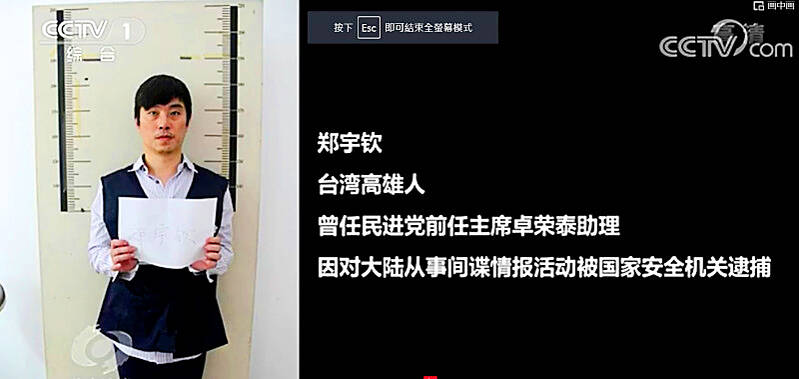
Former Czech Republic-based Taiwanese researcher Cheng Yu-chin (鄭宇欽) has been sentenced to seven years in prison on espionage-related charges, China’s Ministry of State Security announced yesterday. China said Cheng was a spy for Taiwan who “masqueraded as a professor” and that he was previously an assistant to former Cabinet secretary-general Cho Jung-tai (卓榮泰). President-elect William Lai (賴清德) on Wednesday last week announced Cho would be his premier when Lai is inaugurated next month. Today is China’s “National Security Education Day.” The Chinese ministry yesterday released a video online showing arrests over the past 10 years of people alleged to be
THE HAWAII FACTOR: While a 1965 opinion said an attack on Hawaii would not trigger Article 5, the text of the treaty suggests the state is covered, the report says NATO could be drawn into a conflict in the Taiwan Strait if Chinese forces attacked the US mainland or Hawaii, a NATO Defense College report published on Monday says. The report, written by James Lee, an assistant research fellow at Academia Sinica’s Institute of European and American Studies, states that under certain conditions a Taiwan contingency could trigger Article 5 of NATO, under which an attack against any member of the alliance is considered an attack against all members, necessitating a response. Article 6 of the North Atlantic Treaty specifies that an armed attack in the territory of any member in Europe,
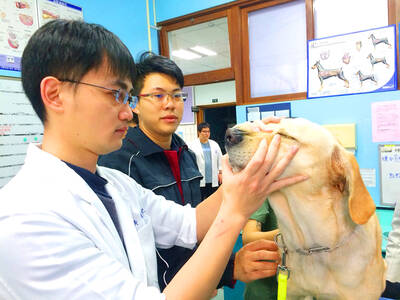
LIKE FAMILY: People now treat dogs and cats as family members. They receive the same medical treatments and tests as humans do, a veterinary association official said The number of pet dogs and cats in Taiwan has officially outnumbered the number of human newborns last year, data from the Ministry of Agriculture’s pet registration information system showed. As of last year, Taiwan had 94,544 registered pet dogs and 137,652 pet cats, the data showed. By contrast, 135,571 babies were born last year. Demand for medical care for pet animals has also risen. As of Feb. 29, there were 5,773 veterinarians in Taiwan, 3,993 of whom were for pet animals, statistics from the Animal and Plant Health Inspection Agency showed. In 2022, the nation had 3,077 pediatricians. As of last
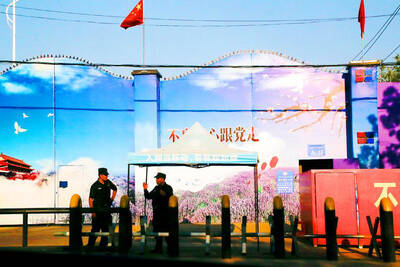
XINJIANG: Officials are conducting a report into amending an existing law or to enact a special law to prohibit goods using forced labor Taiwan is mulling an amendment prohibiting the importation of goods using forced labor, similar to the Uyghur Forced Labor Prevention Act (UFLPA) passed by the US Congress in 2021 that imposed limits on goods produced using forced labor in China’s Xinjiang region. A government official who wished to remain anonymous said yesterday that as the US customs law explicitly prohibits the importation of goods made using forced labor, in 2021 it passed the specialized UFLPA to limit the importation of cotton and other goods from China’s Xinjiang Uyghur region. Taiwan does not have the legal basis to prohibit the importation of goods


 RSS
RSS