


Pan-blue lawmakers yesterday withheld their approval of an amendment proposed by the government which would legally sever the connection between the National Palace Museum and two museums in China where most of its possessions were previously held.
The legislature's Organic Laws and Statutes Committee, along with the Education and Culture Committee, held a preliminary review of the amendment to the Organic Statute of the National Palace Museum (國立故宮博物院組織條例) yesterday.
The amendment must be moved out of committee to a four-month cross-party negotiation period before it can be put on the agenda for a second and third reading.
But some articles, which were seen by pan-blue lawmakers as part of the government's recent de-sinicization efforts, were put on hold until further deliberation.
"Why propose the amendment now when the government is going full-speed on its name-change campaign? Could it be that even the National Palace Museum is also on the government's `de-sinicization' list?" asked Chinese Nationalist Party (KMT) Legislator Diane Lee (李慶安), referring to the government's recent moves to drop words such as "China" and "Chunghwa" from the names of several state-owned enterprises as well as remove images of late dictator Chiang Kai-shek (蔣介石).
The government sent the amendment to the legislature on Jan. 19, but National Palace Museum Director Lin Mun-lee (林曼麗) said it had nothing to do with the name-change campaign.
"We brought up the amendment because the current one is outdated. It was enacted more than 20 years ago. We need to revise the parts that no longer reflect the realities of the times," she said.
The statute stipulates that the purpose of the National Palace Museum is to preserve cultural and historical relics as well as works of art initially stored at the National Palace Museum in Beijing and the Central Museum in Nanjing.
It also says the museum should collect ancient Chinese cultural and historical relics, conduct research and share its knowledge.
Under the amendment, the parts mentioning "initially placed in the National Beiping Palace Museum and Central Museum" were taken off and the "Chinese" ancient cultural or historical relics was replaced with cultural or historic relics "at home and abroad."
"We introduced the changes because we wanted to make the National Palace Museum a place embracing localization and internationalization and to diversify its development," Lin said.
"It would be an unfortunate if the development of the museum was distorted by the dispute over the name-change campaign," she said.
Other articles of the amendment are to reorganize the personnel management system at the museum, which the government said would streamline its operation.
But KMT Legislator Lai Shyh-bao (
"Unless the National Palace Museum has difficulties conducting exchanges with foreign museums under the current statute, I don't see why we need to revise it," Lai said.
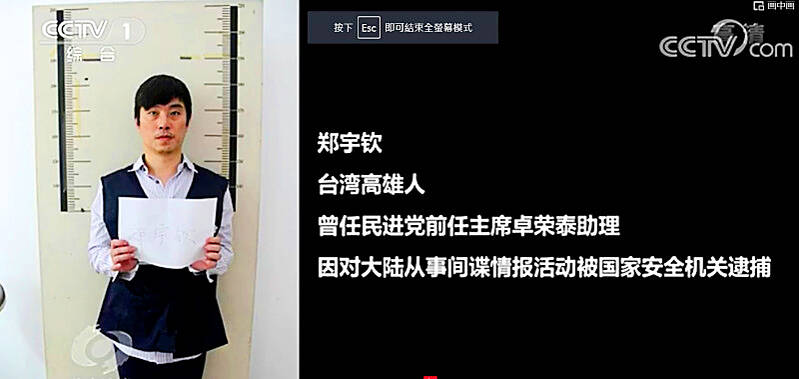
Former Czech Republic-based Taiwanese researcher Cheng Yu-chin (鄭宇欽) has been sentenced to seven years in prison on espionage-related charges, China’s Ministry of State Security announced yesterday. China said Cheng was a spy for Taiwan who “masqueraded as a professor” and that he was previously an assistant to former Cabinet secretary-general Cho Jung-tai (卓榮泰). President-elect William Lai (賴清德) on Wednesday last week announced Cho would be his premier when Lai is inaugurated next month. Today is China’s “National Security Education Day.” The Chinese ministry yesterday released a video online showing arrests over the past 10 years of people alleged to be
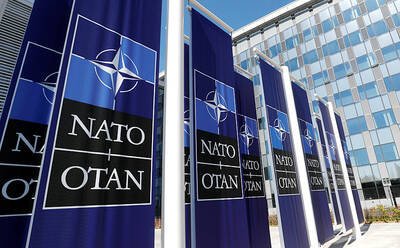
THE HAWAII FACTOR: While a 1965 opinion said an attack on Hawaii would not trigger Article 5, the text of the treaty suggests the state is covered, the report says NATO could be drawn into a conflict in the Taiwan Strait if Chinese forces attacked the US mainland or Hawaii, a NATO Defense College report published on Monday says. The report, written by James Lee, an assistant research fellow at Academia Sinica’s Institute of European and American Studies, states that under certain conditions a Taiwan contingency could trigger Article 5 of NATO, under which an attack against any member of the alliance is considered an attack against all members, necessitating a response. Article 6 of the North Atlantic Treaty specifies that an armed attack in the territory of any member in Europe,
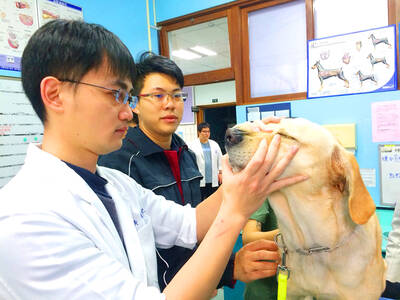
LIKE FAMILY: People now treat dogs and cats as family members. They receive the same medical treatments and tests as humans do, a veterinary association official said The number of pet dogs and cats in Taiwan has officially outnumbered the number of human newborns last year, data from the Ministry of Agriculture’s pet registration information system showed. As of last year, Taiwan had 94,544 registered pet dogs and 137,652 pet cats, the data showed. By contrast, 135,571 babies were born last year. Demand for medical care for pet animals has also risen. As of Feb. 29, there were 5,773 veterinarians in Taiwan, 3,993 of whom were for pet animals, statistics from the Animal and Plant Health Inspection Agency showed. In 2022, the nation had 3,077 pediatricians. As of last
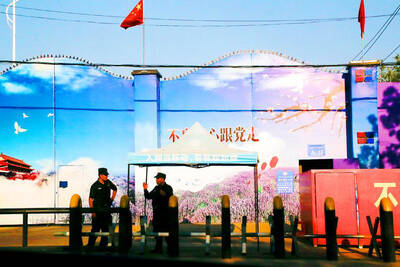
XINJIANG: Officials are conducting a report into amending an existing law or to enact a special law to prohibit goods using forced labor Taiwan is mulling an amendment prohibiting the importation of goods using forced labor, similar to the Uyghur Forced Labor Prevention Act (UFLPA) passed by the US Congress in 2021 that imposed limits on goods produced using forced labor in China’s Xinjiang region. A government official who wished to remain anonymous said yesterday that as the US customs law explicitly prohibits the importation of goods made using forced labor, in 2021 it passed the specialized UFLPA to limit the importation of cotton and other goods from China’s Xinjiang Uyghur region. Taiwan does not have the legal basis to prohibit the importation of goods


 RSS
RSS