


Taipei Times: The public has generally mistaken the TSU's new approach, as well as former president Lee Teng-hui's (李登輝) assertion that there was no need to discuss Taiwanese independence anymore, as a softening of its hardline pro-independence stance. How is the TSU going to help people transcend this politically divisive issue and identify with its new approach?
Huang Kun-huei (黃昆輝): In the past, there were only two extremes -- the blue and the green. Whenever election time drew near, the two sides fought for votes by highlighting the independence-versus-unification issue. But most people belong to neither of the extremes. They just did not have a better choice. But now, the TSU can offer them a better choice.
We want to help people understand that it is the middle class and the minorities that suffer from this political wrangling.
I think people are feeling more and more discontented with this divisiveness and will come to understand that there is no need to focus on the independence issue. This is because Taiwan is in fact an independent nation, particularly since the first direct presidential election in 1996 and the Democratic Progressive Party's (DPP) assumption of political power in 2000.
Voters may not have an adequate understanding of this fact, but we will try to explain it more clearly. Since they have personally felt the pain of political bickering, what we have to do is explain to them that the independence issue in an illusion.
This fact is also mentioned twice in the DPP's Resolution Concerning Taiwan's Future passed in 1999. Maybe the DPP has deliberately "forgotten" it for certain political purposes.
Given these circumstances, the TSU will hold all kinds of seminars and communicate our ideas to people directly. We are going to tell them that "left of the middle" is the approach Taiwan needs.
TT: But will such explanations have an obvious influence on people before the year-end legislative election or next year's presidential election?
Huang: This is a practical problem, but it all depends on how we communicate with people. There are 10 more months before the legislative election.
As long as we carefully map out how we will communicate, I think most people will come to understand our idea.
TT: How are the TSU's grassroots supporters, many of whom may also support the DPP, reacting to the TSU's new approach?
Huang: The TSU has not changed its insistence on Taiwan's sovereignty. We called the new approach "left of the middle" to highlight the socio-economic dimension of our views. Our new approach has stirred up some public discussions, which I believe is good for the nation.
After my inauguration, some supporters even told me that the TSU should have announced the new approach earlier. Since most of the TSU's and DPP's supporters are in favor of a Taiwan-centered approach, TSU supporters who also support the DPP will gradually come to understand that what the DPP calls "de jure independence" is the same as what the TSU calls "normalizing the nation."
But we think that correcting Taiwan's name and creating a new constitution as part of the normalization process are domestic affairs, because Taiwan is an independent country.
An important person in the media told me that more and more people will identify with the TSU's new approach, and I also think people know what is right and what is wrong.
TT: Pro-independence groups previously urged the TSU to withdraw from last December's Kaohsiung mayoral election. They also recently criticized Lee and the TSU on the independence issue. How are the TSU's relations with pro-independence groups now?
Huang: Pro-independence groups embody various different interpretations toward "Taiwanese independence."
But I think we should correct the nation's title, write a new constitution and then fight for other nations' recognition instead of highlighting the independence issue and creating political divisions. The truth will gradually come out as we discuss this further.
We need to improve communication with pro-independence groups. What they and the TSU insist on is a "Taiwan first" approach.
There is no difference between us on this point. Their criticisms against us over the past months were all political wrangling.
TT: Aren't you worried that this political wrangling will influence the TSU's performance in the year-end election?
Huang: Failing to clarify our stance would surely influence our performance, possibly to a great extent. Therefore, I hope the public continues to debate our new approach and the TSU's conception of Taiwanese independence.
That Taiwan is an independent country should be a consensus between all sides. I believe moderate opinions will gradually gain the upper hand.
TT: There has been speculation in the media that if Legislative Speaker Wang Jin-pyng (
Huang: Nothing of the sort. This is purely media speculation. Wang is close to Lee, so it is normal for them to band together. But I've never heard of anything like that.
TT: What are the TSU's campaign strategies for the year-end legislative election to help it maintain or increase its number of legislative seats? What are the party's strategies for next year's presidential election? Will the TSU support the DPP?
Huang: Basically, whoever upholds a "Taiwan-centric" approach is the TSU's friend. We will support any party that really follows this approach.
If the DPP insists on following this line, we will lend it our support. As for the KMT, if it is still seeking Taiwanese unification with China, it is definitely not taking the same approach as we are. [Former] KMT chairman Ma Ying-jeou (馬英九) actually knows that Lee did not intend to map out a unification timetable when he drew up the National Unification Guidelines (國統綱領).
What Lee was trying to do at that time was maintain cross-strait peace so that the nation could develop. Lee knew perfectly well that it was impossible for China to reach the standard of democracy laid out in the guidelines, without which Taiwan would not be willing to accept unification.
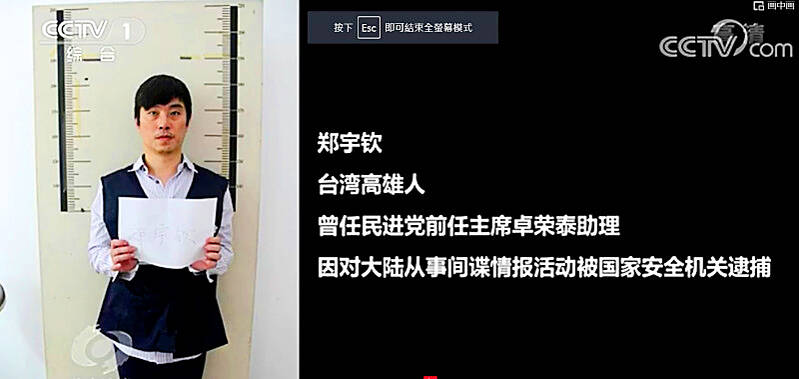
Former Czech Republic-based Taiwanese researcher Cheng Yu-chin (鄭宇欽) has been sentenced to seven years in prison on espionage-related charges, China’s Ministry of State Security announced yesterday. China said Cheng was a spy for Taiwan who “masqueraded as a professor” and that he was previously an assistant to former Cabinet secretary-general Cho Jung-tai (卓榮泰). President-elect William Lai (賴清德) on Wednesday last week announced Cho would be his premier when Lai is inaugurated next month. Today is China’s “National Security Education Day.” The Chinese ministry yesterday released a video online showing arrests over the past 10 years of people alleged to be
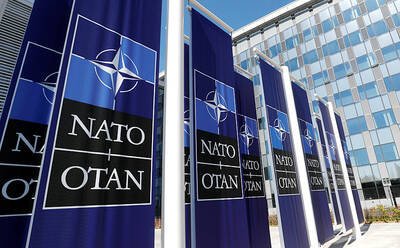
THE HAWAII FACTOR: While a 1965 opinion said an attack on Hawaii would not trigger Article 5, the text of the treaty suggests the state is covered, the report says NATO could be drawn into a conflict in the Taiwan Strait if Chinese forces attacked the US mainland or Hawaii, a NATO Defense College report published on Monday says. The report, written by James Lee, an assistant research fellow at Academia Sinica’s Institute of European and American Studies, states that under certain conditions a Taiwan contingency could trigger Article 5 of NATO, under which an attack against any member of the alliance is considered an attack against all members, necessitating a response. Article 6 of the North Atlantic Treaty specifies that an armed attack in the territory of any member in Europe,
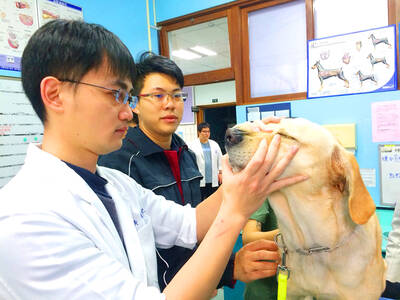
LIKE FAMILY: People now treat dogs and cats as family members. They receive the same medical treatments and tests as humans do, a veterinary association official said The number of pet dogs and cats in Taiwan has officially outnumbered the number of human newborns last year, data from the Ministry of Agriculture’s pet registration information system showed. As of last year, Taiwan had 94,544 registered pet dogs and 137,652 pet cats, the data showed. By contrast, 135,571 babies were born last year. Demand for medical care for pet animals has also risen. As of Feb. 29, there were 5,773 veterinarians in Taiwan, 3,993 of whom were for pet animals, statistics from the Animal and Plant Health Inspection Agency showed. In 2022, the nation had 3,077 pediatricians. As of last
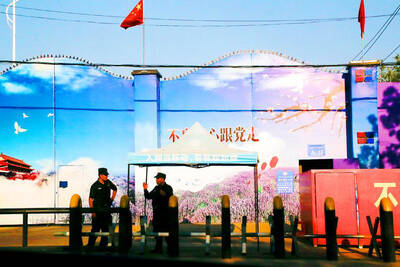
XINJIANG: Officials are conducting a report into amending an existing law or to enact a special law to prohibit goods using forced labor Taiwan is mulling an amendment prohibiting the importation of goods using forced labor, similar to the Uyghur Forced Labor Prevention Act (UFLPA) passed by the US Congress in 2021 that imposed limits on goods produced using forced labor in China’s Xinjiang region. A government official who wished to remain anonymous said yesterday that as the US customs law explicitly prohibits the importation of goods made using forced labor, in 2021 it passed the specialized UFLPA to limit the importation of cotton and other goods from China’s Xinjiang Uyghur region. Taiwan does not have the legal basis to prohibit the importation of goods


 RSS
RSS