


A generation ago, strangers in the flesh were a big threat to children, and the message was simple: Stay away from strangers, kids!
Today, however, the message isn't as simple as "stranger danger."
In the information age, digital, nuanced threats to youth have mixed with conventional dangers, spawning an environment fraught with new and graver risks. So abstract are the dangers that they're harder to talk about and prepare kids for than "stranger danger."
But that isn't stopping the Ministry of Education (MOE) and End Child Prostitution in Asian Tourism (ECPAT), a non-profit organization with a Taiwan-based chapter, from devising sophisticated ways to protect youth from sophisticated threats.
"Kids, I want to talk to you today about roads and highways," said Minister of Education Tu Cheng-sheng (
"Whenever you go somewhere, you travel on a road, right? Roads take us everywhere. And now there's a highway that can take you farther than anybody could've dreamed of when I was your age. It takes us anywhere, anytime, at the click of a button; it's called the Information Superhighway: the Internet," Tu said.
"Beware, though," he added, "because the Internet can take you to good places ... and it can take you to bad places, just like a real highway."
With that, the minister commenced a press conference on such online dangers as communicating with sexual predators and fraudsters, viewing pornography and downloading illegal material.
Attended by mostly school-age children, the conference touted recent efforts by ECPAT to educate youth on how to avoid breaking intellectual property laws and falling victim to online predators.
ECPAT director Kuo Ching-en (
Located online at www.smartkid.org.tw, the program was created in October with assistance from the ministry, Kuo added.
Thanks to public or private efforts, children nationwide are steadily gaining a proper understanding of how to conduct themselves in cyberspace, conference participants said.
Although Ho Chu-yu (
"I saw TV commercials warning against volunteering any personal information on the Internet when I was in middle school," Ho said. "They made a pretty big impression."
Ho's mother, meanwhile, pays Chunghwa Telecom, their Internet service provider, NT$100 (US$3) per month to filter out any pornographic material from their home computer, he added.
"That part sucks," Ho said.
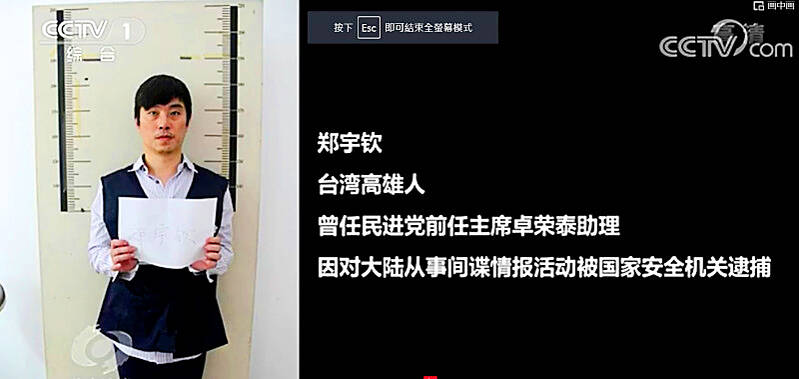
Former Czech Republic-based Taiwanese researcher Cheng Yu-chin (鄭宇欽) has been sentenced to seven years in prison on espionage-related charges, China’s Ministry of State Security announced yesterday. China said Cheng was a spy for Taiwan who “masqueraded as a professor” and that he was previously an assistant to former Cabinet secretary-general Cho Jung-tai (卓榮泰). President-elect William Lai (賴清德) on Wednesday last week announced Cho would be his premier when Lai is inaugurated next month. Today is China’s “National Security Education Day.” The Chinese ministry yesterday released a video online showing arrests over the past 10 years of people alleged to be

THE HAWAII FACTOR: While a 1965 opinion said an attack on Hawaii would not trigger Article 5, the text of the treaty suggests the state is covered, the report says NATO could be drawn into a conflict in the Taiwan Strait if Chinese forces attacked the US mainland or Hawaii, a NATO Defense College report published on Monday says. The report, written by James Lee, an assistant research fellow at Academia Sinica’s Institute of European and American Studies, states that under certain conditions a Taiwan contingency could trigger Article 5 of NATO, under which an attack against any member of the alliance is considered an attack against all members, necessitating a response. Article 6 of the North Atlantic Treaty specifies that an armed attack in the territory of any member in Europe,
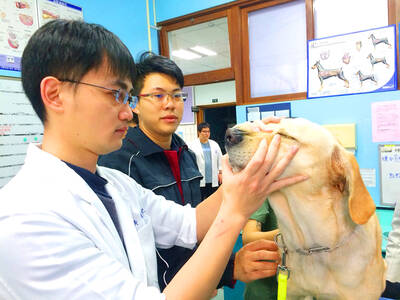
LIKE FAMILY: People now treat dogs and cats as family members. They receive the same medical treatments and tests as humans do, a veterinary association official said The number of pet dogs and cats in Taiwan has officially outnumbered the number of human newborns last year, data from the Ministry of Agriculture’s pet registration information system showed. As of last year, Taiwan had 94,544 registered pet dogs and 137,652 pet cats, the data showed. By contrast, 135,571 babies were born last year. Demand for medical care for pet animals has also risen. As of Feb. 29, there were 5,773 veterinarians in Taiwan, 3,993 of whom were for pet animals, statistics from the Animal and Plant Health Inspection Agency showed. In 2022, the nation had 3,077 pediatricians. As of last

XINJIANG: Officials are conducting a report into amending an existing law or to enact a special law to prohibit goods using forced labor Taiwan is mulling an amendment prohibiting the importation of goods using forced labor, similar to the Uyghur Forced Labor Prevention Act (UFLPA) passed by the US Congress in 2021 that imposed limits on goods produced using forced labor in China’s Xinjiang region. A government official who wished to remain anonymous said yesterday that as the US customs law explicitly prohibits the importation of goods made using forced labor, in 2021 it passed the specialized UFLPA to limit the importation of cotton and other goods from China’s Xinjiang Uyghur region. Taiwan does not have the legal basis to prohibit the importation of goods


 RSS
RSS