


With campaigning in Taipei and Kaohsiung coming to an end, both the Chinese Nationalist Party (KMT) and the Democratic Progressive Party (DPP) each expressed confidence in their respective mayoral candidates.
The KMT yesterday predicted that the hotly contested mayoral races in both metropolises would result in victory. The party called on pan-blue supporters to vote for its Kaohsiung mayoral candidate Huang Chun-ying (
The DPP was similarly confident that it had a good chance of winning both mayoral elections. The DPP expressed confidence that a high voter turnout would be sufficient to help secure a victory in Kaohsiung, and that public anger at People First Party (PFP) Chairman James Soong (宋楚瑜), who is running in the Taipei mayoral race as an independent, would motivate pan-green supporters to show up in support of the DPP.
"For the KMT, the last phase of the election campaign should focus on combating vote-buying and dirty campaigning, campaigning for more votes and consolidating existing voter support" said Liao Fung-te (廖風德), director of the KMT's Organization and Development Committee.
DPP Deputy Secretary-General Tsai Huang-liang (蔡煌瑯) said that his party and other pollsters all believed that DPP Taipei mayoral candidate Frank Hsieh (
Support in Kaohsiung is almost evenly divided between DPP candidate Chen Ju (陳菊) and KMT candidate Huang Chun-ying, and a high voter turnout among DPP supporters could be what is needed to secure victory there, Tsai added.
Analysts said that the revelation of a private meeting between KMT Chairman Ma Ying-jeou (馬英九) and Soong, together with the hand-in-hand promotional event held along Kaohsiung's Ai River last Sunday, had led to a change in the situation in Kaohsiung.
The KMT predicted a voter turnout of about 65 percent to 70 percent, adding that a turnout of more than 70 percent would be unfavorable to Huang.
"If Soong is elected in Taipei, it will translate into a reunion between the KMT and PFP, which is not what the DPP expects to deal with," Tsai said. "If Soong comes out badly, then the split between the two parties could widen further."
Political analysts said yesterday that today's electoral outcomes would directly affect the 2008 presidential election and that the KMT and DPP would both face the problems of power reshuffling whether they win or lose.
"Even if Hau wins, Ma faces another thorny problem, which is how to appease Soong, who claims he possesses the KMT's scandal secrets," said Hsu Yung-ming (徐永明), an assistant research fellow in political science at Academia Sinica, at a forum hosted by the Friends of Hong Kong and Macau Association.
"Likewise, if the DPP loses Kaohsiung, its presidential candidate [for 2008] will be forced to be announced in advance," he said, adding that supporters of the pan-blue camp would have much stronger voting motivation than that of pan-green supporters since they shared a common motive -- their distaste for President Chen Shui-bian (陳水扁) and desire to win back ruling power.
Chu Chao-hsiang (曲兆祥), professor of political studies at Taiwan National Normal University, said that political performances would not be the deciding issue for voters.
Voters generally stick to their party preferences, he said.
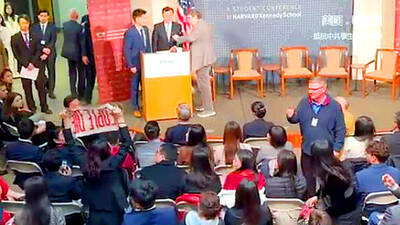
A group of Taiwanese-American and Tibetan-American students at Harvard University on Saturday disrupted Chinese Ambassador to the US Xie Feng’s (謝鋒) speech at the school, accusing him of being responsible for numerous human rights violations. Four students — two Taiwanese Americans and two from Tibet — held up banners inside a conference hall where Xie was delivering a speech at the opening ceremony of the Harvard Kennedy School China Conference 2024. In a video clip provided by the Coalition of Students Resisting the CCP (Chinese Communist Party), Taiwanese-American Cosette Wu (吳亭樺) and Tibetan-American Tsering Yangchen are seen holding banners that together read:

UNAWARE: Many people sit for long hours every day and eat unhealthy foods, putting them at greater risk of developing one of the ‘three highs,’ an expert said More than 30 percent of adults aged 40 or older who underwent a government-funded health exam were unaware they had at least one of the “three highs” — high blood pressure, high blood lipids or high blood sugar, the Health Promotion Administration (HPA) said yesterday. Among adults aged 40 or older who said they did not have any of the “three highs” before taking the health exam, more than 30 percent were found to have at least one of them, Adult Preventive Health Examination Service data from 2022 showed. People with long-term medical conditions such as hypertension or diabetes usually do not
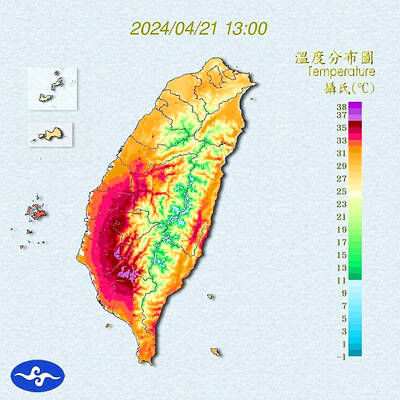
Heat advisories were in effect for nine administrative regions yesterday afternoon as warm southwesterly winds pushed temperatures above 38°C in parts of southern Taiwan, the Central Weather Administration (CWA) said. As of 3:30pm yesterday, Tainan’s Yujing District (玉井) had recorded the day’s highest temperature of 39.7°C, though the measurement will not be included in Taiwan’s official heat records since Yujing is an automatic rather than manually operated weather station, the CWA said. Highs recorded in other areas were 38.7°C in Kaohsiung’s Neimen District (內門), 38.2°C in Chiayi City and 38.1°C in Pingtung’s Sandimen Township (三地門), CWA data showed. The spell of scorching
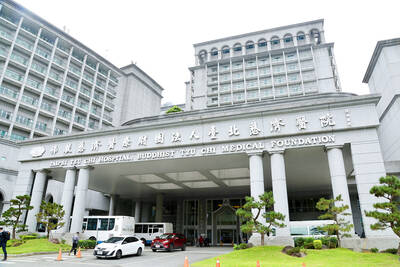
POLICE INVESTIGATING: A man said he quit his job as a nurse at Taipei Tzu Chi Hospital as he had been ‘disgusted’ by the behavior of his colleagues A man yesterday morning wrote online that he had witnessed nurses taking photographs and touching anesthetized patients inappropriately in Taipei Tzu Chi Hospital’s operating theaters. The man surnamed Huang (黃) wrote on the Professional Technology Temple bulletin board that during his six-month stint as a nurse at the hospital, he had seen nurses taking pictures of patients, including of their private parts, after they were anesthetized. Some nurses had also touched patients inappropriately and children were among those photographed, he said. Huang said this “disgusted” him “so much” that “he felt the need to reveal these unethical acts in the operating theater


 RSS
RSS