


The Environmental Quality Protection Foundation yesterday launched a scale that it developed to measure ultraviolet A (UVA) rays to help boost public awareness of the long-term effect UVA has on skin.
The scale was created by first switching the radiation volume measured by the Environmental Protection Administration (EPA) to a UVA index.
Researchers then developed five intensity levels based on the index, from "low: (UV-A 0~2), to "moderate" (UV-A 3~4)" "high" (UV-A 5~6), "very high" (UV-A 7~9) and "extreme" (UV-A >10).
Foundation chairman Liou Ming-lone (
He said clinical research, especially in the EU, has indicated that prolonged exposure to UVA could age skin and eventually damage the body's immune system.
Liu Chung-ming (
According Liu, UVC has the longest wavelength and can cause the most damage to skin, but it is mostly filtered out by the ozone layer before it enters the Earth's atmosphere.
UVB is rated second in terms of its intensity and wavelength. It can cause immediate damage to the skin and eyes, notably sunburn.
However, a majority of UVB rays do not enter the atmosphere, except when they are able to enter through holes in the ozone layer.
UVA has the longest wavelength of the three and consists of a major portion of ultraviolet rays, Liu said. It can penetrate the ozone layer, but will not cause immediate damage to the skin. However, constant exposure to UVA could prove detrimental, as it can cause aging of the skin and potentially induce skin cancer, he said.
Liu's analysis of the EPA's statistics showed that the radiation volume from UVA is a hundred times more than that of UVB. While both UVA and UVB rays are strongest between 10am and 3pm, UVA poses a stronger influence when it is before and after that time frame, he said.
In particular, UVA's influence remains strong in the winter, he said, adding that it can reach levels from "very high" to "extreme."
Chao Chao-ming (趙昭明), a dermatologist at the Tri-Service General Hospital, said the scale will help educate the public about the impact of ultraviolet rays on health, specifically the cumulative effects of ultraviolet rays on the skin.
Chao said he has seen a growing number of elderly people with skin cancer in recent years.
Chao suggested that sunscreen with Sun Protection Factor (SPF) of 15 is adequate to protect the skin from harm, provided that it contains compounds that can block both UVA and UVB rays from penetrating the skin. Such suncreens must also be reapplied several times a day, he said, depending on the weather and skin types.
The latest UVA Index report from the EPA can be accessed on the Internet at cats.gcc.ntu.edu.tw/UVA/welcome.html.

Former president Ma Ying-jeou’s (馬英九) mention of Taiwan’s official name during a meeting with Chinese President Xi Jinping (習近平) on Wednesday was likely a deliberate political play, academics said. “As I see it, it was intentional,” National Chengchi University Graduate Institute of East Asian Studies professor Wang Hsin-hsien (王信賢) said of Ma’s initial use of the “Republic of China” (ROC) to refer to the wider concept of “the Chinese nation.” Ma quickly corrected himself, and his office later described his use of the two similar-sounding yet politically distinct terms as “purely a gaffe.” Given Ma was reading from a script, the supposed slipup
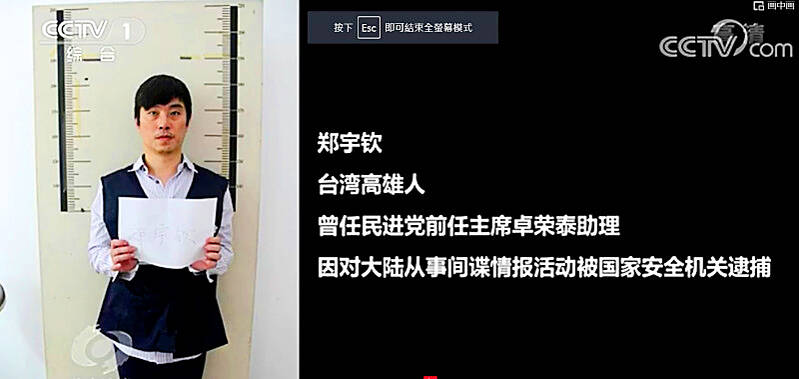
Former Czech Republic-based Taiwanese researcher Cheng Yu-chin (鄭宇欽) has been sentenced to seven years in prison on espionage-related charges, China’s Ministry of State Security announced yesterday. China said Cheng was a spy for Taiwan who “masqueraded as a professor” and that he was previously an assistant to former Cabinet secretary-general Cho Jung-tai (卓榮泰). President-elect William Lai (賴清德) on Wednesday last week announced Cho would be his premier when Lai is inaugurated next month. Today is China’s “National Security Education Day.” The Chinese ministry yesterday released a video online showing arrests over the past 10 years of people alleged to be
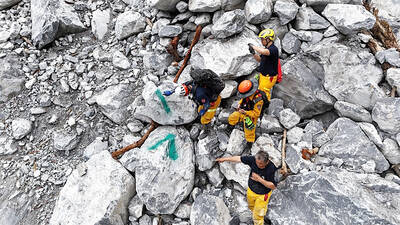
The bodies of two individuals were recovered and three additional bodies were discovered on the Shakadang Trail (砂卡礑) in Taroko National Park, eight days after the devastating earthquake in Hualien County, search-and-rescue personnel said. The rescuers reported that they retrieved the bodies of a man and a girl, suspected to be the father and daughter from the Yu (游) family, 500m from the entrance of the trail on Wednesday. The rescue team added that despite the discovery of the two bodies on Friday last week, they had been unable to retrieve them until Wednesday due to the heavy equipment needed to lift
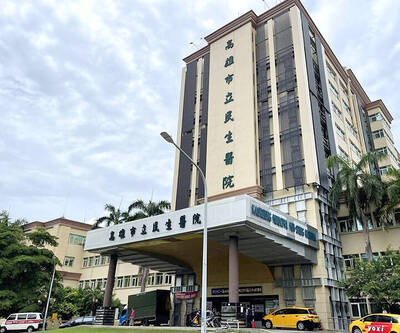
MIX-UP: Kaohsiung Municipal Min-Sheng Hospital director Yen Chia-chi was suspended from his duties after surgeons operated on the wrong patient last week The Kaohsiung Department of Health yesterday fined Kaohsiung Municipal Min-Sheng Hospital NT$500,0000 for misidentifying two patients and consequently causing one of them to undergo the wrong surgery last week. The hospital’s director Yen Chia-chi (顏家祺) was suspended from his duties. The surgeon who was scheduled to operate on the patient was given a major demerit and is subject to subsequent disciplinary actions. Demerits were given to the anesthesiologist, the nurse in the operation room, the nurse in the ward and the worker who helped transfer the patient from the ward to the operation room for having failed to verify the patient’s identity. Meanwhile, the


 RSS
RSS