


The recent reports of President Chen Shui-bian's (陳水扁) alleged intimidation of Legislative Speaker Wang Jin-pyng (王金平) may have been a political gambit on Wang's part, aimed at boosting his chances of being nominated as a candidate in the next presidential election, political analysts said yesterday.
"Wang, who has been questioned about his stand on unification, is trying to reassure pan-blue supporters and Chinese Nationalist Party (KMT) Chairman Ma Ying-jeou (
Although Wang is an ethnic Taiwanese and is popular among the pan-blue camp's "local forces," he has had problems obtaining the trust of die-hard pro-unification supporters because of his native roots and close relationship with the pan-green camp, especially with former president Lee Teng-hui (
It was therefore necessary and important for Wang to court pan-blue supporters, but at the same time maintain his sound relationship with the pan-green camp, Chen Yi-shen said.
"However, he may risk losing the backing of both sides," Chen Yi-shen said.
The issue stems from a news report by the Chinese-language daily, China Times, on Wednesday, alleging that the president had shown Wang some "legal documents" outlining possible evidence of his wrongdoing in an attempt to intimidate Wang.
The Presidential Office held a press conference on the same day and threatened legal action if the paper did not retract its claim and apologize the following day.
Ignoring the warning, how-ever, the China Times followed up with more coverage of its claim the next day.
Wang, who was in Japan, told reporters in a phone interview on Thursday that Chen did ask him twice to decline the offer to serve as campaign manager for the KMT in the run-up to the presidential election in 2004, but that he firmly rejected the president's requests.
Wang also confirmed that the president mentioned the Zanadau Development Corp (新瑞都) scan-dal, in which Wang was accused of taking bribes in exchange for helping remove obstacles to the privatization of a state-run enterprise.
Wang, however, denied that the president threatened him and that he "thumped the desk and then walked out."
President Chen yesterday also denied that he had tried to intimidate Wang.
Liao Da-chi (廖達琪), a professor of political science at National Chungshan University, said that while it was unclear whether Wang himself leaked the information to the media, the incident seemed to be an "apparent maneuver."
"It is only in Wang's interest to distance himself from President Chen, who is embroiled in corruption scandals and faces doubts about his leadership," she said.
"If President Chen steps down before his term expires, Wang is bound to play a more important role in the political arena. He, of course, will not change his political stance to support independence, but he can definitely force Ma to cooperate with him," Liao added.
Liao said she believed that Lee, the spiritual leader of the Taiwan Solidarity Union (TSU), also wanted to see the president face more pressure on his ethics and credibility problem.
"I have inside sources confirming that former president Lee is very disappointed with President Chen's performance over the years," she said.
"If Chen were to step down before his term ends, the only party that would benefit would be the TSU because it would then enjoy a better chance in the upcoming Taipei and Kaohsiung mayoral election and next year's legislative polls," she added.
Yang Tai-shun (
While Wang may sabotage his relationship with President Chen this way, Yang said, he may not care about maintaining a good relationship with a "lame duck" president.
Ger Yeong-kuang (
Analysts all frowned on speculation that former KMT chairman Lien Chan (
"Lien's age is a big problem, because he will be 73 in 2008," Liao said.
"Besides, his time has passed and he's too cozy with China. He has lost the presidential election twice, and I don't think a third try will change anything," Liao added.
It would be a plus for Ma to team up with Wang, who is an ethnic Taiwanese and has "ambiguous political color," she said.
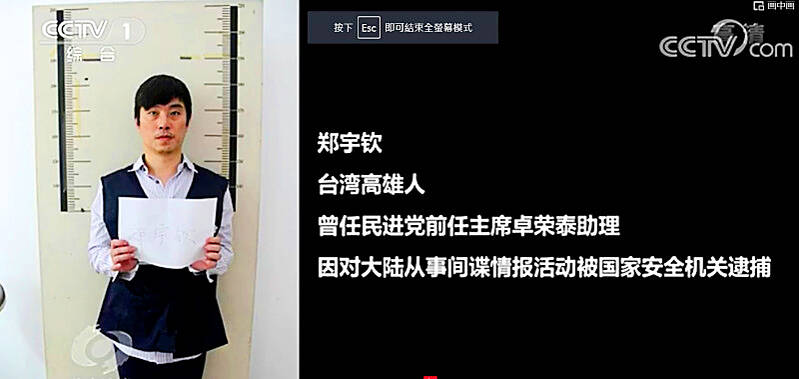
Former Czech Republic-based Taiwanese researcher Cheng Yu-chin (鄭宇欽) has been sentenced to seven years in prison on espionage-related charges, China’s Ministry of State Security announced yesterday. China said Cheng was a spy for Taiwan who “masqueraded as a professor” and that he was previously an assistant to former Cabinet secretary-general Cho Jung-tai (卓榮泰). President-elect William Lai (賴清德) on Wednesday last week announced Cho would be his premier when Lai is inaugurated next month. Today is China’s “National Security Education Day.” The Chinese ministry yesterday released a video online showing arrests over the past 10 years of people alleged to be
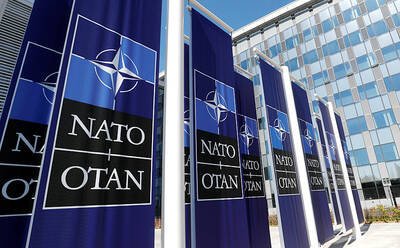
THE HAWAII FACTOR: While a 1965 opinion said an attack on Hawaii would not trigger Article 5, the text of the treaty suggests the state is covered, the report says NATO could be drawn into a conflict in the Taiwan Strait if Chinese forces attacked the US mainland or Hawaii, a NATO Defense College report published on Monday says. The report, written by James Lee, an assistant research fellow at Academia Sinica’s Institute of European and American Studies, states that under certain conditions a Taiwan contingency could trigger Article 5 of NATO, under which an attack against any member of the alliance is considered an attack against all members, necessitating a response. Article 6 of the North Atlantic Treaty specifies that an armed attack in the territory of any member in Europe,
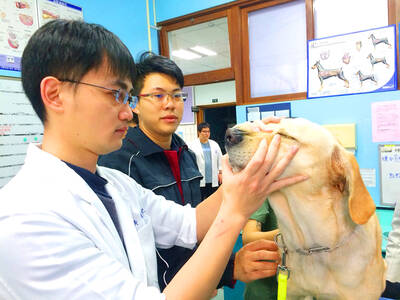
LIKE FAMILY: People now treat dogs and cats as family members. They receive the same medical treatments and tests as humans do, a veterinary association official said The number of pet dogs and cats in Taiwan has officially outnumbered the number of human newborns last year, data from the Ministry of Agriculture’s pet registration information system showed. As of last year, Taiwan had 94,544 registered pet dogs and 137,652 pet cats, the data showed. By contrast, 135,571 babies were born last year. Demand for medical care for pet animals has also risen. As of Feb. 29, there were 5,773 veterinarians in Taiwan, 3,993 of whom were for pet animals, statistics from the Animal and Plant Health Inspection Agency showed. In 2022, the nation had 3,077 pediatricians. As of last
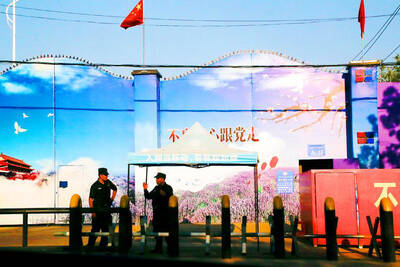
XINJIANG: Officials are conducting a report into amending an existing law or to enact a special law to prohibit goods using forced labor Taiwan is mulling an amendment prohibiting the importation of goods using forced labor, similar to the Uyghur Forced Labor Prevention Act (UFLPA) passed by the US Congress in 2021 that imposed limits on goods produced using forced labor in China’s Xinjiang region. A government official who wished to remain anonymous said yesterday that as the US customs law explicitly prohibits the importation of goods made using forced labor, in 2021 it passed the specialized UFLPA to limit the importation of cotton and other goods from China’s Xinjiang Uyghur region. Taiwan does not have the legal basis to prohibit the importation of goods


 RSS
RSS