


The recent string of personnel reshuffles at the Presidential Office are aimed at placating factions within the Democratic Progressive Party (DPP), political observers said yesterday.
Dogged by allegations of political and financial improprieties, Presidential Office deputy secretary-general Ma Yung-cheng (
Ma's long-term colleague, National Security Council member Lin Chin-chang (
Ma and Lin have worked with Chen since 1991. Together with former DPP legislator Luo Wen-jia (
Right-hand man
Ma was Chen's right-hand man, serving as a coordinator, mediator and policy strategist, when Chen was elected Taipei mayor in 1994.
Before becoming a senior adviser to the National Security Council in 2004, Lin, who is well known for his writing skill, was in charge of writing Chen's presidential speeches.
Following the resignations of Ma and Lin, the Presidential Office issued a statement on Sunday announcing that council deputy secretaries-general Parris Chang (
Vice President Annette Lu (
Despite the calls for the resignation of council Secretary-General Chiou I-jen (
Some DPP members have criticized Chiou for being too "cooperative" with Chen, especially with regard to cross-strait policies.
Another victim
Su also confirmed on Monday that Taiwan Stock Exchange Chairman Wu Nai-jen (
Shih Cheng-feng (
"It is clear that New Tide, which enjoys a close relationship with Su, wants Chen to transfer more power to the premier so that he can place more of their members in government positions," Shih said. "More [New Tide] members in the government means more resources for the presidential election."
By dismissing Ma, Lin, Tsai and Chang, Shih said that Chen had sent out a message that he was willing to compromise, but hoped the faction would show some restraint.
Tsai, a former New Tide member, oversaw matters of national defense for the council. His departure raised eyebrows because he only took up the post about three months ago.
Chang, who was responsible for matters of diplomatic affairs, is considered a supporter of Lu and reportedly does not get along with Minister of Foreign Affairs James Huang (黃志芳).
While some New Tide faction members have proposed that Chen cease calling council meetings, Shih said this scheme was aimed at further marginalizing the president.
Commenting on Chen's decision to cease hiring presidential advisers and national policy counselors, Shih said that the president may have gone too far in righting a wrong.
However, Hsu Yung-ming (
"By pulling his men out of the castle, Chen can sit back and watch the party's heavyweights slug it out," he said. "The reshuffles at the Presidential Office are a strategy aimed at retreating in order to advance."
By continuing to serve at the council, Hsu said that Chiou would be free to concentrate on his job instead of diverting his energy into mapping out campaign strategies and campaigning for DPP members running for public office.
"Chiou serves as an umbilical cord between Chen and the New Tide faction," he said. "Chiou is one of the party's few well-rounded strategists -- a man that Chen cannot do without."
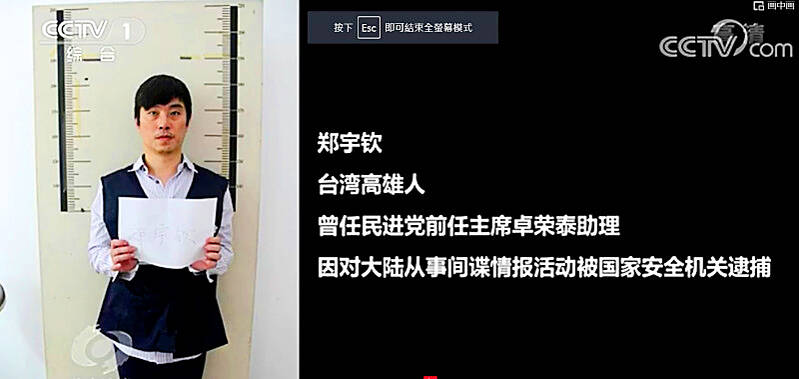
Former Czech Republic-based Taiwanese researcher Cheng Yu-chin (鄭宇欽) has been sentenced to seven years in prison on espionage-related charges, China’s Ministry of State Security announced yesterday. China said Cheng was a spy for Taiwan who “masqueraded as a professor” and that he was previously an assistant to former Cabinet secretary-general Cho Jung-tai (卓榮泰). President-elect William Lai (賴清德) on Wednesday last week announced Cho would be his premier when Lai is inaugurated next month. Today is China’s “National Security Education Day.” The Chinese ministry yesterday released a video online showing arrests over the past 10 years of people alleged to be
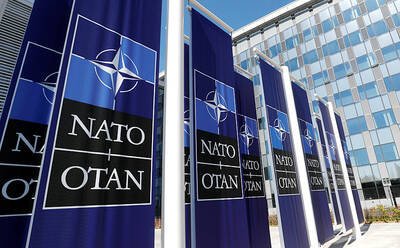
THE HAWAII FACTOR: While a 1965 opinion said an attack on Hawaii would not trigger Article 5, the text of the treaty suggests the state is covered, the report says NATO could be drawn into a conflict in the Taiwan Strait if Chinese forces attacked the US mainland or Hawaii, a NATO Defense College report published on Monday says. The report, written by James Lee, an assistant research fellow at Academia Sinica’s Institute of European and American Studies, states that under certain conditions a Taiwan contingency could trigger Article 5 of NATO, under which an attack against any member of the alliance is considered an attack against all members, necessitating a response. Article 6 of the North Atlantic Treaty specifies that an armed attack in the territory of any member in Europe,
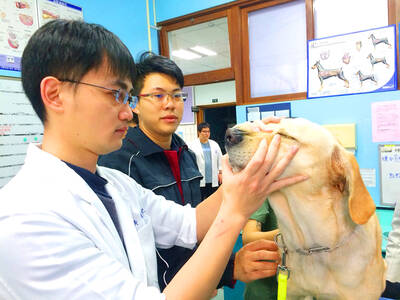
LIKE FAMILY: People now treat dogs and cats as family members. They receive the same medical treatments and tests as humans do, a veterinary association official said The number of pet dogs and cats in Taiwan has officially outnumbered the number of human newborns last year, data from the Ministry of Agriculture’s pet registration information system showed. As of last year, Taiwan had 94,544 registered pet dogs and 137,652 pet cats, the data showed. By contrast, 135,571 babies were born last year. Demand for medical care for pet animals has also risen. As of Feb. 29, there were 5,773 veterinarians in Taiwan, 3,993 of whom were for pet animals, statistics from the Animal and Plant Health Inspection Agency showed. In 2022, the nation had 3,077 pediatricians. As of last
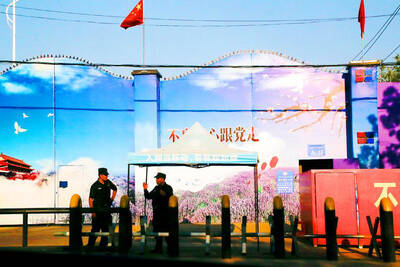
XINJIANG: Officials are conducting a report into amending an existing law or to enact a special law to prohibit goods using forced labor Taiwan is mulling an amendment prohibiting the importation of goods using forced labor, similar to the Uyghur Forced Labor Prevention Act (UFLPA) passed by the US Congress in 2021 that imposed limits on goods produced using forced labor in China’s Xinjiang region. A government official who wished to remain anonymous said yesterday that as the US customs law explicitly prohibits the importation of goods made using forced labor, in 2021 it passed the specialized UFLPA to limit the importation of cotton and other goods from China’s Xinjiang Uyghur region. Taiwan does not have the legal basis to prohibit the importation of goods


 RSS
RSS