


The release of information on the Pentagon's latest operational plan to fight China if Beijing decides to launch military action against Taiwan has lifted the lid on a problem that many US specialists in Taiwan and Chinese military matters have long worried about: allegations that Chinese spies may have infiltrated deep inside Taiwan's military.
The concern, according to several specialists who spoke with the Taipei Times, has kept the US from sharing much of its information with Taiwan's defense ministry despite enhanced cooperation between the two militaries in recent years.
As a result, Taiwan's military may have been kept in the dark about the Pentagon's latest operational plan to deal with a Chinese military attack on Taiwan.
"There is a danger that Taiwan is pretty badly penetrated, thoroughly penetrated, by the Chinese," said one military expert who spoke on the condition of anonymity.
"Most observers simply think that that has happened over the years, and the evidence has been the occasional discoveries [of spies]. That is at least something you would have to take into account when you decide what it is that you are going to share," the expert said.
There is "more of a suspicion, a general feeling you will find if you had conversations with folks who work on these issues," he added. "They would say, `Look, the Taiwanese military is so penetrated that it's hopeless.'"
William Arkin, the journalist who wrote a recent story about the existence of the Pentagon's latest war plan for dealing with a Chinese attack, Oplan 5077-04, has his own suspicions.
"When you look at the really significant expansion of coalition information sharing since 9/11," he said, referring to US-led international communications exchanges on terrorism and other threats, "Taiwan is not really involved."
The US war plan, he notes, is a unilateral plan.
"I don't see them taking the Taiwanese military capability and using it as a force multiplier," he said. "I see it as a go-it-alone plan."
Military specialist Richard Fisher, a vice president of the International Assessment and Strategy Center, echoed those remarks.
"I would agree that the danger of penetration in Taiwan is very high," he said. "There's a real security concern with regard to any past and any future military communications we might have with the military and government on Taiwan."
"That has been a constant risk throughout the history of Taiwan, and one that the US government is likely aware of, and one that you can plan for," he said.
However, the specialists agreed that knowing about the penetration of spies can give the US a great opportunity to fool the Chinese by spreading "disinformation" along with whatever real information Washington is willing to share, albeit indirectly, with Beijing.
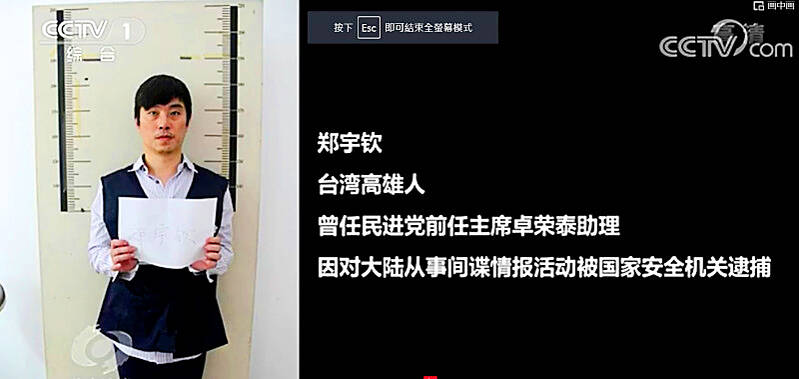
Former Czech Republic-based Taiwanese researcher Cheng Yu-chin (鄭宇欽) has been sentenced to seven years in prison on espionage-related charges, China’s Ministry of State Security announced yesterday. China said Cheng was a spy for Taiwan who “masqueraded as a professor” and that he was previously an assistant to former Cabinet secretary-general Cho Jung-tai (卓榮泰). President-elect William Lai (賴清德) on Wednesday last week announced Cho would be his premier when Lai is inaugurated next month. Today is China’s “National Security Education Day.” The Chinese ministry yesterday released a video online showing arrests over the past 10 years of people alleged to be
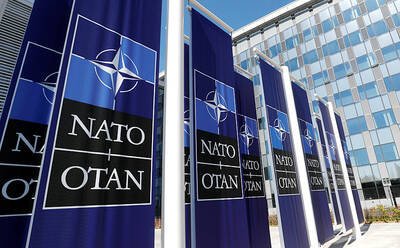
THE HAWAII FACTOR: While a 1965 opinion said an attack on Hawaii would not trigger Article 5, the text of the treaty suggests the state is covered, the report says NATO could be drawn into a conflict in the Taiwan Strait if Chinese forces attacked the US mainland or Hawaii, a NATO Defense College report published on Monday says. The report, written by James Lee, an assistant research fellow at Academia Sinica’s Institute of European and American Studies, states that under certain conditions a Taiwan contingency could trigger Article 5 of NATO, under which an attack against any member of the alliance is considered an attack against all members, necessitating a response. Article 6 of the North Atlantic Treaty specifies that an armed attack in the territory of any member in Europe,

LIKE FAMILY: People now treat dogs and cats as family members. They receive the same medical treatments and tests as humans do, a veterinary association official said The number of pet dogs and cats in Taiwan has officially outnumbered the number of human newborns last year, data from the Ministry of Agriculture’s pet registration information system showed. As of last year, Taiwan had 94,544 registered pet dogs and 137,652 pet cats, the data showed. By contrast, 135,571 babies were born last year. Demand for medical care for pet animals has also risen. As of Feb. 29, there were 5,773 veterinarians in Taiwan, 3,993 of whom were for pet animals, statistics from the Animal and Plant Health Inspection Agency showed. In 2022, the nation had 3,077 pediatricians. As of last
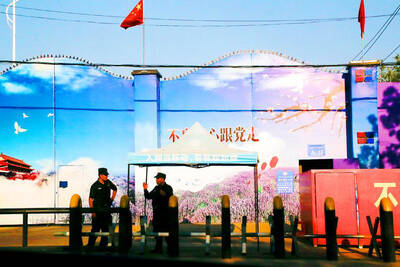
XINJIANG: Officials are conducting a report into amending an existing law or to enact a special law to prohibit goods using forced labor Taiwan is mulling an amendment prohibiting the importation of goods using forced labor, similar to the Uyghur Forced Labor Prevention Act (UFLPA) passed by the US Congress in 2021 that imposed limits on goods produced using forced labor in China’s Xinjiang region. A government official who wished to remain anonymous said yesterday that as the US customs law explicitly prohibits the importation of goods made using forced labor, in 2021 it passed the specialized UFLPA to limit the importation of cotton and other goods from China’s Xinjiang Uyghur region. Taiwan does not have the legal basis to prohibit the importation of goods


 RSS
RSS