


To all the mom-wannabes, moms-to-bes, or moms who wish to give birth to another child but have been hesitant to do so, the incentive package proposed by the Council of Labor Affairs (CLA) last week seemed like encouraging news.
Under the CLA's proposal -- which is intended to help boost the nation's sagging birth rate -- women on maternity leave would receive monthly compensation of NT$13,500 (US$422) for six months. Husbands who ask for paternity leave would receive the same amount of compensation, in a bid to encourage more fathers to share parenting responsibilities at an early stage of a child's development. The employment insurance fund, which most of the nation's workers pay into, would be used to fund the policy.
The CLA proposals will be introduced at the national, cross-party economic forum planned for next month, then sent to the Executive Yuan for review.

PHOTO: SHELLEY SHAN, TAIPEI TIMES
The proposals would have to be passed by the legislature in order to be implemented.
But in the meantime, the proposal has already generated a whirlwind of debate among labor and women rights groups and the public at large.
Insufficient amount?
Wang Juan-ping (王娟萍), spokesperson for the Labor Rights Association (LRA), has expressed doubts on whether the policy will truly protect women's interests, and whether it is true to the spirit of the Gender Equality Employment Law (兩性工作平等法), which was implemented in 2002.
"We laughed as soon as we saw the amount [NT$13,500], which is ludicrous," Wang said, "Of course you can always say it is better than nothing, but the policy is simply filled with hypocrisy."
Wang said that by law, both mothers and fathers are entitled to up to two years of parental leave. When the total monthly amount that a person could claim under the new proposals is divided by 24, it therefore boils down to just over NT$3,000 a month for that two-year period.
Wang added that on average, women in Taiwan earn 20 to 30 percent less than men, so that the man's income is typically a family's main revenue source. The proposed subsidy for fathers is therefore not big enough to encourage most men to forfeit their normal salary, she said.
Using the employment insurance fund for payment is also questionable, she said, since it would exclude a lot of people who are not covered by the insurance.
Under the proposal, only mothers or fathers who pay into employment insurance would be eligible for the subsidy -- which means that the CLA's proposal would create another form of legal inequality.
"The fundamental solution is for the government to budget additional funds for this," she said.
Broader issues
While recognizing that the proposed subsidies for mothers and fathers are better than nothing, legal experts at the Awakening Foundation called attention to broader issues that need to be addressed -- including the nation's imperfect childcare system and the discriminatory practices against pregnant women that are still prevalent in the workplace.
The foundation also said that women are often threatened with being fired and forced to take pay cuts, because some employers refuse to reimburse their wages while they are on maternity leave.
Dagmar Yu (
The council has apparently taken no action against the other 61.3 percent of firms, she said.
Yu also referred to statistics from the discriminatory employment review committee of the Taipei City Government. Among the 151 complaints filed between 1995 and 2003, 68.21 percent dealt with the pregnancy-related cases.
"The government's policy of establishing a comprehensive community childcare network has not been adequately enforced, but it does not dare ask the companies to comply as they fear that corporations would just do business somewhere else," Yu said.
The lack of safeguard mechanisms to protect employment rights has also prevented many employees from planning for pregnancy or asking for parental leave, Yu said.
According to CLA statistics, only 24 percent of the companies with more than 30 staff members have employees who have filed applications for parental leave.
The foundation suggested that Taiwan could learn from the example of Sweden. In Sweden, both males and females are eligible to apply for parental leave, and are given 480 days to this end. The government reimburses each applicant approximately 80 percent of their original salary for 390 days.
For the rest of their leave days, each person is reimbursed 60 kronas (NT$240) per day, and low-income families get an additional 90 kronas. Swedish law also mandates that fathers must apply for at least two months of compensation for parental leave, and mothers must do the same.
The flexibility the Swedish policy offers has motivated many Swedish men to take a break from their careers. According to statistics from the Council of Europe, in 2002, 75 percent of Swedish men -- including many male politicians -- took parental leave.
Lukewarm response
Meanwhile, Taiwanese couples have not embraced the CLA's proposals wholeheartedly. Lee Ying-te (
While Lee said that he is willing to take parental leave, the small subsidy he will receive gives him little incentive to do so. Lee added that he earned NT$40,000 a month, and that his compensation would have to be at least 70 percent of that income to sustain his family.
"It doesn't matter how long parental leave will take, as long as there is a sufficient subsidy," Lee said.
Samuel Wang and his wife Deborah have already had two children. Deborah asked for two years of maternity leave, one for each child. Since she is a teacher, she received a monthly payment of NT$5,000 while on maternity leave from a teachers' support group, which was partially funded by the Taipei City Government. But those benefits were halted due to funding problems.
"Funding is an important issue if the government want to continue executing the policy," Deborah said.
She said that while the law gives women the right to take two years of maternity leave, most women do not to wait that long to re-enter the workforce.
"The workplace changes quickly, and every day," she said. "A lot of women would have problems readjusting after leaving their jobs for two years."
However, Deborah did acknowledge that the government was making an effort to involve more males in the parenting process through the CLA's proposal.
But Wang said that the proposals would not be effective in raising the nation's birth rate.
Wang said that while he could only receive a total subsidy of NT$81,000 under the CLA's proposal, he can earn far more from his quarterly bonus as a salesman for a pharmaceutical firm.
"If the government really wants to [increase the birth rate], the compensation should come in various forms, such as educational support," Wang said.
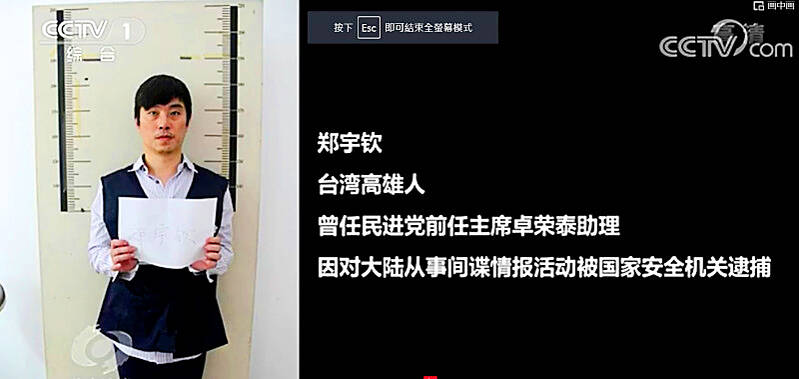
Former Czech Republic-based Taiwanese researcher Cheng Yu-chin (鄭宇欽) has been sentenced to seven years in prison on espionage-related charges, China’s Ministry of State Security announced yesterday. China said Cheng was a spy for Taiwan who “masqueraded as a professor” and that he was previously an assistant to former Cabinet secretary-general Cho Jung-tai (卓榮泰). President-elect William Lai (賴清德) on Wednesday last week announced Cho would be his premier when Lai is inaugurated next month. Today is China’s “National Security Education Day.” The Chinese ministry yesterday released a video online showing arrests over the past 10 years of people alleged to be
THE HAWAII FACTOR: While a 1965 opinion said an attack on Hawaii would not trigger Article 5, the text of the treaty suggests the state is covered, the report says NATO could be drawn into a conflict in the Taiwan Strait if Chinese forces attacked the US mainland or Hawaii, a NATO Defense College report published on Monday says. The report, written by James Lee, an assistant research fellow at Academia Sinica’s Institute of European and American Studies, states that under certain conditions a Taiwan contingency could trigger Article 5 of NATO, under which an attack against any member of the alliance is considered an attack against all members, necessitating a response. Article 6 of the North Atlantic Treaty specifies that an armed attack in the territory of any member in Europe,

LIKE FAMILY: People now treat dogs and cats as family members. They receive the same medical treatments and tests as humans do, a veterinary association official said The number of pet dogs and cats in Taiwan has officially outnumbered the number of human newborns last year, data from the Ministry of Agriculture’s pet registration information system showed. As of last year, Taiwan had 94,544 registered pet dogs and 137,652 pet cats, the data showed. By contrast, 135,571 babies were born last year. Demand for medical care for pet animals has also risen. As of Feb. 29, there were 5,773 veterinarians in Taiwan, 3,993 of whom were for pet animals, statistics from the Animal and Plant Health Inspection Agency showed. In 2022, the nation had 3,077 pediatricians. As of last

XINJIANG: Officials are conducting a report into amending an existing law or to enact a special law to prohibit goods using forced labor Taiwan is mulling an amendment prohibiting the importation of goods using forced labor, similar to the Uyghur Forced Labor Prevention Act (UFLPA) passed by the US Congress in 2021 that imposed limits on goods produced using forced labor in China’s Xinjiang region. A government official who wished to remain anonymous said yesterday that as the US customs law explicitly prohibits the importation of goods made using forced labor, in 2021 it passed the specialized UFLPA to limit the importation of cotton and other goods from China’s Xinjiang Uyghur region. Taiwan does not have the legal basis to prohibit the importation of goods


 RSS
RSS