


Half of the 150,000 foreign caregivers currently in Taiwan are underqualified, work excessive overtime hours and receive salaries and social benefits that are not commensurate with the work they do, according to a survey conducted by the International Action and Cooperation Team (iACT).
In view of the results of the survey, academics are now calling on the government to review the current system and reduce their workloads.
interviews
iACT interviewed a total of 481 Taiwanese and foreign caregivers working in five institutional settings -- large hospitals in southern, central and northern Taiwan and care centers and agencies cooperating with these hospitals.
A close comparison between foreign and local staff showed that the situation for foreign caregivers is worse than for Taiwanese, that depression is common and that the actual situation may be worse than previously thought.
Yang Chen-chang (楊振昌), the director of iACT and associate professor in the Department of Internal Medicine in Yang Ming University's Faculty of Medicine, said that almost 60 percent of all foreign caregivers work more than 12 hours per day, but that the same applies to less than 30 percent of local caregivers.
Foreign caregivers also had a heavier workload, although that was not reflected in their salaries and social benefits, he added.
Yang said that duties were all-inclusive and tiring and that it was more common for foreign caregivers to suffer from headaches, dizziness and irregular menstrual cycles.
hard to adapt
He said that it was often difficult for foreign caregivers to adapt to life in Taiwan due to language difficulties, lack of opportunities to participate in social activities, not being accepted by society at large and having different living habits, which made it difficult to make new friends.
Although in general they are younger than local caregivers -- their average age being 31 compared with an average of 47 for local caregivers -- and better educated, foreign caregivers still have a lower quality of life and suffer from more illnesses than local caregivers, he said.
Almost 60 percent of foreign caregivers had no previous experience of working as a caregiver and almost 50 percent have never received relevant training, figures much higher than for local caregivers, Yang added.
Yang called on agencies to work to guarantee the rights of foreign caregivers, adjust employment systems, require a minimum amount of training before hiring and to conduct annual physical examinations and psychological evaluations, with provisions for counseling if necessary.

A group of Taiwanese-American and Tibetan-American students at Harvard University on Saturday disrupted Chinese Ambassador to the US Xie Feng’s (謝鋒) speech at the school, accusing him of being responsible for numerous human rights violations. Four students — two Taiwanese Americans and two from Tibet — held up banners inside a conference hall where Xie was delivering a speech at the opening ceremony of the Harvard Kennedy School China Conference 2024. In a video clip provided by the Coalition of Students Resisting the CCP (Chinese Communist Party), Taiwanese-American Cosette Wu (吳亭樺) and Tibetan-American Tsering Yangchen are seen holding banners that together read:

UNAWARE: Many people sit for long hours every day and eat unhealthy foods, putting them at greater risk of developing one of the ‘three highs,’ an expert said More than 30 percent of adults aged 40 or older who underwent a government-funded health exam were unaware they had at least one of the “three highs” — high blood pressure, high blood lipids or high blood sugar, the Health Promotion Administration (HPA) said yesterday. Among adults aged 40 or older who said they did not have any of the “three highs” before taking the health exam, more than 30 percent were found to have at least one of them, Adult Preventive Health Examination Service data from 2022 showed. People with long-term medical conditions such as hypertension or diabetes usually do not
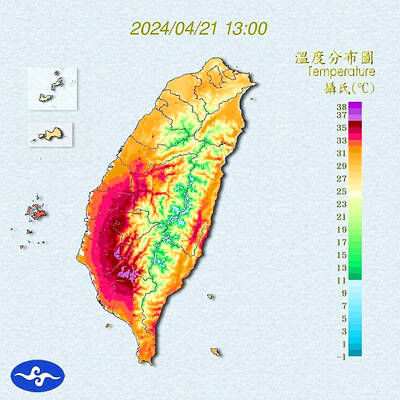
Heat advisories were in effect for nine administrative regions yesterday afternoon as warm southwesterly winds pushed temperatures above 38°C in parts of southern Taiwan, the Central Weather Administration (CWA) said. As of 3:30pm yesterday, Tainan’s Yujing District (玉井) had recorded the day’s highest temperature of 39.7°C, though the measurement will not be included in Taiwan’s official heat records since Yujing is an automatic rather than manually operated weather station, the CWA said. Highs recorded in other areas were 38.7°C in Kaohsiung’s Neimen District (內門), 38.2°C in Chiayi City and 38.1°C in Pingtung’s Sandimen Township (三地門), CWA data showed. The spell of scorching
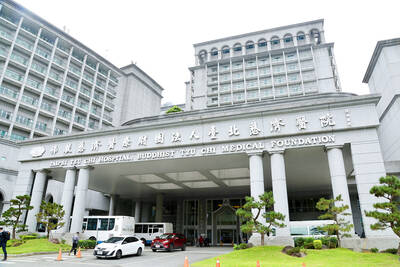
POLICE INVESTIGATING: A man said he quit his job as a nurse at Taipei Tzu Chi Hospital as he had been ‘disgusted’ by the behavior of his colleagues A man yesterday morning wrote online that he had witnessed nurses taking photographs and touching anesthetized patients inappropriately in Taipei Tzu Chi Hospital’s operating theaters. The man surnamed Huang (黃) wrote on the Professional Technology Temple bulletin board that during his six-month stint as a nurse at the hospital, he had seen nurses taking pictures of patients, including of their private parts, after they were anesthetized. Some nurses had also touched patients inappropriately and children were among those photographed, he said. Huang said this “disgusted” him “so much” that “he felt the need to reveal these unethical acts in the operating theater


 RSS
RSS