


The US think tank Atlantic Council of the United States (ACUS), in a 20-page report published on Thursday, claimed that major antagonisms within the Taiwan polity seem to rule out any internal long-term consensus on issues such as the "one China" principle, economic ties with China, or national defense strategy.
The report, entitled Taiwan in Search of a Strategic Consensus, goes on to say that this will result in a weakening of the Taiwanese economy, increased isolation internationally, and an erosion of their strategic status should Taiwan enter negotiations with China.
A high-ranking Chinese official involved in Taiwan affairs was quoted in the report, saying that Beijing had no intention to isolate the Democratic Progressive Party (DPP) government and was even prepared to enter into talks with them if they retain power in the 2008 presidential elections. The official said that Chinese President Hu Jintao (
Hu did, however, emphasize the importance of recognizing the so-called "1992 consensus."
The report said that it was difficult to assess just how serious Chinese leaders were about talks with the DPP, or how flexible they would be regarding the conditions laid down as prerequisites, as Beijing holds that it is yet to see any intention from President Chen Shui-bian (陳水扁) to hold talks based on the "spirit of 1992." And, says ACUS, the possibility of talks rests very much on political will, and not on words.
According to the report, Taiwan will face many difficult choices over the next year, and is not sufficiently prepared to address its future prosperity or military strategy -- the greatest impediment to these being the lack of internal political consensus, which will weaken Taiwan's overall strategic position. Even with a change of president come the 2008 presidential elections, it may still be very difficult to reach any internal consensus, the report said.
With increased globalization, a new strategic environment is emerging, and even though the US continues to support Taiwan's democracy, Taiwan's importance to US regional strategy may well decline in the future. A continued cross-strait stalemate is likely to lead to stability within an unstable situation, and any miscalculation on the part of either side could lead to confrontation between China and Taiwan, with military confrontation being impossible to rule out, it said.
The report also pointed out that the US remains opposed to any unilateral action resulting in a change in the status quo, and continues to encourage both sides to engage in dialogue. Despite differences regarding the Taiwan question, and economic and political issues between them, the US and China still have common interests, it said.
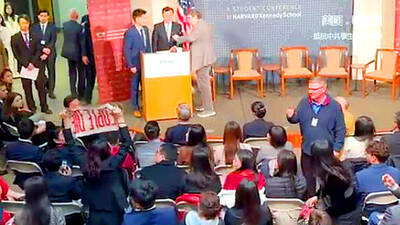
A group of Taiwanese-American and Tibetan-American students at Harvard University on Saturday disrupted Chinese Ambassador to the US Xie Feng’s (謝鋒) speech at the school, accusing him of being responsible for numerous human rights violations. Four students — two Taiwanese Americans and two from Tibet — held up banners inside a conference hall where Xie was delivering a speech at the opening ceremony of the Harvard Kennedy School China Conference 2024. In a video clip provided by the Coalition of Students Resisting the CCP (Chinese Communist Party), Taiwanese-American Cosette Wu (吳亭樺) and Tibetan-American Tsering Yangchen are seen holding banners that together read:

UNAWARE: Many people sit for long hours every day and eat unhealthy foods, putting them at greater risk of developing one of the ‘three highs,’ an expert said More than 30 percent of adults aged 40 or older who underwent a government-funded health exam were unaware they had at least one of the “three highs” — high blood pressure, high blood lipids or high blood sugar, the Health Promotion Administration (HPA) said yesterday. Among adults aged 40 or older who said they did not have any of the “three highs” before taking the health exam, more than 30 percent were found to have at least one of them, Adult Preventive Health Examination Service data from 2022 showed. People with long-term medical conditions such as hypertension or diabetes usually do not
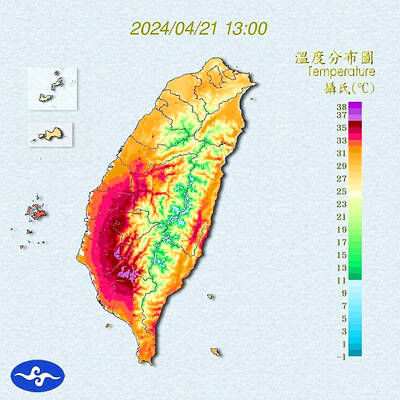
Heat advisories were in effect for nine administrative regions yesterday afternoon as warm southwesterly winds pushed temperatures above 38°C in parts of southern Taiwan, the Central Weather Administration (CWA) said. As of 3:30pm yesterday, Tainan’s Yujing District (玉井) had recorded the day’s highest temperature of 39.7°C, though the measurement will not be included in Taiwan’s official heat records since Yujing is an automatic rather than manually operated weather station, the CWA said. Highs recorded in other areas were 38.7°C in Kaohsiung’s Neimen District (內門), 38.2°C in Chiayi City and 38.1°C in Pingtung’s Sandimen Township (三地門), CWA data showed. The spell of scorching
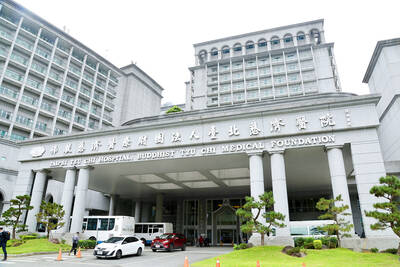
POLICE INVESTIGATING: A man said he quit his job as a nurse at Taipei Tzu Chi Hospital as he had been ‘disgusted’ by the behavior of his colleagues A man yesterday morning wrote online that he had witnessed nurses taking photographs and touching anesthetized patients inappropriately in Taipei Tzu Chi Hospital’s operating theaters. The man surnamed Huang (黃) wrote on the Professional Technology Temple bulletin board that during his six-month stint as a nurse at the hospital, he had seen nurses taking pictures of patients, including of their private parts, after they were anesthetized. Some nurses had also touched patients inappropriately and children were among those photographed, he said. Huang said this “disgusted” him “so much” that “he felt the need to reveal these unethical acts in the operating theater


 RSS
RSS