


While the US' shift of naval power to the Pacific seems to suggest Taiwan would be under increased protection, it is naive to think that Taiwan can rely on the US for its defense, security analysts said yesterday.
Liu Fu-kuo (劉復國), an associate research fellow at the Institute of International Relations of National Chengchi University, made the remarks while taking part in a seminar about the Pentagon's Quadrennial Defense Review (QDR) released early this month. The event was sponsored by a private think tank, the Foundation on International and Cross-Strait Studies.
The QDR categorized China as an "emerging power" along with Russia and India, but said that China is the mostly likely of the three "to compete militarily with the US," as well as the nation most likely to deploy military capabilities that could threaten "traditional US military advantages."

PHOTO: LO PEI-DER, TAIPEI TIMES
The report also stated that the US plans to make two significant adjustments to its naval forces. First, it will transfer 60 percent of its submarine fleet to the Pacific, and would annually add two offensive subs till 2012. Second, it will ensure that six out of its 11 aircraft carrier groups are always ready for combat in the Pacific.
Liu said Taiwan would surely be under better protection as the US gradually transfers military power to the Pacific, but Taiwanese would be naive to believe the country can rely on the US for Taiwan's defense, thinking that the country could "eat a free lunch" because of the shift in focus.
Instead, Liu added, even as Japan has enhanced its defense integration with the US in support of the US-Japan security alliance, Taiwan should boost its capabilities to a level which would allow the Taiwanese military to operate jointly with the US military.
"Taiwan's military should not be a burden to the US military in the future," Liu added.
Kenneth Wang (王高成), an associate professor and director of the Graduate Institute of International Affairs and Strategic Studies of Tamkang University, said the US shift of military power toward the Pacific was designed not only to prevent military adventurism from China, but also to maintain regional stability, including coping with the threat from North Korea and terrorists in the region.
"Although Taiwan would have better protection under the US' security policy announcement, the US will put more pressure on its allies and friendly nations, such as Taiwan, to boost their own defensive capabilities," Wang added.
However, Arthur Ding (
In terms of China, Ding said, the QDR stated that the US has noted that China has been attempting to develop high-tech weapons, with the aim of using asymmetrical warfare to deny the US the power to enter a military conflict in the region.
Such capabilities could be used to paralyze the US military's communication systems, but the QDR indicated the US has been preparing to counter China's efforts to block US intervention, allowing it to enter the region should deterrence fail.
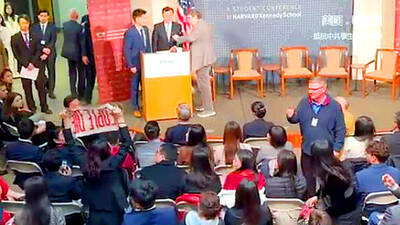
A group of Taiwanese-American and Tibetan-American students at Harvard University on Saturday disrupted Chinese Ambassador to the US Xie Feng’s (謝鋒) speech at the school, accusing him of being responsible for numerous human rights violations. Four students — two Taiwanese Americans and two from Tibet — held up banners inside a conference hall where Xie was delivering a speech at the opening ceremony of the Harvard Kennedy School China Conference 2024. In a video clip provided by the Coalition of Students Resisting the CCP (Chinese Communist Party), Taiwanese-American Cosette Wu (吳亭樺) and Tibetan-American Tsering Yangchen are seen holding banners that together read:

UNAWARE: Many people sit for long hours every day and eat unhealthy foods, putting them at greater risk of developing one of the ‘three highs,’ an expert said More than 30 percent of adults aged 40 or older who underwent a government-funded health exam were unaware they had at least one of the “three highs” — high blood pressure, high blood lipids or high blood sugar, the Health Promotion Administration (HPA) said yesterday. Among adults aged 40 or older who said they did not have any of the “three highs” before taking the health exam, more than 30 percent were found to have at least one of them, Adult Preventive Health Examination Service data from 2022 showed. People with long-term medical conditions such as hypertension or diabetes usually do not
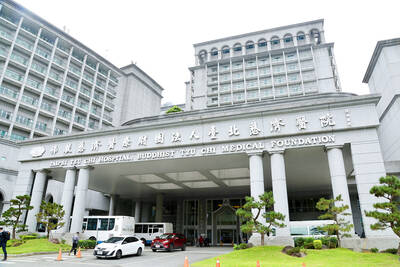
POLICE INVESTIGATING: A man said he quit his job as a nurse at Taipei Tzu Chi Hospital as he had been ‘disgusted’ by the behavior of his colleagues A man yesterday morning wrote online that he had witnessed nurses taking photographs and touching anesthetized patients inappropriately in Taipei Tzu Chi Hospital’s operating theaters. The man surnamed Huang (黃) wrote on the Professional Technology Temple bulletin board that during his six-month stint as a nurse at the hospital, he had seen nurses taking pictures of patients, including of their private parts, after they were anesthetized. Some nurses had also touched patients inappropriately and children were among those photographed, he said. Huang said this “disgusted” him “so much” that “he felt the need to reveal these unethical acts in the operating theater
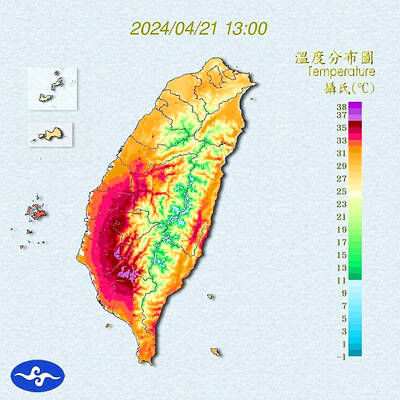
Heat advisories were in effect for nine administrative regions yesterday afternoon as warm southwesterly winds pushed temperatures above 38°C in parts of southern Taiwan, the Central Weather Administration (CWA) said. As of 3:30pm yesterday, Tainan’s Yujing District (玉井) had recorded the day’s highest temperature of 39.7°C, though the measurement will not be included in Taiwan’s official heat records since Yujing is an automatic rather than manually operated weather station, the CWA said. Highs recorded in other areas were 38.7°C in Kaohsiung’s Neimen District (內門), 38.2°C in Chiayi City and 38.1°C in Pingtung’s Sandimen Township (三地門), CWA data showed. The spell of scorching


 RSS
RSS