


Chinese Nationalist Party (KMT) headquarters in Taipei has long faced the Presidential Office down Ketagelan Boulevard, as the party's spiritual fort.
But after more than five decades at its present site, the party is due to sell its ostentatious 12-story headquarters, valued at about NT$2 billion (US$62.4 million). In April, whether that building is sold or not, the party will move to a smaller headquarters on Bade Road. The downsizing comes as part of KMT Chairman Ma Ying-jeou's (
The current site, located in Taipei at the intersection of the Zhongshan S Road and Renai Road, belonged to a Japanese organization during Japan's 50-year colonization of Taiwan. In 1949, after Japan had ceded Taiwan at the end of World War II and the KMT government had arrived to take its place, the site became the party's headquarters. The KMT hasn't moved since.
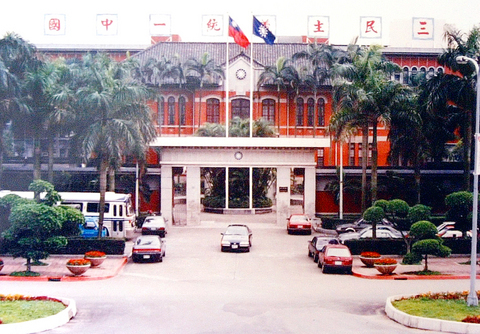
TAIPEI TIMES FILE PHOTO
"The KMT bought the land from the National Property Bureau of the Finance Ministry with more than NT$300 million, and the first KMT central standing committee was held there in 1950," said the KMT's Organization and Development Committee head Liao Feng-teh (
The current 12-story building was built in 1995 with an exhibition room on the first floor, offices on the second to tenth floors, the chairman and vice chairmen's office on the 11th floor, and meeting and banquet rooms on the 12th floor.
The design of the building, Liao told the Taipei Times, was based on the concept of "democracy," incorporating modernity and a down-to-earth and expansive style.
Built with granite and shielded by a four-story tall arc wall, the headquarters look from above like the Chinese character da "
Rumor has it that the arc wall was designed in accordance with feng shui principles, but Lee denied that.
"We did discuss the use of feng shui in the design, but at the end feng shui did not determine the look of the building," he said.
The KMT finished the construction of the current headquarters under former president Lee Teng-hui (李登輝), who then also served as the party chairman.
During the 51 years when the party governed Taiwan, the headquarters once housed as many as 600 full-time party workers. After the KMT lost power to the Democratic Progressive Party (DPP) in 2000, the party began to downsize. There will only be 120 party workers left when the KMT moves to its new building on Bade Road.
In the 2004 presidential election, when former KMT chairman Lien Chan (連戰) and the People First Party Chairman James Soong (宋楚瑜) lost again to the DPP, pan-blue supporters held a protest along Ketagelan Boulevard, and the KMT headquarters turned into a place for protesters' to take shelter to sleep or bathe.
After Lien visited China last April, the KMT headquarters became a new attraction for Chinese tourists. According to the party, the exhibition room on the first floor and the party history room on the seventh floor are the two most visited spots in the building.
A NT$40 million maintenance fee per year for the headquarters, however, has become a heavy burden for the cash-strapped KMT. Furthermore, the luxurious building is not consistent with the clean, modest image that Ma is trying to create for the party.
Given those financial and symbolic concerns, the KMT decided to sell the building and move to a new location, despite opposition from many older party officials.
KMT Deputy Secretary-General Chang Che-chen (張哲琛) said that the new headquarters on Bade Road, whose maintenance fees are NT$8 million per year -- a fifth of the cost of the current site -- will ease the party's financial burdens. The party will use only the basement, first floor and third floor of the building.
"[The move] is our declaration to continue our reform efforts and fight against corruption," Chang said.
The KMT plans to sell its current headquarters to financial institutions, but it has also considered giving the building to a civic group. Whatever the building's fate, the KMT, yearning for a rebirth under Ma's leadership, is determined to leave the symbol of its corrupt past behind and "take the spirit with the KMT wherever the party moves," the chairman said.
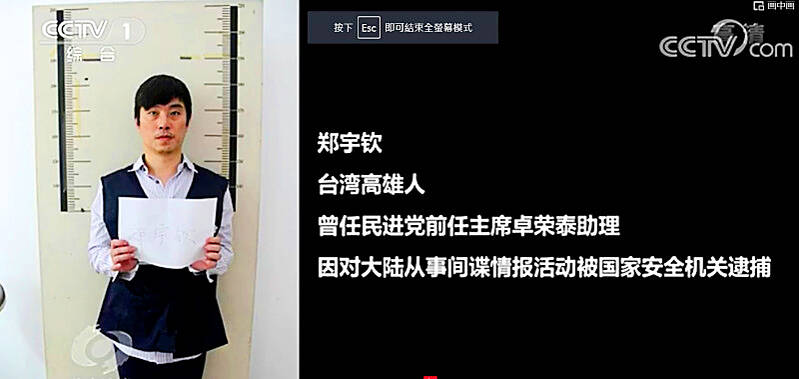
Former Czech Republic-based Taiwanese researcher Cheng Yu-chin (鄭宇欽) has been sentenced to seven years in prison on espionage-related charges, China’s Ministry of State Security announced yesterday. China said Cheng was a spy for Taiwan who “masqueraded as a professor” and that he was previously an assistant to former Cabinet secretary-general Cho Jung-tai (卓榮泰). President-elect William Lai (賴清德) on Wednesday last week announced Cho would be his premier when Lai is inaugurated next month. Today is China’s “National Security Education Day.” The Chinese ministry yesterday released a video online showing arrests over the past 10 years of people alleged to be
THE HAWAII FACTOR: While a 1965 opinion said an attack on Hawaii would not trigger Article 5, the text of the treaty suggests the state is covered, the report says NATO could be drawn into a conflict in the Taiwan Strait if Chinese forces attacked the US mainland or Hawaii, a NATO Defense College report published on Monday says. The report, written by James Lee, an assistant research fellow at Academia Sinica’s Institute of European and American Studies, states that under certain conditions a Taiwan contingency could trigger Article 5 of NATO, under which an attack against any member of the alliance is considered an attack against all members, necessitating a response. Article 6 of the North Atlantic Treaty specifies that an armed attack in the territory of any member in Europe,
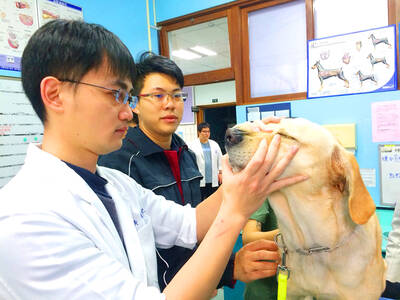
LIKE FAMILY: People now treat dogs and cats as family members. They receive the same medical treatments and tests as humans do, a veterinary association official said The number of pet dogs and cats in Taiwan has officially outnumbered the number of human newborns last year, data from the Ministry of Agriculture’s pet registration information system showed. As of last year, Taiwan had 94,544 registered pet dogs and 137,652 pet cats, the data showed. By contrast, 135,571 babies were born last year. Demand for medical care for pet animals has also risen. As of Feb. 29, there were 5,773 veterinarians in Taiwan, 3,993 of whom were for pet animals, statistics from the Animal and Plant Health Inspection Agency showed. In 2022, the nation had 3,077 pediatricians. As of last
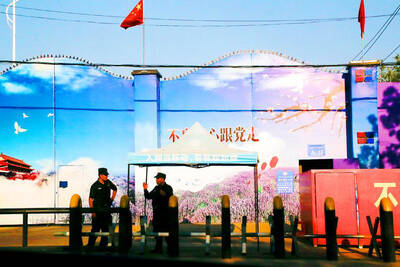
XINJIANG: Officials are conducting a report into amending an existing law or to enact a special law to prohibit goods using forced labor Taiwan is mulling an amendment prohibiting the importation of goods using forced labor, similar to the Uyghur Forced Labor Prevention Act (UFLPA) passed by the US Congress in 2021 that imposed limits on goods produced using forced labor in China’s Xinjiang region. A government official who wished to remain anonymous said yesterday that as the US customs law explicitly prohibits the importation of goods made using forced labor, in 2021 it passed the specialized UFLPA to limit the importation of cotton and other goods from China’s Xinjiang Uyghur region. Taiwan does not have the legal basis to prohibit the importation of goods


 RSS
RSS