


The 33-year-old teacher beat the student 10 times on the hand with a long, heavy stick and then, after catching her breath, whacked the teen's bottom in front of his classmates in a high school in Taichung.
The boy's offense? Failing to pass in his homework in on time.
The National Alliance of Parents Association and the Humanistic Education Foundation (HEF), the nation's unofficial education watchdog, has long sought to ban corporal punishment in schools to protect students from what they describe as physical and mental torture.
Video footage of the beating described above, caught on a mobile phone camera by a fellow student and aired on television last month, has helped galvanize politicians into introducing legislation that would create an outright ban.
Kuan Pi-ling (
"The law has a fundamental function which declares the value that children and students have equal human rights as adults," she said.
"Of course, more should be done to make lasting changes in people's attitudes and behavior, and this comes back to why legislation is extremely important -- it gets more things done," she added.
The campaign, spearheaded by the HEF in Taipei, has also been given a boost with the high-profile backing of President Chen Shui-bian (
It comes at a time when incidents of physical and mental abuse are rife.
A poll of 3,000 junior and primary school children revealed that 65 percent admitted to receiving some form of physical punishment during school in the last year.
The results, though, did show a slight drop in reported cases compared with the year before, when more than 72 percent of students said they had experienced some form of corporal punishment.
Despite the fall, the abuse continues in many schools.
Students suffered beatings with sticks, bamboo canes and even whips, while others suffered mental torment, such as standing in front of the class for long periods and having to perform push-ups in front of classmates.
Groups that support the ban want to follow in the footsteps of other countries -- such as Germany and Sweden -- by outlawing corporal punishment in schools and finding alternative methods of disciplining children.
But the decades-old practice has been used throughout the nation as a means of forcing students to be obedient, with many schools operating like personal fiefdoms using fear and manipulation to force students to perform well in exams, to ensure the school maintains a high grade average.
"Outstanding academic performance is highly regarded. Therefore, many students are recipients of corporal punishment when their scores fail to meet teachers' standards," said HEF's Kim Wang. "But students are often forced to do strenuous exercise as punishment just because they forgot to bring scissors to school."
In fact, the foundation says the majority of schools widely flout government guidelines that request schools to stop using physical punishment.
Some schools even force children to sign agreements that give teachers permission to use corporal punishment, but parents fail to speak out.
"The problem is that parents are too scared to complain because they are concerned that teachers will simply neglect their children's educational needs," said Tiffany Wang, the mother of 16-year-old Taipei student.
The campaign will continue to face resistance from teachers who say that it requires a wholesale cultural change over a long period of time.
"Corporate punishment is not a moral issue, it is a cultural one," said Chang Hui-shan, principal of Dongguan Elementary School in Kaohsiung. "Teachers in Taiwan are not ready for such a change yet."
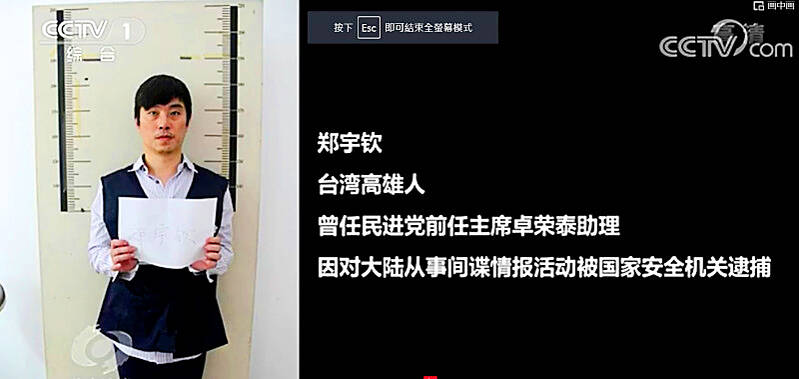
Former Czech Republic-based Taiwanese researcher Cheng Yu-chin (鄭宇欽) has been sentenced to seven years in prison on espionage-related charges, China’s Ministry of State Security announced yesterday. China said Cheng was a spy for Taiwan who “masqueraded as a professor” and that he was previously an assistant to former Cabinet secretary-general Cho Jung-tai (卓榮泰). President-elect William Lai (賴清德) on Wednesday last week announced Cho would be his premier when Lai is inaugurated next month. Today is China’s “National Security Education Day.” The Chinese ministry yesterday released a video online showing arrests over the past 10 years of people alleged to be

THE HAWAII FACTOR: While a 1965 opinion said an attack on Hawaii would not trigger Article 5, the text of the treaty suggests the state is covered, the report says NATO could be drawn into a conflict in the Taiwan Strait if Chinese forces attacked the US mainland or Hawaii, a NATO Defense College report published on Monday says. The report, written by James Lee, an assistant research fellow at Academia Sinica’s Institute of European and American Studies, states that under certain conditions a Taiwan contingency could trigger Article 5 of NATO, under which an attack against any member of the alliance is considered an attack against all members, necessitating a response. Article 6 of the North Atlantic Treaty specifies that an armed attack in the territory of any member in Europe,

LIKE FAMILY: People now treat dogs and cats as family members. They receive the same medical treatments and tests as humans do, a veterinary association official said The number of pet dogs and cats in Taiwan has officially outnumbered the number of human newborns last year, data from the Ministry of Agriculture’s pet registration information system showed. As of last year, Taiwan had 94,544 registered pet dogs and 137,652 pet cats, the data showed. By contrast, 135,571 babies were born last year. Demand for medical care for pet animals has also risen. As of Feb. 29, there were 5,773 veterinarians in Taiwan, 3,993 of whom were for pet animals, statistics from the Animal and Plant Health Inspection Agency showed. In 2022, the nation had 3,077 pediatricians. As of last
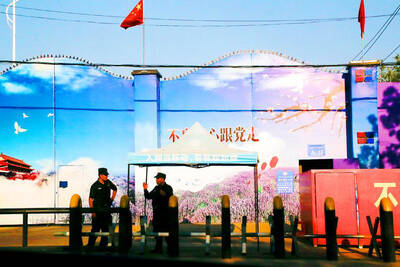
XINJIANG: Officials are conducting a report into amending an existing law or to enact a special law to prohibit goods using forced labor Taiwan is mulling an amendment prohibiting the importation of goods using forced labor, similar to the Uyghur Forced Labor Prevention Act (UFLPA) passed by the US Congress in 2021 that imposed limits on goods produced using forced labor in China’s Xinjiang region. A government official who wished to remain anonymous said yesterday that as the US customs law explicitly prohibits the importation of goods made using forced labor, in 2021 it passed the specialized UFLPA to limit the importation of cotton and other goods from China’s Xinjiang Uyghur region. Taiwan does not have the legal basis to prohibit the importation of goods


 RSS
RSS