


Taiwan should play a more proactive role in the US-Japan security arrangements in the Asia-Pacific region, a researcher with the private policy research institute Taiwan Thinktank said yesterday.
Lai I-chung (賴怡忠), director of Taiwan Thinktank's internat-ional affairs department, said that Taiwan should not simply envisage that a US-Japan-Taiwan triangular structure can form a security bloc against China.
Instead, he said, Taiwan should actively help implement the US-Japan security arrangements so that an Asia-Pacific strategic order conducive to the development of maritime democracies can be built in all of the region.
Once a new Asia-Pacific strategic order is built, Taiwan can engage in exchanges with other countries in the region more freely, which will in turn help deepen Taiwan's democratization and accelerate economic and social reforms at the same time, Lai said.
According to Lai, Taiwan Thinktank, which is tailored after the US' Rand Corp, has successfully integrated opinions in Taiwan and initiated the common focus on a "US-China-Taiwan" triangular relations framework in the past to a new "US-Japan-Taiwan" strategic vision.
Taiwan Thinktank is working on a two-year program aimed at working out a three-side cooperation agenda among Taiwan, Japan and the US after the establishment of the US-Japan Security Consultative Committee late last year, Lai said.
The program is aimed at establishing areas for cooperation among the three potential strategic partners; finding out ways to build a composite security consultative mechanism; and tapping the possibility of such cooperation, Lai said.
He said that Taiwan Thinktank is scheduled to sponsor a sym-posium, entitled "US-Japan-Taiwan Strategic Dialogue," to be held at the Westin Taipei today and tomorrow, to allow strategists from the three countries to exchange views on US-Japan-Taiwan alliance relations in the wake of the establishment of the US-Japan Security Consultative Committee, particularly on issues pertaining to security, economic and political integration.
Well-known personalities expected to attend the symposium include Randall Schriver, formerly a US deputy assistant secretary of state for East Asian affairs; Robin Sakoda, a top aide to former US deputy secretary of state Richard Armitage; and Rupert Hammond-Chambers, president of the US-Taiwan Business Council.
Speaking about regional politics, he said that in the face of Taiwan's constitutional re-engineering and Japan's new constitutional agenda, as well as probable leadership changes in Taiwan and the US in 2008, the US, Japan and Taiwan need to build mutual trust via institutional systems and the sooner this happens, the better.
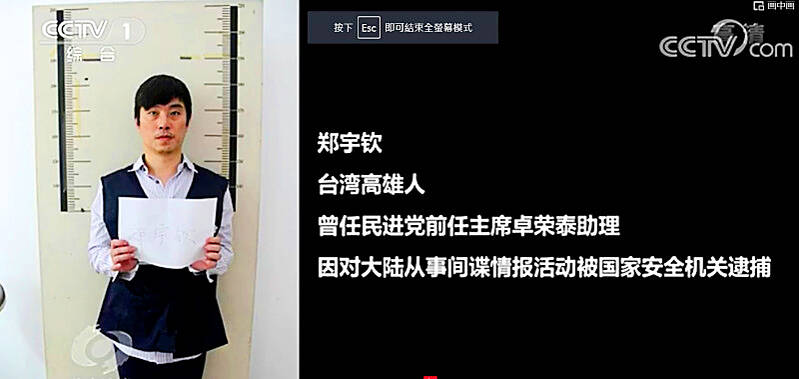
Former Czech Republic-based Taiwanese researcher Cheng Yu-chin (鄭宇欽) has been sentenced to seven years in prison on espionage-related charges, China’s Ministry of State Security announced yesterday. China said Cheng was a spy for Taiwan who “masqueraded as a professor” and that he was previously an assistant to former Cabinet secretary-general Cho Jung-tai (卓榮泰). President-elect William Lai (賴清德) on Wednesday last week announced Cho would be his premier when Lai is inaugurated next month. Today is China’s “National Security Education Day.” The Chinese ministry yesterday released a video online showing arrests over the past 10 years of people alleged to be
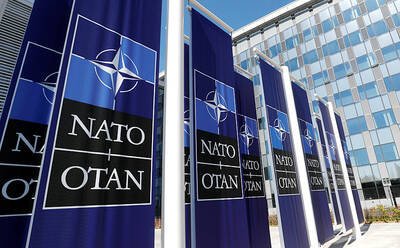
THE HAWAII FACTOR: While a 1965 opinion said an attack on Hawaii would not trigger Article 5, the text of the treaty suggests the state is covered, the report says NATO could be drawn into a conflict in the Taiwan Strait if Chinese forces attacked the US mainland or Hawaii, a NATO Defense College report published on Monday says. The report, written by James Lee, an assistant research fellow at Academia Sinica’s Institute of European and American Studies, states that under certain conditions a Taiwan contingency could trigger Article 5 of NATO, under which an attack against any member of the alliance is considered an attack against all members, necessitating a response. Article 6 of the North Atlantic Treaty specifies that an armed attack in the territory of any member in Europe,
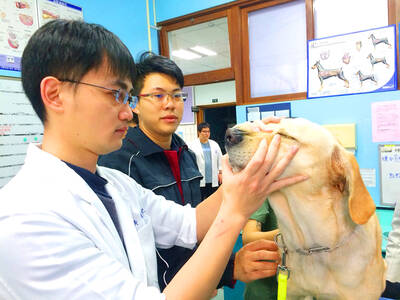
LIKE FAMILY: People now treat dogs and cats as family members. They receive the same medical treatments and tests as humans do, a veterinary association official said The number of pet dogs and cats in Taiwan has officially outnumbered the number of human newborns last year, data from the Ministry of Agriculture’s pet registration information system showed. As of last year, Taiwan had 94,544 registered pet dogs and 137,652 pet cats, the data showed. By contrast, 135,571 babies were born last year. Demand for medical care for pet animals has also risen. As of Feb. 29, there were 5,773 veterinarians in Taiwan, 3,993 of whom were for pet animals, statistics from the Animal and Plant Health Inspection Agency showed. In 2022, the nation had 3,077 pediatricians. As of last
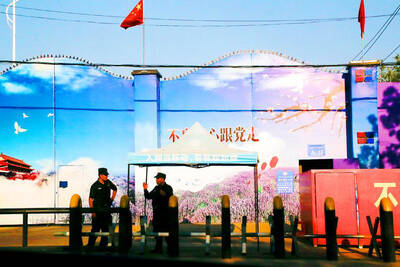
XINJIANG: Officials are conducting a report into amending an existing law or to enact a special law to prohibit goods using forced labor Taiwan is mulling an amendment prohibiting the importation of goods using forced labor, similar to the Uyghur Forced Labor Prevention Act (UFLPA) passed by the US Congress in 2021 that imposed limits on goods produced using forced labor in China’s Xinjiang region. A government official who wished to remain anonymous said yesterday that as the US customs law explicitly prohibits the importation of goods made using forced labor, in 2021 it passed the specialized UFLPA to limit the importation of cotton and other goods from China’s Xinjiang Uyghur region. Taiwan does not have the legal basis to prohibit the importation of goods


 RSS
RSS