


A 47-year-old woman surnamed Yeh (葉) who followed provided health advice that cervical cancer could be detected in its early stages by having a regular pap smear test, and had had two screenings with normal results was diagnosed with advanced cervical cancer just two months later.
Sitting in a wheelchair and wearing a mask, Yeh, who has just finished a chemotherapy course after being diagnosed with cervical cancer in July, questioned the professionalism and effectiveness of the free pap-smear screenings the government provides.
"I was relieved after the results of the screenings came back negative. I just don't understand how I could have had advanced cervical cancer when the screenings showed that there was nothing wrong ... How can I trust the government again?" she said.

PHOTO: SEAN CHAO, TAIPEI TIMES
During a press conference held to tell Yeh's story, Taipei City Councilwoman Lin Yi-hua (林奕華) said that while both the central government and the city government provided free pap-smear services at all hospitals, clinics and mobile medical centers, this incident raised the question whether the quality of the health screening is good enough.
"We want to know how she could develop cancer in such a short time? Were there mistakes during the sampling process? Or was a wrong diagnosis made by the doctor?" she said.
Yeh completed a pap smear test at Da-an (大安) District Hospital last year, and did another at a mobile testing center provided by the Taipei Women and Children's Hospital this May. Both results showed no sign of cervical cancer.
According to the test in May, the result was "normal," although it noted there was "too much blood," and "another pap-smear in three months is recommended."
The hospital, however, only sent a card to inform her of the "normal" result, and it did not include the notes until Yeh's family asked the hospital to provide them after she found out she had cancer.
Taipei Municipal Hospital's obstetrics and gynecology doctor, Yu Jian-ren (余堅忍), said that because Yeh had previously had a Cesarean Section, it may have caused the contraction of her cervix and therefore the test sample would contain more necrosis cells, which would make it much harder to detect pathological changes. On the other hand, if the diagnosis noted that there was "too much blood" in the result -- a warning sign of cervical problems -- the doctor or the hospital should have informed the person about the potential danger.
"But pap-smear screening only has a sensitivity rate of about 87 percent, so there is always a possibility that the test failed to detect the cancer," he added.
The Taipei City Department of Health acknowledged that the medical institutions which provide the smears could provide a more detailed report, instead of a simple card. Whether the hospital or the doctor should be punished over the incident depends on further investigation, they said.
Lin suggested that the government should inform people about the margin of error for pap smears. To raise the effectiveness of cervical cancer screening, it would be much more effective to do a HPV test along with each pap smear, she said.
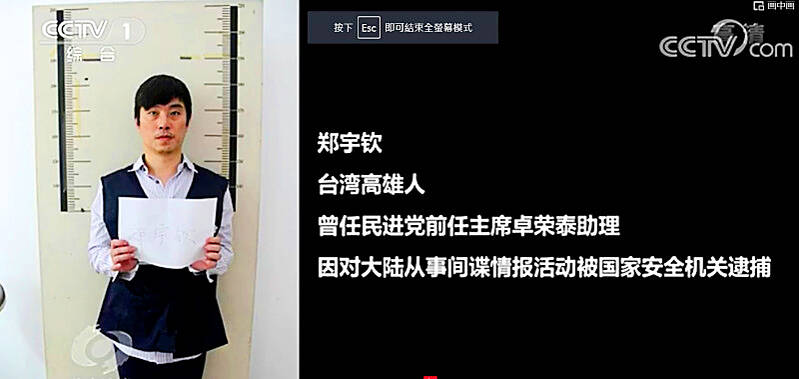
Former Czech Republic-based Taiwanese researcher Cheng Yu-chin (鄭宇欽) has been sentenced to seven years in prison on espionage-related charges, China’s Ministry of State Security announced yesterday. China said Cheng was a spy for Taiwan who “masqueraded as a professor” and that he was previously an assistant to former Cabinet secretary-general Cho Jung-tai (卓榮泰). President-elect William Lai (賴清德) on Wednesday last week announced Cho would be his premier when Lai is inaugurated next month. Today is China’s “National Security Education Day.” The Chinese ministry yesterday released a video online showing arrests over the past 10 years of people alleged to be

THE HAWAII FACTOR: While a 1965 opinion said an attack on Hawaii would not trigger Article 5, the text of the treaty suggests the state is covered, the report says NATO could be drawn into a conflict in the Taiwan Strait if Chinese forces attacked the US mainland or Hawaii, a NATO Defense College report published on Monday says. The report, written by James Lee, an assistant research fellow at Academia Sinica’s Institute of European and American Studies, states that under certain conditions a Taiwan contingency could trigger Article 5 of NATO, under which an attack against any member of the alliance is considered an attack against all members, necessitating a response. Article 6 of the North Atlantic Treaty specifies that an armed attack in the territory of any member in Europe,
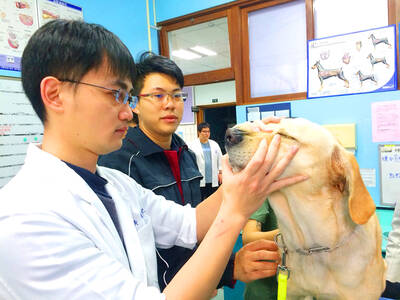
LIKE FAMILY: People now treat dogs and cats as family members. They receive the same medical treatments and tests as humans do, a veterinary association official said The number of pet dogs and cats in Taiwan has officially outnumbered the number of human newborns last year, data from the Ministry of Agriculture’s pet registration information system showed. As of last year, Taiwan had 94,544 registered pet dogs and 137,652 pet cats, the data showed. By contrast, 135,571 babies were born last year. Demand for medical care for pet animals has also risen. As of Feb. 29, there were 5,773 veterinarians in Taiwan, 3,993 of whom were for pet animals, statistics from the Animal and Plant Health Inspection Agency showed. In 2022, the nation had 3,077 pediatricians. As of last

XINJIANG: Officials are conducting a report into amending an existing law or to enact a special law to prohibit goods using forced labor Taiwan is mulling an amendment prohibiting the importation of goods using forced labor, similar to the Uyghur Forced Labor Prevention Act (UFLPA) passed by the US Congress in 2021 that imposed limits on goods produced using forced labor in China’s Xinjiang region. A government official who wished to remain anonymous said yesterday that as the US customs law explicitly prohibits the importation of goods made using forced labor, in 2021 it passed the specialized UFLPA to limit the importation of cotton and other goods from China’s Xinjiang Uyghur region. Taiwan does not have the legal basis to prohibit the importation of goods


 RSS
RSS