


China's economic growth faces several risks, the key ones being with regard to investment, with cross-strait experts suggesting that Taiwanese investors should collect as much information as possible about the investment risks before heading to China.
With the rapid transformation from the traditional to the modern in Chinese society, its risk index has tended to rise in recent years, said Tung Li-wen (
"The risk index is determined mainly by four factors -- the personal safety level of Taiwanese businesspeople, the level of tax auditing, the ability to solve commercial disputes, and whether there is a shortage of water and electricity," Tung said.
Regarding the safety issue, surveys conducted by the Straits Exchange Foundation (SEF) showed that the total number of cases was 807 as of last month, a sharp increase compared to the 406 cases in 2002.
For the past 15 years, since Taiwanese businesspeople began to invest money in China in 1991, there have been 77 people killed, 84 people blackmailed, 60 people kidnapped, 186 people who have disappeared, and 244 people put in prison up until last month, the research indicated.
However, William Kao (高為邦), president of the Victims of Investment in China Association, a self-help organization made up of Taiwanese businesspeople who say they have been victimized, said that these tallies are not a true reflection.
"As far as I know, there were at least 300 Taiwanese businesspeople sent to prison in just one city, Guangzhou, not to mention the victims in other places," Kao said, noting that most Taiwanese businesspeople were jailed on the charge of tax evasion.
On condition of anonymity, a Taiwanese businessman with an investment in Zhangzhou said that tax audition is "the main trick" Chinese authorities use to regulate Taiwanese businesspeople.
"The Chinese authority has set up special tax auditing telephone lines at its tax administration and police administration in each province," he said.
"It also provides a lot of bonuses for informants, most of whom are laborers working in Taiwanese-funded firms," he said.
The businessman, an owner of a bike factory, said that the factory's operation would be forced to stop for several days at a time when tax inspectors appeared at his factory.
Regarding business disputes, Keng Shu (耿曙), an associate professor of East Asia studies at National Chengchi University, drew on a report by the Taiwan Electrical and Electronic Manufacturers' Association that suggested about 26 percent of all Taiwanese businesspeople based in China have reported having negative experiences there.
China is not a country governed by the rule of law, but by the will of the powerful, Keng said.
"Even though Taiwanese businesspeople know all the Chinese statutes very well and hire competent lawyers, it is the relationship with the Chinese officials that matters -- not its statutes -- when it comes to dealing with commercial disputes," he said.
Taiwanese businessman Sun Li-chung's (
According to the foundation, Sun, who had a rice-dumpling business in Shanghai for eight years, was suddenly told in 2001 that the land for which he had a legal lease for 50 years had been "expropriated," to be sold to someone else, and so his factory was dismantled.
In addition, the availability of electric power is a serious problem in China. Keng said that reports last summer estimated an electric shortage of 30 million kilowatts, affecting about three-fourths of the provinces.
"In the industrial zone mainly occupied by Taiwanese investment firms such as Suzhou, Kunshan, Hangzhou, Shanghai, Dongguan and Shenzhen, the policy of conserving electricity in the summer is exercised every week for a day or two," he said.
As for the question of water resources, Keng said that some cities such as Beijing have announced new regulations on 18 kinds of high water-consuming industries, including textiles, paper, pharmaceuticals, leather products and so on, in the city due to the shortage of water.
This indicates the shortage is not a problem that will be easily solved, or in a short time, he said.
Since electricity and water supplies are the most important factors in production, Keng suggested that Taiwanese investors take special note of this.
The government has set up ways to help investors to understand the investment climate in China, with a Taiwanese business service center under the foundation, and a consultancy under the Mainland Affairs Council.
The experts, however, said that the government should provide information that can reflect the real business environment in China, and not just explanations of Chinese statutes, which are far from the reality.
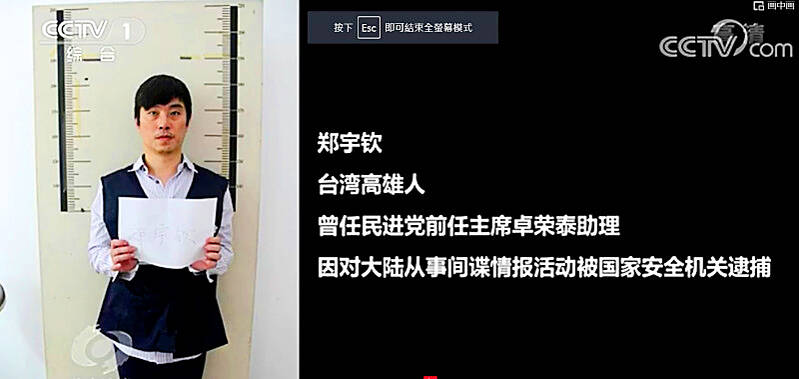
Former Czech Republic-based Taiwanese researcher Cheng Yu-chin (鄭宇欽) has been sentenced to seven years in prison on espionage-related charges, China’s Ministry of State Security announced yesterday. China said Cheng was a spy for Taiwan who “masqueraded as a professor” and that he was previously an assistant to former Cabinet secretary-general Cho Jung-tai (卓榮泰). President-elect William Lai (賴清德) on Wednesday last week announced Cho would be his premier when Lai is inaugurated next month. Today is China’s “National Security Education Day.” The Chinese ministry yesterday released a video online showing arrests over the past 10 years of people alleged to be
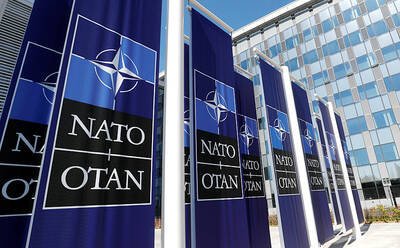
THE HAWAII FACTOR: While a 1965 opinion said an attack on Hawaii would not trigger Article 5, the text of the treaty suggests the state is covered, the report says NATO could be drawn into a conflict in the Taiwan Strait if Chinese forces attacked the US mainland or Hawaii, a NATO Defense College report published on Monday says. The report, written by James Lee, an assistant research fellow at Academia Sinica’s Institute of European and American Studies, states that under certain conditions a Taiwan contingency could trigger Article 5 of NATO, under which an attack against any member of the alliance is considered an attack against all members, necessitating a response. Article 6 of the North Atlantic Treaty specifies that an armed attack in the territory of any member in Europe,
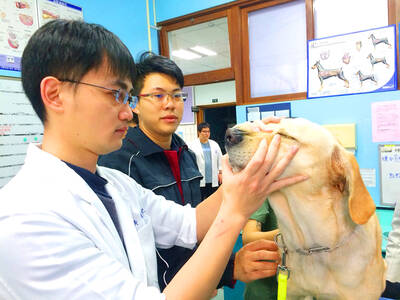
LIKE FAMILY: People now treat dogs and cats as family members. They receive the same medical treatments and tests as humans do, a veterinary association official said The number of pet dogs and cats in Taiwan has officially outnumbered the number of human newborns last year, data from the Ministry of Agriculture’s pet registration information system showed. As of last year, Taiwan had 94,544 registered pet dogs and 137,652 pet cats, the data showed. By contrast, 135,571 babies were born last year. Demand for medical care for pet animals has also risen. As of Feb. 29, there were 5,773 veterinarians in Taiwan, 3,993 of whom were for pet animals, statistics from the Animal and Plant Health Inspection Agency showed. In 2022, the nation had 3,077 pediatricians. As of last
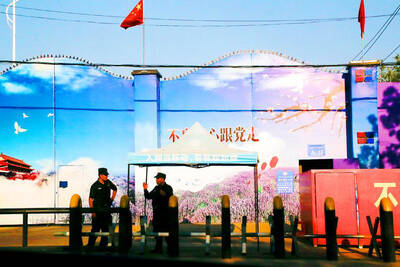
XINJIANG: Officials are conducting a report into amending an existing law or to enact a special law to prohibit goods using forced labor Taiwan is mulling an amendment prohibiting the importation of goods using forced labor, similar to the Uyghur Forced Labor Prevention Act (UFLPA) passed by the US Congress in 2021 that imposed limits on goods produced using forced labor in China’s Xinjiang region. A government official who wished to remain anonymous said yesterday that as the US customs law explicitly prohibits the importation of goods made using forced labor, in 2021 it passed the specialized UFLPA to limit the importation of cotton and other goods from China’s Xinjiang Uyghur region. Taiwan does not have the legal basis to prohibit the importation of goods


 RSS
RSS