


Consumer advocates yesterday called on the government to immediately ban imports of US beef after an older animal on a US ranch was suspected of having the lethal mad cow disease.
The advocates argued that since the case was discovered at the end of last year, the government's decision in mid-April to lift a 16-month-old ban on US beef was even more questionable.
"When the government decided to open the doors to US beef imports in April, it said the risk was very low -- even though the US is still identified as an area where bovine spongiform encephalopathy [BSE, or mad-cow disease] remains a threat," Terry Huang (
The foundation criticized the government for adopting contradictory positions in upholding food safety.
The government adopted a tough stance and ordered product recalls when dealing with food scares involving baby milk powder, the poisoning of energy drinks and the illegal sale of meat from sick and dead pigs, the foundation said.
"However, over the past month, Taiwanese consumers continued eating US beef. The government is taking a huge gamble with people's lives," said the foundation's chairman, Jason Lee (李鳳翱).
According to Article 10 and Article 36 of the Consumer Protection Law (
Hsiao Tung-ming (
But for now, he said, there was no reason to believe the beef on the market was dangerous.
"All the US beef products here are safe, and therefore there is no need to demand recalls and destruction," Hsiao said.
Currently, only boneless meat from cattle younger than 30 months can enter Taiwan's market. Cattle parts such as intestines and tonsils, which have a higher risk of being contaminated, are still prohibited.
Despite the alarming news of a second suspected case, major retailers said their US beef sales had not suffered.
"US beef has its own loyal customers. Those who dare not eat it will still stay away from it anyway. We haven't seen a marked difference in the sales," said Ahmen Lee (李伯孟), regional marketing manager at the members-only Costco Taiwan.
Costco has sold an average of 22.5 tonnes of US beef, or NT$10 million (US$320,000), per week since imports were conditionally resumed on April 16.
Taiwan purchased US$325 million of US beef and beef products in 2003 and was the sixth-largest importer of US beef before it imposed the ban in December 2003.
Lobo Lee (李森斌), general manager of the Wang Group, said that a possible ban on US beef would have little impact on their business, since consumers care the most about their beef's taste and quality, rather than its origin.
Wang Group, which runs nearly 40 steakhouses nationwide under the high-priced Wang Steaks, and middle-priced Tasty and Tao Ban House outlets, now sees US beef account for 60 percent of its stock, with the rest imported from Australia and New Zealand.
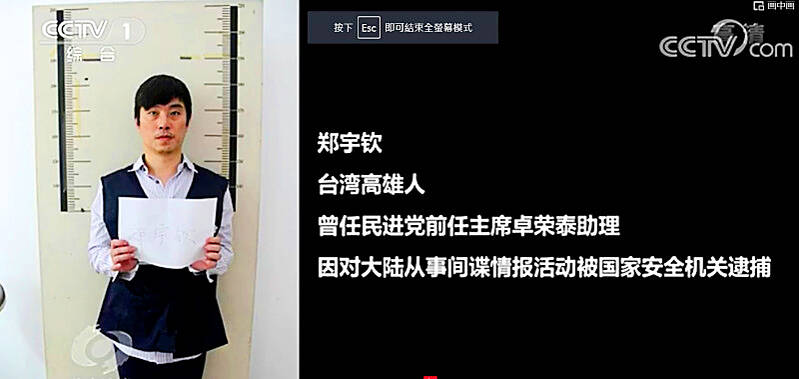
Former Czech Republic-based Taiwanese researcher Cheng Yu-chin (鄭宇欽) has been sentenced to seven years in prison on espionage-related charges, China’s Ministry of State Security announced yesterday. China said Cheng was a spy for Taiwan who “masqueraded as a professor” and that he was previously an assistant to former Cabinet secretary-general Cho Jung-tai (卓榮泰). President-elect William Lai (賴清德) on Wednesday last week announced Cho would be his premier when Lai is inaugurated next month. Today is China’s “National Security Education Day.” The Chinese ministry yesterday released a video online showing arrests over the past 10 years of people alleged to be
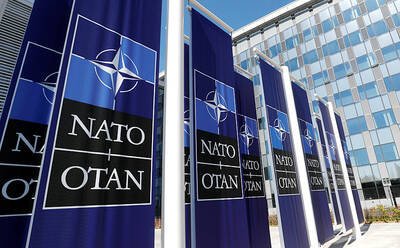
THE HAWAII FACTOR: While a 1965 opinion said an attack on Hawaii would not trigger Article 5, the text of the treaty suggests the state is covered, the report says NATO could be drawn into a conflict in the Taiwan Strait if Chinese forces attacked the US mainland or Hawaii, a NATO Defense College report published on Monday says. The report, written by James Lee, an assistant research fellow at Academia Sinica’s Institute of European and American Studies, states that under certain conditions a Taiwan contingency could trigger Article 5 of NATO, under which an attack against any member of the alliance is considered an attack against all members, necessitating a response. Article 6 of the North Atlantic Treaty specifies that an armed attack in the territory of any member in Europe,
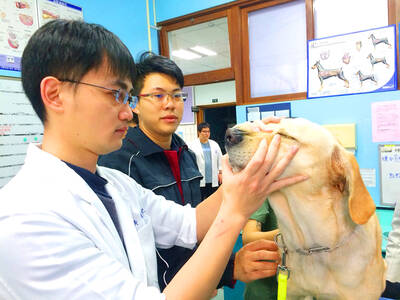
LIKE FAMILY: People now treat dogs and cats as family members. They receive the same medical treatments and tests as humans do, a veterinary association official said The number of pet dogs and cats in Taiwan has officially outnumbered the number of human newborns last year, data from the Ministry of Agriculture’s pet registration information system showed. As of last year, Taiwan had 94,544 registered pet dogs and 137,652 pet cats, the data showed. By contrast, 135,571 babies were born last year. Demand for medical care for pet animals has also risen. As of Feb. 29, there were 5,773 veterinarians in Taiwan, 3,993 of whom were for pet animals, statistics from the Animal and Plant Health Inspection Agency showed. In 2022, the nation had 3,077 pediatricians. As of last
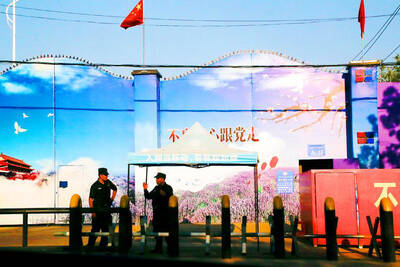
XINJIANG: Officials are conducting a report into amending an existing law or to enact a special law to prohibit goods using forced labor Taiwan is mulling an amendment prohibiting the importation of goods using forced labor, similar to the Uyghur Forced Labor Prevention Act (UFLPA) passed by the US Congress in 2021 that imposed limits on goods produced using forced labor in China’s Xinjiang region. A government official who wished to remain anonymous said yesterday that as the US customs law explicitly prohibits the importation of goods made using forced labor, in 2021 it passed the specialized UFLPA to limit the importation of cotton and other goods from China’s Xinjiang Uyghur region. Taiwan does not have the legal basis to prohibit the importation of goods


 RSS
RSS