


The father of a Taiwanese boy affected with adrenoleukodystrophy or ALD, said he would keep approximately NT$32 million from the NT$69 million raised over the past three days to cover the medical expenses of his first and third sons to receive medical care in the US, and give the rest to other needy ALD patients.
"I would like to first thank the public for its love. We plan to keep US$1 million [approximately NT$32 million] for the medical treatment for my first son and for checkups for my third son. If there is any possibility of treatment for my already paralyzed second son, we are planning to use the money to do so also," said Chang Ming-hui (
Chang Chien-hsun (
Chang Ming-hui promised to make transparent to the public how the money is used.
The Chang family, according to reports, is setting up a trust fund to manage the donations and help others who also suffer from ALD.
The medical records of Chang's sons have already been forwarded to the US medical institution and the Changs are expecting to leave for the US within two weeks.
According to doctors, ALD is a rare genetic disorder that causes damage to the fatty covering, or myelin sheath, that acts as an insulating membrane around nerve cells in the brain.
The inherited illness, widely publicized in the 1993 film Lorenzo's Oil, develops into progressive dementia, and this is followed by a loss of eyesight, seizures, coma, neurological disability and finally death.
Medical findings show that only one in about 20,000 people inherits the disease, according to Lin Kai-hsin (
Nationwide, 13 people are known to have had the incurable disease, according to official statistics. Eight of them keep contact with the Taiwan Foundation of Rare Diseases (TFRD) to seek grants from the government. Two of them failed to survive the grueling process of bone marrow transplants.
Although the hospital's medical team advised the Chang family to treat the children in Taiwan, the parents decided to go overseas in hopes of finding a surgeon willing to operate on the children.
The marrow transplant works only for patients with slight ALD, doctors said.
"Thirty-seven percent of patients die during the operation or of complications. We do not suggest newborns or patients with severe ALD to undergo marrow transplant. The risk is simply too high," said Niu Dao-ming (
In Taiwan, a marrow transplant costs about NT$2 million. Local media reports said that the over NT$69.7 million in donations given to the Chang family could pay for over 30 transplants.
The use of the unexpectedly large amount of donated money has attracted media attention and sparked disputes. Patients' groups urged the public to respect the family's will.
"It's up to the parents when it comes to where and how to treat their children. I think our society should respect the parents' decision. But meanwhile, we also hope that Mr Chang will explain the use of the funds to society, who gave them so much in donations and care," said Serena Chen (陳莉茵), chairwoman of the TFRD's standing committee.
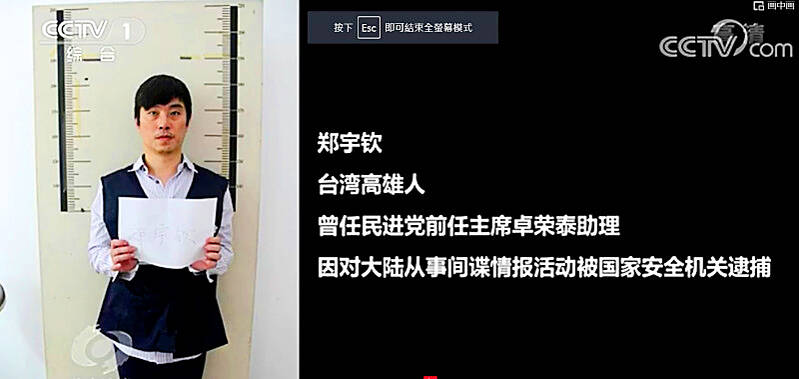
Former Czech Republic-based Taiwanese researcher Cheng Yu-chin (鄭宇欽) has been sentenced to seven years in prison on espionage-related charges, China’s Ministry of State Security announced yesterday. China said Cheng was a spy for Taiwan who “masqueraded as a professor” and that he was previously an assistant to former Cabinet secretary-general Cho Jung-tai (卓榮泰). President-elect William Lai (賴清德) on Wednesday last week announced Cho would be his premier when Lai is inaugurated next month. Today is China’s “National Security Education Day.” The Chinese ministry yesterday released a video online showing arrests over the past 10 years of people alleged to be
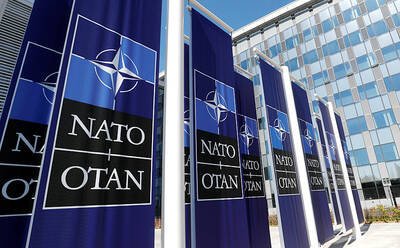
THE HAWAII FACTOR: While a 1965 opinion said an attack on Hawaii would not trigger Article 5, the text of the treaty suggests the state is covered, the report says NATO could be drawn into a conflict in the Taiwan Strait if Chinese forces attacked the US mainland or Hawaii, a NATO Defense College report published on Monday says. The report, written by James Lee, an assistant research fellow at Academia Sinica’s Institute of European and American Studies, states that under certain conditions a Taiwan contingency could trigger Article 5 of NATO, under which an attack against any member of the alliance is considered an attack against all members, necessitating a response. Article 6 of the North Atlantic Treaty specifies that an armed attack in the territory of any member in Europe,
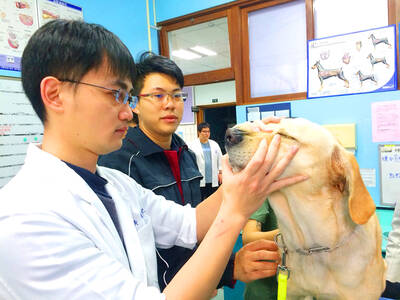
LIKE FAMILY: People now treat dogs and cats as family members. They receive the same medical treatments and tests as humans do, a veterinary association official said The number of pet dogs and cats in Taiwan has officially outnumbered the number of human newborns last year, data from the Ministry of Agriculture’s pet registration information system showed. As of last year, Taiwan had 94,544 registered pet dogs and 137,652 pet cats, the data showed. By contrast, 135,571 babies were born last year. Demand for medical care for pet animals has also risen. As of Feb. 29, there were 5,773 veterinarians in Taiwan, 3,993 of whom were for pet animals, statistics from the Animal and Plant Health Inspection Agency showed. In 2022, the nation had 3,077 pediatricians. As of last

XINJIANG: Officials are conducting a report into amending an existing law or to enact a special law to prohibit goods using forced labor Taiwan is mulling an amendment prohibiting the importation of goods using forced labor, similar to the Uyghur Forced Labor Prevention Act (UFLPA) passed by the US Congress in 2021 that imposed limits on goods produced using forced labor in China’s Xinjiang region. A government official who wished to remain anonymous said yesterday that as the US customs law explicitly prohibits the importation of goods made using forced labor, in 2021 it passed the specialized UFLPA to limit the importation of cotton and other goods from China’s Xinjiang Uyghur region. Taiwan does not have the legal basis to prohibit the importation of goods


 RSS
RSS