


Although Taiwanese people have suffered from environmental catastrophes caused by reckless development policies for years, raising controversial environmental issues during the legislative campaigning remains, ironically, a taboo for candidates, no matter where they are on the political spectrum.
Some candidates who are concerned about the environment, however, have integrated environmental issues into other campaign topics -- such as water resource management -- in order to win voter support.

TAIPEI TIMES FILE PHOTO
Democratic Progressive Party (DPP) Legislator Eugene Jao (
"To be honest, it's difficult to express in campaign materials things I have been involved in with regard to environmental issues. But at least I can highlight essential environmental problems facing the country during the campaign," Jao told the Taipei Times.
In his campaign headquarters and elsewhere workshops were established to teach children the concept of ecological conservation.
"I'm not sure if this will attract the children's parents to vote for me. But I do so because of my conscience," Jao said.
In 2000, Jao's vow to halt the construction of the Fourth Nuclear Power Plant, located in Gongliao Township, led to his expulsion from the Chinese Nationalist Party (KMT), which is in favor of nuclear power generation. Running as an independent in 2002, Jao later joined DPP and promoted renewable energy as alternatives nuclear power.
Three years, Jao was one of a host of legislators who called for laws regulating not only the energy industry, but also energy supply.
In addition to energy issues, Jao has criticized "inappropriate" construction projects, such as the Suao-Hualien Freeway project, and urged the Executive Yuan to review environmental disasters from an ecological perspective.
He also criticized the Environmental Protection Administration (EPA) for not keeping abreast with the spirit of international agreements ensuring sustainable development. In May, as most of the rest of the world began to implement the Stockholm Convention -- a global treaty designed to protect the environment from persistent organic pollutants -- Jao criticized the EPA for failing to control these pollutants adequately. the pollutants targeted by the treaty include some of the world's most dangerous chemicals, such as chlordane, PCBs and industrial by-products such as furans and dioxins.
As the Kyoto Protocol is set to go into force early next year, Jao and other legislators called for laws regulating emissions of greenhouse gases, even though this country is not bound by the accord.
Yang Jiao-yen (楊嬌豔), a legislative assistant to Jao, told the Taipei Times that Jao's idea is to link Taiwan with important international environmental agreements. He insists that Taiwan, a member of "global village," should not be absent from international trends stressing sustainable development.
"But society has not matured enough. We can't just talk tough about environmental issues only in the legislative campaign. That's why we also focus on local issues such as daycare centers and kindergarten education," Yang said.
The strategy adopted by KMT Legislator Hsu Chung-hsiung (
Su Jin-pin (蘇俊賓), as assistant to Hsu, said that Hsu has worked on the legislation involving freedom in information, coastal development, waste recycling and incinerators.
With regard to the Fourth Nuclear Power Plant and the KMT's support for nuclear power generation, Hsu said he had no choice but to avoid talking about halting the plant's construction. However, Hsu's camp stressed related issues, including nuclear safety and radioactive waste management.
"Before doubts over nuclear safety are eliminated and the site for Taiwan's first repository for its radioactive waste is decided, we don't think Taiwan needs to complete the construction of the controversial plant," Su said.
Su also said that some existing environmental policies encourage construction, which implies certain job opportunities. Taking industrial waste management and green-energy industries as examples, Su said that the policy might turn Taiwan into a designation for hazardous waste from other countries.
"We don't say we oppose such initiatives, which can offer job opportunities, but we tactfully stand for not treating hazardous industrial waste from overseas," Su said.
Even, the Taiwan Solidarity Union's (TSU) devotion to environmental protection and ecological conservation has not gone as far as Hsu's ideas. In Yunlin County, Councilwoman Yin Lin-in (
Yin said that she would rather address the broader picture, involving water resources management of the water shed of the Chuo-shui River. Yunlin's coastal areas have also suffered from serious land subsidence for decades due to overpumping of groundwater for the aquaculture industry.
"If water resources can be well-managed and the environment well-protected, Yunlin can be turned into a source of competitive agricultural products. It's a win-win strategy," Yin said.
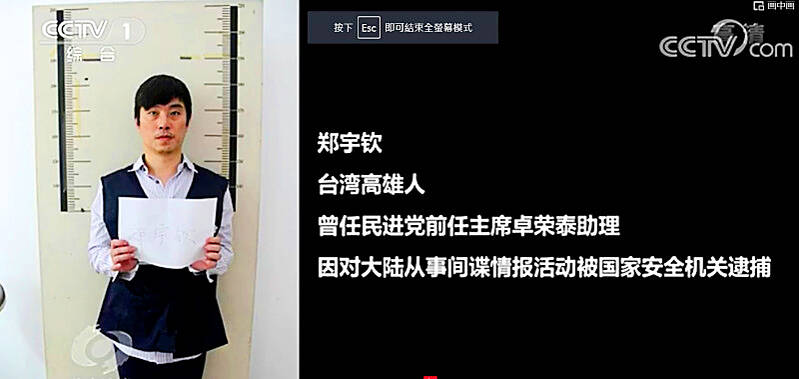
Former Czech Republic-based Taiwanese researcher Cheng Yu-chin (鄭宇欽) has been sentenced to seven years in prison on espionage-related charges, China’s Ministry of State Security announced yesterday. China said Cheng was a spy for Taiwan who “masqueraded as a professor” and that he was previously an assistant to former Cabinet secretary-general Cho Jung-tai (卓榮泰). President-elect William Lai (賴清德) on Wednesday last week announced Cho would be his premier when Lai is inaugurated next month. Today is China’s “National Security Education Day.” The Chinese ministry yesterday released a video online showing arrests over the past 10 years of people alleged to be

THE HAWAII FACTOR: While a 1965 opinion said an attack on Hawaii would not trigger Article 5, the text of the treaty suggests the state is covered, the report says NATO could be drawn into a conflict in the Taiwan Strait if Chinese forces attacked the US mainland or Hawaii, a NATO Defense College report published on Monday says. The report, written by James Lee, an assistant research fellow at Academia Sinica’s Institute of European and American Studies, states that under certain conditions a Taiwan contingency could trigger Article 5 of NATO, under which an attack against any member of the alliance is considered an attack against all members, necessitating a response. Article 6 of the North Atlantic Treaty specifies that an armed attack in the territory of any member in Europe,
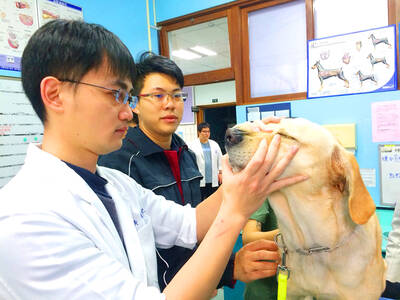
LIKE FAMILY: People now treat dogs and cats as family members. They receive the same medical treatments and tests as humans do, a veterinary association official said The number of pet dogs and cats in Taiwan has officially outnumbered the number of human newborns last year, data from the Ministry of Agriculture’s pet registration information system showed. As of last year, Taiwan had 94,544 registered pet dogs and 137,652 pet cats, the data showed. By contrast, 135,571 babies were born last year. Demand for medical care for pet animals has also risen. As of Feb. 29, there were 5,773 veterinarians in Taiwan, 3,993 of whom were for pet animals, statistics from the Animal and Plant Health Inspection Agency showed. In 2022, the nation had 3,077 pediatricians. As of last
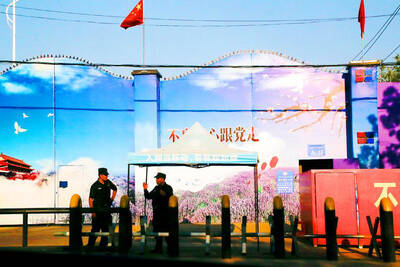
XINJIANG: Officials are conducting a report into amending an existing law or to enact a special law to prohibit goods using forced labor Taiwan is mulling an amendment prohibiting the importation of goods using forced labor, similar to the Uyghur Forced Labor Prevention Act (UFLPA) passed by the US Congress in 2021 that imposed limits on goods produced using forced labor in China’s Xinjiang region. A government official who wished to remain anonymous said yesterday that as the US customs law explicitly prohibits the importation of goods made using forced labor, in 2021 it passed the specialized UFLPA to limit the importation of cotton and other goods from China’s Xinjiang Uyghur region. Taiwan does not have the legal basis to prohibit the importation of goods


 RSS
RSS