


US President George W. Bush's nomination of National Security Advisor Condoleezza Rice to replace Secretary of State Colin Powell will signal no change in US policy toward Taiwan, but will fill the post with someone who believes Washington should play a more active role in pushing Beijing and Taipei toward a resumption of cross-strait dialogue, according to observers in Washington.
The appointment will put in place at the State Department an official who has been Bush's closest foreign policy aide, who is fully in tune with Bush's thinking on China and Taiwan, and whose presence could reduce the chance of mixed messages emanating from Washington to Taiwan.
Significantly, when Bush criticized President Chen Shui-bian (
"Condi Rice and Bush were on the same page last December. That is a policy that Condi Rice supported," said Bonnie Glaser, a senior associate at the Center For Strategic and International Studies.
"What we are going to see is a lot of continuity. Condi really un-derstands what the president is thinking, and she will proceed to implement that," Glaser said.
Irrespective of who is in charge at the State Department, it is Bush who will decide on foreign policy issues, said Michael Fonte, the Democratic Progressive Party's Washington liaison.
"Bush is completely in charge of the US approach to Taiwan. It is really his decision that has put Taiwan to the side and has made China the more important player," he said.
"I see continuity on how the US will continue to lean on Taiwan to cool its jets on issues of independence and sovereignty, and there will be continued pressure for dialogue and discussion," Fonte said.
Hopefully, he added, such dialogue will be on the basis of no preconditions to the talks.
Robert Hathaway, the director of the Asia program at the Wood-row Wilson Center, agrees.
"I don't think you can expect any particular changes. At the end of the day, the US president makes policy," he said.
"In Taiwan's case, Secretary Powell was simply following the direction of the White House," Hathaway said.
However, Rice might be more energetic in trying to push for a resumption of cross-strait dialogue.
"I think we will see Condi supporting a policy of doing more, to try to encourage both sides to think more creatively about how to stabilize the relationship, how to restart dialogue, how to start the three links and confidence building measures," Glaser said.
During her tenure as national security advisor, Rice regularly made her offices open to delegations from Taiwan for discussions of bilateral issues.
While she did not often attend the meetings, her top Asian experts always did, and the Taiwanese visitors universally came away satisfied that their views were listened to and had a positive effect.
Rice's deputy Stephen Hadley usually welcomed Taiwanese visitors who described meetings with him as very comfortable. Hadley has been named by Bush to replace Rice in the security advisor post.
Observers point to Rice's visit to Beijing in July, in which she pointedly and firmly rebuffed Chinese efforts to get Washington to reduce US arms sales to Taiwan. The Bush administration did not expect Beijing to make the arms sales issue the centerpiece of their negotiating strategy.
China felt that with its new leverage with the Bush administration over the war on terrorism and other international issues, it could get Washington to relent on arms sales to Taiwan -- a strategy that turned out to be a miscalculation.
"Rice recognized this and told them [the arms sales decision] does not reflect a shift in US policy toward Taiwan. It reflects the decision Bush made in April 2001 to sell the arms to Taiwan," said one observer close to US policymaking.
During her visit, coming about a month after Chen's inaugural address, Rice refused to back down on arms sales, telling the Chinese leaders that the US felt it was on the right track with its policy.
However, Rice did try to advance the resumption of cross-strait dialogue.
"She planted a seed in the mind of the Chinese leaders. She said, `What can the US do to facilitate the resumption of talks?' The idea was to have the Chinese leaders and Taiwan start thinking about what to do after the [legislative] election season," Glaser said.
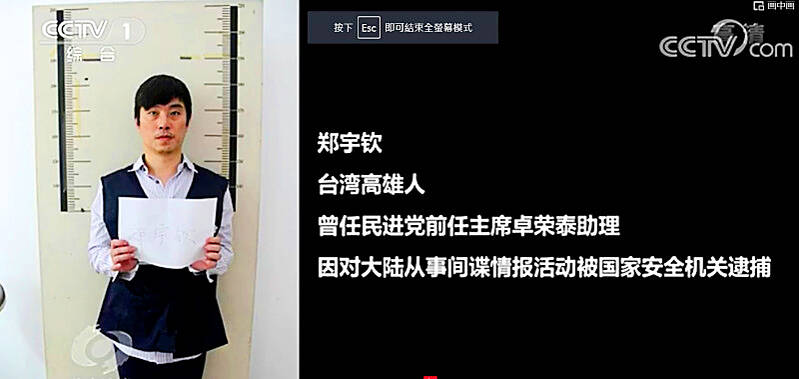
Former Czech Republic-based Taiwanese researcher Cheng Yu-chin (鄭宇欽) has been sentenced to seven years in prison on espionage-related charges, China’s Ministry of State Security announced yesterday. China said Cheng was a spy for Taiwan who “masqueraded as a professor” and that he was previously an assistant to former Cabinet secretary-general Cho Jung-tai (卓榮泰). President-elect William Lai (賴清德) on Wednesday last week announced Cho would be his premier when Lai is inaugurated next month. Today is China’s “National Security Education Day.” The Chinese ministry yesterday released a video online showing arrests over the past 10 years of people alleged to be
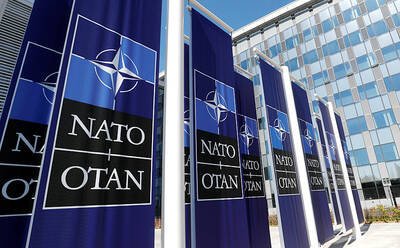
THE HAWAII FACTOR: While a 1965 opinion said an attack on Hawaii would not trigger Article 5, the text of the treaty suggests the state is covered, the report says NATO could be drawn into a conflict in the Taiwan Strait if Chinese forces attacked the US mainland or Hawaii, a NATO Defense College report published on Monday says. The report, written by James Lee, an assistant research fellow at Academia Sinica’s Institute of European and American Studies, states that under certain conditions a Taiwan contingency could trigger Article 5 of NATO, under which an attack against any member of the alliance is considered an attack against all members, necessitating a response. Article 6 of the North Atlantic Treaty specifies that an armed attack in the territory of any member in Europe,
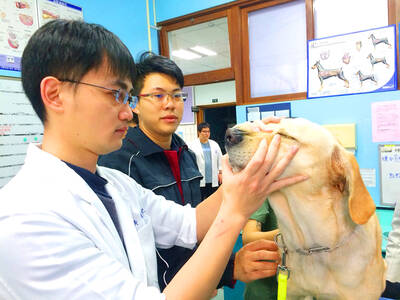
LIKE FAMILY: People now treat dogs and cats as family members. They receive the same medical treatments and tests as humans do, a veterinary association official said The number of pet dogs and cats in Taiwan has officially outnumbered the number of human newborns last year, data from the Ministry of Agriculture’s pet registration information system showed. As of last year, Taiwan had 94,544 registered pet dogs and 137,652 pet cats, the data showed. By contrast, 135,571 babies were born last year. Demand for medical care for pet animals has also risen. As of Feb. 29, there were 5,773 veterinarians in Taiwan, 3,993 of whom were for pet animals, statistics from the Animal and Plant Health Inspection Agency showed. In 2022, the nation had 3,077 pediatricians. As of last
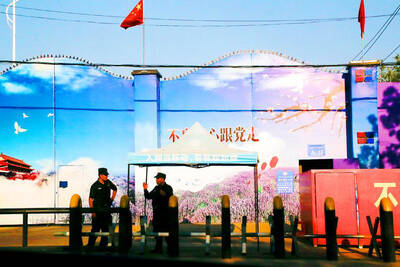
XINJIANG: Officials are conducting a report into amending an existing law or to enact a special law to prohibit goods using forced labor Taiwan is mulling an amendment prohibiting the importation of goods using forced labor, similar to the Uyghur Forced Labor Prevention Act (UFLPA) passed by the US Congress in 2021 that imposed limits on goods produced using forced labor in China’s Xinjiang region. A government official who wished to remain anonymous said yesterday that as the US customs law explicitly prohibits the importation of goods made using forced labor, in 2021 it passed the specialized UFLPA to limit the importation of cotton and other goods from China’s Xinjiang Uyghur region. Taiwan does not have the legal basis to prohibit the importation of goods


 RSS
RSS