


While over 10 million people are bothered by weight problems in this country, most slim-figure seekers are bedazzled by onrushing diet info in newspapers, fashion magazines, and blinded by exaggerate TV commercials, health officials warned yesterday.
Chang Chin-jen (
"The whole nation is in the grip of craze for slimness," said Chang.
Also,the department's latest survey on nutrition intake revealed that people's weight increases quickly once they enter middle age.
There is a gender imbalance behind the figures, health experts said. Shaw Ning-shing (
Education also plays an important role in obesity scenario. The department's figures showed that better educated people tend to be thinner, Shaw said, because "educated people are more likely to read the food label, and calculate how much protein, carbohydrates, and fat are in each bite."
Obesity is feared becoming a class issue, said Chang. Because the poor don't have money to see a nutritionist or go to gyms like the urbane, their girth keeps growing. The most effective means of weight control -- a better diet and regular exercise -- seems the exclusive right of the rich.
According to Chu Nain-feng (
"We found out that in some remote villages in the mountain, [obesity] is more common than in cities," Chu said.
Though obesity afflicts the poor more than the rich, the desire to narrow one's girth is common nationwide. The diet craze has fueled a surfeit of fitness and diet information in the marketplace. The report from National Cheng Kung indicated that pills and drugs offered by pharmacists are by far the most popular option for dieters.
Health officials issued a string of heavy fines in the last two months against several diet products companies for false promises made in their TV and newspaper ads. Officials cautioned that most over-the-counter drugs do not deliver the magical effect of reducing tens of kilograms in a week, as some companies claim.
"A multitude of misleading ads has besieged the public," Chen Lu-hung (
Health experts agreed that, true to the cliche, a balanced diet and an hour of exercise every day is the rule of thumb for weight management.
"Going to the Alexander Health Club once a week will not shake off fat as effectively as walking 10,000 steps every day," Chang said.

A group of Taiwanese-American and Tibetan-American students at Harvard University on Saturday disrupted Chinese Ambassador to the US Xie Feng’s (謝鋒) speech at the school, accusing him of being responsible for numerous human rights violations. Four students — two Taiwanese Americans and two from Tibet — held up banners inside a conference hall where Xie was delivering a speech at the opening ceremony of the Harvard Kennedy School China Conference 2024. In a video clip provided by the Coalition of Students Resisting the CCP (Chinese Communist Party), Taiwanese-American Cosette Wu (吳亭樺) and Tibetan-American Tsering Yangchen are seen holding banners that together read:

UNAWARE: Many people sit for long hours every day and eat unhealthy foods, putting them at greater risk of developing one of the ‘three highs,’ an expert said More than 30 percent of adults aged 40 or older who underwent a government-funded health exam were unaware they had at least one of the “three highs” — high blood pressure, high blood lipids or high blood sugar, the Health Promotion Administration (HPA) said yesterday. Among adults aged 40 or older who said they did not have any of the “three highs” before taking the health exam, more than 30 percent were found to have at least one of them, Adult Preventive Health Examination Service data from 2022 showed. People with long-term medical conditions such as hypertension or diabetes usually do not
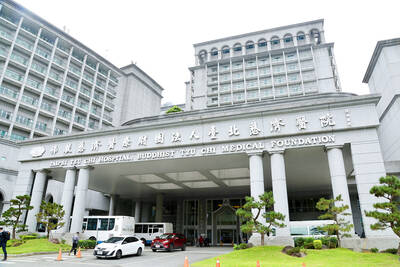
POLICE INVESTIGATING: A man said he quit his job as a nurse at Taipei Tzu Chi Hospital as he had been ‘disgusted’ by the behavior of his colleagues A man yesterday morning wrote online that he had witnessed nurses taking photographs and touching anesthetized patients inappropriately in Taipei Tzu Chi Hospital’s operating theaters. The man surnamed Huang (黃) wrote on the Professional Technology Temple bulletin board that during his six-month stint as a nurse at the hospital, he had seen nurses taking pictures of patients, including of their private parts, after they were anesthetized. Some nurses had also touched patients inappropriately and children were among those photographed, he said. Huang said this “disgusted” him “so much” that “he felt the need to reveal these unethical acts in the operating theater
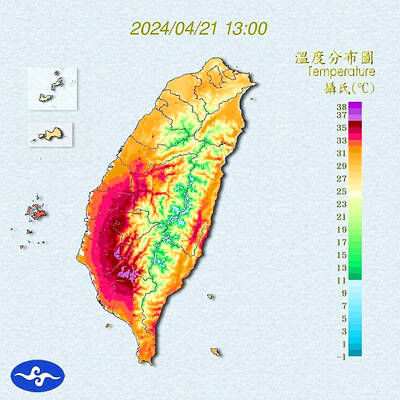
Heat advisories were in effect for nine administrative regions yesterday afternoon as warm southwesterly winds pushed temperatures above 38°C in parts of southern Taiwan, the Central Weather Administration (CWA) said. As of 3:30pm yesterday, Tainan’s Yujing District (玉井) had recorded the day’s highest temperature of 39.7°C, though the measurement will not be included in Taiwan’s official heat records since Yujing is an automatic rather than manually operated weather station, the CWA said. Highs recorded in other areas were 38.7°C in Kaohsiung’s Neimen District (內門), 38.2°C in Chiayi City and 38.1°C in Pingtung’s Sandimen Township (三地門), CWA data showed. The spell of scorching


 RSS
RSS