


US President George W. Bush said Monday that he is "convinced" that cross-strait issues can be settled peacefully despite China's deployment of some 500 missiles aimed at Taiwan. But, he added, resolution of the issues will "take some time."
Bush made his remarks in response to a question from a Taiwanese-American at a campaign event called "Ask President Bush" in the Washington suburb of Annandale, Virginia. Bush said that his administration's `one China' policy has not changed. He said the policy was "based upon the three communiques," but he neglected to add a reference to the Taiwan Relations Act, the 25-year-old law that is the cornerstone of US-Taiwan relations.
Normally, the communiques and the act are mentioned together, in a single phrase, when the US administration recites its `one China' policy.
China, on the other hand, omits any reference to the act, which it rejects.
Bush again called on both sides to maintain the status quo.
"Neither side should unilaterally change the circumstances by which a peaceful resolution will be achieved," Bush said.
Bush told the questioner that "I'm convinced this issue can be solved peacefully. It's just going to take some time to do so. And we'll continue to work to see to it that it does."
He added that "we'll keep working both sides to see if we can't see that that very important issue be resolved peacefully."
These were Bush's first extensive public comments on Taiwan issues since the inauguration of President Chen Shui-bian (
However Beijing has raised strong objections to US plans to sell arms to Taiwan ever since the inauguration, and especially since a visit to Washington in June by a Legislative Yuan delegation headed by Legislative Speaker Wang Jin-pyng (
In an effort to quell Beijing's concerns, Bush telephoned Chinese President Hu Jintao (
Since Chen's re-election, and especially since the inauguration, the Bush administration has been making a strong effort to promote the resumption of negotiations toward an eventual settlement of cross-strait differences. Washington has also been debating whether to take a more direct role in fostering such talks, in contrast to its traditional pledge to leave any talks up to the two sides themselves.
In his ask-Bush session, the president did not give any details of how he sees the US' role in promoting resumed dialogue. He did say, though, that it is "essential that both sides understand my position as clearly stated, and I've stated it publicly, just like I just did," adding that "I will continue to state it."
Meanwhile, the State Department confirmed that it "expressed our regret" for the fact that Taipei's new representative to the US, David Lee (
"The acting chairman of the American Institute in Taipei expressed our regret to this mistake or mishandling at the airport, and that expression of regret was accepted," department spokesman Adam Ereli told reporters at his daily press briefing.
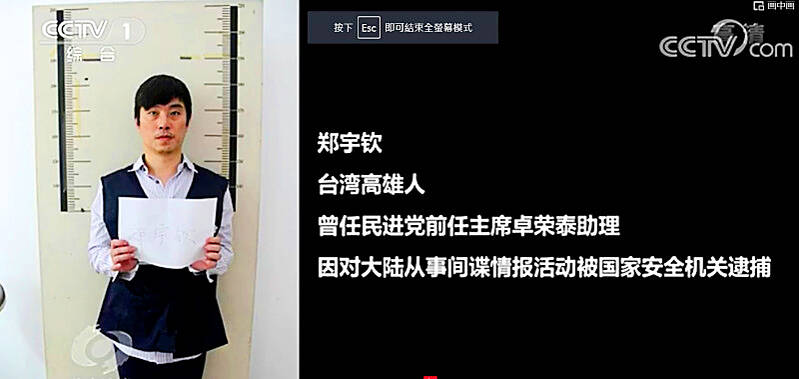
Former Czech Republic-based Taiwanese researcher Cheng Yu-chin (鄭宇欽) has been sentenced to seven years in prison on espionage-related charges, China’s Ministry of State Security announced yesterday. China said Cheng was a spy for Taiwan who “masqueraded as a professor” and that he was previously an assistant to former Cabinet secretary-general Cho Jung-tai (卓榮泰). President-elect William Lai (賴清德) on Wednesday last week announced Cho would be his premier when Lai is inaugurated next month. Today is China’s “National Security Education Day.” The Chinese ministry yesterday released a video online showing arrests over the past 10 years of people alleged to be
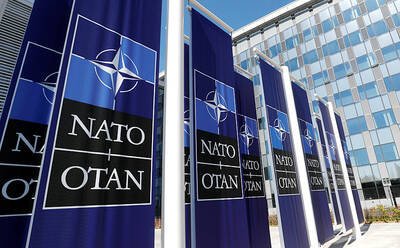
THE HAWAII FACTOR: While a 1965 opinion said an attack on Hawaii would not trigger Article 5, the text of the treaty suggests the state is covered, the report says NATO could be drawn into a conflict in the Taiwan Strait if Chinese forces attacked the US mainland or Hawaii, a NATO Defense College report published on Monday says. The report, written by James Lee, an assistant research fellow at Academia Sinica’s Institute of European and American Studies, states that under certain conditions a Taiwan contingency could trigger Article 5 of NATO, under which an attack against any member of the alliance is considered an attack against all members, necessitating a response. Article 6 of the North Atlantic Treaty specifies that an armed attack in the territory of any member in Europe,

LIKE FAMILY: People now treat dogs and cats as family members. They receive the same medical treatments and tests as humans do, a veterinary association official said The number of pet dogs and cats in Taiwan has officially outnumbered the number of human newborns last year, data from the Ministry of Agriculture’s pet registration information system showed. As of last year, Taiwan had 94,544 registered pet dogs and 137,652 pet cats, the data showed. By contrast, 135,571 babies were born last year. Demand for medical care for pet animals has also risen. As of Feb. 29, there were 5,773 veterinarians in Taiwan, 3,993 of whom were for pet animals, statistics from the Animal and Plant Health Inspection Agency showed. In 2022, the nation had 3,077 pediatricians. As of last
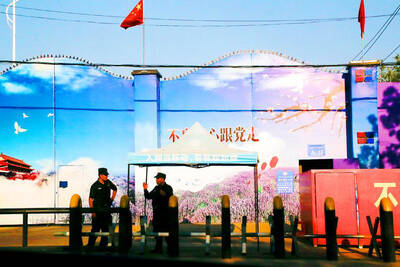
XINJIANG: Officials are conducting a report into amending an existing law or to enact a special law to prohibit goods using forced labor Taiwan is mulling an amendment prohibiting the importation of goods using forced labor, similar to the Uyghur Forced Labor Prevention Act (UFLPA) passed by the US Congress in 2021 that imposed limits on goods produced using forced labor in China’s Xinjiang region. A government official who wished to remain anonymous said yesterday that as the US customs law explicitly prohibits the importation of goods made using forced labor, in 2021 it passed the specialized UFLPA to limit the importation of cotton and other goods from China’s Xinjiang Uyghur region. Taiwan does not have the legal basis to prohibit the importation of goods


 RSS
RSS