


Although Chinese President Hu Jintao (
The ministry's reassurance came after President Chen Shui-bian (
Details of the itinerary of Chen's first foreign trip since his second term started are still unclear. Sources have said Chen might stop over in Boston or Miami, where US President George W. Bush's brother, Jeb Bush, governor of Florida, might receive him.
Chen is also expected to visit Belize, another of Taiwan's allies in Latin America, on the same trip.
Anna Kao (
"The Presidential Office will unveil the itinerary in due time," she said.
Kao said Bush reiterated the US stance on the Taiwan issue in his conversation with Hu.
"White House spokesman Scott McClellan explained the phone call to reporters. We will continue to pay close attention to our relationship with the US," she said.
McClellan told reporters that Bush called Hu last Friday as a follow-up to the recent visit to Beijing by US National Security Advisor Condoleezza Rice, who met top Chinese leaders and held discussions on North Korea and Taiwan.
According to China's official Xinhua news agency, Hu told Bush the current cross-strait situation is "very sensitive and complicated and that China would never tolerate independence for Taiwan."
Hu, nevertheless, said China would exert its utmost efforts to resolve the Taiwan issue peacefully.
Bush expressed his understanding for China's concern over the Taiwan issue. The US would implement the "`one China' policy, and observe the Three Communiques and position of not supporting the independence of Taiwan," he said.
Meanwhile, a US senate delegation has had strong words and very forceful discussions with China over Taiwan, telling Beijing that Washington would not back down from selling arms to the island, a leading US lawmaker said yesterday.
"We believe we are still following the 1979 policy set down by China itself to recognize [the] `one China' [policy] but at the same time opposing any attempt by either side to change the relationship between Taiwan and the mainland by force," senate leader Ted Stevens told reporters.
He rejected China's protest that US military exchanges and arms sales to Taiwan constituted a breach of the accord.
Stevens, who met Hu yesterday, said there was a "misunderstanding" on the issue, saying that although the sale of new radars to Taiwan had been authorized, none had been manufactured, delivered or even ordered.
"We are still maintaining the position that Taiwan should be able to defend itself against a military attack," he said.
Given the growing economic dependency and exchanges between China and Taiwan, "we believe that time will erase the differences and we still maintain that we are following the `one China' policy," he said.
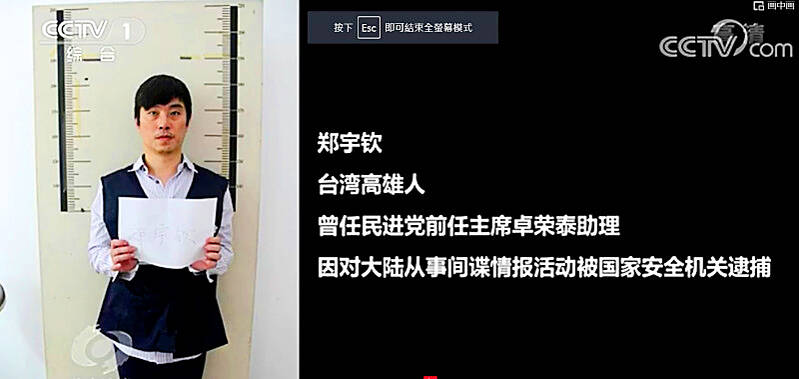
Former Czech Republic-based Taiwanese researcher Cheng Yu-chin (鄭宇欽) has been sentenced to seven years in prison on espionage-related charges, China’s Ministry of State Security announced yesterday. China said Cheng was a spy for Taiwan who “masqueraded as a professor” and that he was previously an assistant to former Cabinet secretary-general Cho Jung-tai (卓榮泰). President-elect William Lai (賴清德) on Wednesday last week announced Cho would be his premier when Lai is inaugurated next month. Today is China’s “National Security Education Day.” The Chinese ministry yesterday released a video online showing arrests over the past 10 years of people alleged to be
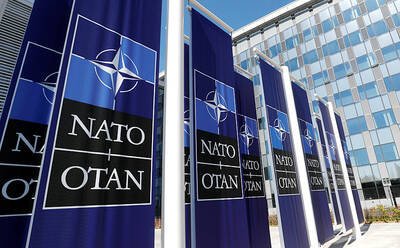
THE HAWAII FACTOR: While a 1965 opinion said an attack on Hawaii would not trigger Article 5, the text of the treaty suggests the state is covered, the report says NATO could be drawn into a conflict in the Taiwan Strait if Chinese forces attacked the US mainland or Hawaii, a NATO Defense College report published on Monday says. The report, written by James Lee, an assistant research fellow at Academia Sinica’s Institute of European and American Studies, states that under certain conditions a Taiwan contingency could trigger Article 5 of NATO, under which an attack against any member of the alliance is considered an attack against all members, necessitating a response. Article 6 of the North Atlantic Treaty specifies that an armed attack in the territory of any member in Europe,
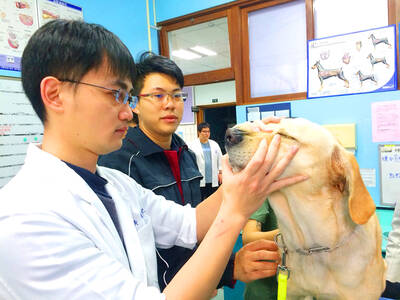
LIKE FAMILY: People now treat dogs and cats as family members. They receive the same medical treatments and tests as humans do, a veterinary association official said The number of pet dogs and cats in Taiwan has officially outnumbered the number of human newborns last year, data from the Ministry of Agriculture’s pet registration information system showed. As of last year, Taiwan had 94,544 registered pet dogs and 137,652 pet cats, the data showed. By contrast, 135,571 babies were born last year. Demand for medical care for pet animals has also risen. As of Feb. 29, there were 5,773 veterinarians in Taiwan, 3,993 of whom were for pet animals, statistics from the Animal and Plant Health Inspection Agency showed. In 2022, the nation had 3,077 pediatricians. As of last
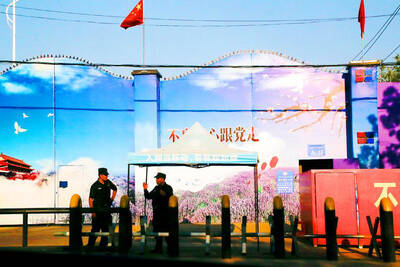
XINJIANG: Officials are conducting a report into amending an existing law or to enact a special law to prohibit goods using forced labor Taiwan is mulling an amendment prohibiting the importation of goods using forced labor, similar to the Uyghur Forced Labor Prevention Act (UFLPA) passed by the US Congress in 2021 that imposed limits on goods produced using forced labor in China’s Xinjiang region. A government official who wished to remain anonymous said yesterday that as the US customs law explicitly prohibits the importation of goods made using forced labor, in 2021 it passed the specialized UFLPA to limit the importation of cotton and other goods from China’s Xinjiang Uyghur region. Taiwan does not have the legal basis to prohibit the importation of goods


 RSS
RSS