


Taiwan's first successfully separated conjoined twins, Chang Chung-jen (張忠仁) and Chang Chung-i (張忠義), issued memorial stamps last week with much nostalgia of the 1980s to remind the public how far Taiwan has gone since then.
"Now that we have grown up, we can help other people," Chung-jen said during the first publication of the stamps last Thursday.
Twenty-five years ago, while the twins were just 3 years old, doctors successfully separated the twins who were joined at the pelvis. The nation was captivated by the surgery, which was broadcast on television. People all over Taiwan were united in joy upon hearing the the surgery was a success, and many let off firecrackers in celebration.
Two days after the televised surgery, then president Chiang Ching-kuo (蔣經國) received the medical team and news of the surgery's success was aired across the Strait. The twin brothers have been a part of the Taiwanese people's collective memory and become a symbol of national pride ever since.
The twins now sell lottery tickets in a busy ally in Taipei City's Neihu District. Their combined efforts earn them roughly NT$40,000 every month, but their income drops sharply if interest in the lottery declines. Despite their situation, the twins do not feel sorry for themselves.
"I would like to have stable income, but I believe there are many more people in this country that lead more difficult lives than us," the elder twin, Chung-jen, said.
"I would like to open a pet store one day," said the younger Chung-i .
Before they could support themselves financially, the twin brothers lived off a total of NT$ 7.6 million in donations from the public. Their parents, faced with the life-long burden of medical expenses and the arduous task of raising the twins, left them in a hospital a day after their birth. The Lourdes Home, a Catholic organization in Taipei City, took them in until they were 8 years old. Throughout their childhood, they constantly moved from place to place and transferred schools frequently.
After graduation from His-hu Industrial and Commercial Vocational High School, Chung-jen found a position in the Taipei City's Bureau of Environmental Protection while Chung-i sold women's accessories and gum in the Shih-lin night-market. Yet their health prevented them from working for very long. In January of this year, Chung-jen quit his job at the bureau after five-years of service. He had surgery on his left kidney last year, but kidney stones continue cause him much pain. Chung-i, like his brother, needs to go to the hospital every month for intestinal cleansing.
Their ability to support themselves is far from certain. They both had interviews recently, but were unsuccessful at landing a job.
"We understand [employers'] concerns about our below-average physical ability," Chung-jen said, "and sometimes we are prevented from working like others by stairs and other barriers," he added.
The location of a prospective place of employment is also a barrier for the twins. Each has an artificial leg and use crutches. Commuting to work is difficult for the brothers. Under the Physically and Mentally Challenged Protection Law (身心障礙者保護法), the twin can receive up to NT$3,000 every month. The latest figures from the Department of the Interior (DOI) show that NT$ 1.125 billion was allotted to Taipei City Government last year to subsidize the cost of living.
A bigger problem rather than their income, however, is that the law does not grant them equal access to the job market. A non-official survey on employment opportunities for the mentally and psychically challenged last year indicated that the unemployment rate among the disabled is three-times higher than any other group. The report pointed out that over 20 percent of companies with more than 200 employers were willing to pay the fine for breaking the law rather than hiring mentally or physically challenged people.
Statistics from the DOI also discovered an alarming trend. Data show that the unemployment rate of this group jumped from 7.5 percent in 2001 to 14.16 percent last year.
With their public donation fund spent four years ago, the brothers only have themselves and a monthly NT$3000 grant to live on. While a portion of the income from the sale of stamps will go to the twins, part of the money will also help fund a foundation to help other physically and mentally challenged people.
"Our foundation will design rehabilitation plans and help integrate our friends into the labor force," Cheng-jen said.
Taiwan's medical advances and the prevalence of charity organizations have helped sustain the brothers, but whether the symbol of Taiwan's pride in the 1980s can make it in today's Taiwan is a question that remains answered.
"They are 28 years old now. We hope there will be opportunity for them to realize their dreams," KMT Legislator Apollo Chen (
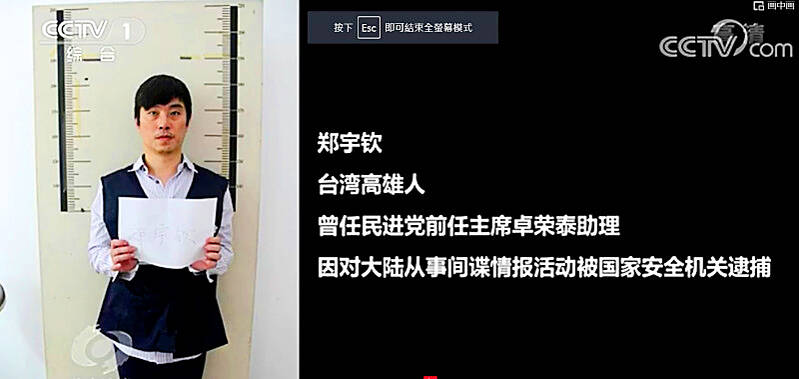
Former Czech Republic-based Taiwanese researcher Cheng Yu-chin (鄭宇欽) has been sentenced to seven years in prison on espionage-related charges, China’s Ministry of State Security announced yesterday. China said Cheng was a spy for Taiwan who “masqueraded as a professor” and that he was previously an assistant to former Cabinet secretary-general Cho Jung-tai (卓榮泰). President-elect William Lai (賴清德) on Wednesday last week announced Cho would be his premier when Lai is inaugurated next month. Today is China’s “National Security Education Day.” The Chinese ministry yesterday released a video online showing arrests over the past 10 years of people alleged to be
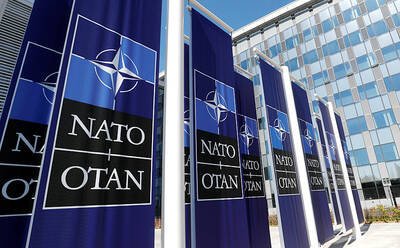
THE HAWAII FACTOR: While a 1965 opinion said an attack on Hawaii would not trigger Article 5, the text of the treaty suggests the state is covered, the report says NATO could be drawn into a conflict in the Taiwan Strait if Chinese forces attacked the US mainland or Hawaii, a NATO Defense College report published on Monday says. The report, written by James Lee, an assistant research fellow at Academia Sinica’s Institute of European and American Studies, states that under certain conditions a Taiwan contingency could trigger Article 5 of NATO, under which an attack against any member of the alliance is considered an attack against all members, necessitating a response. Article 6 of the North Atlantic Treaty specifies that an armed attack in the territory of any member in Europe,
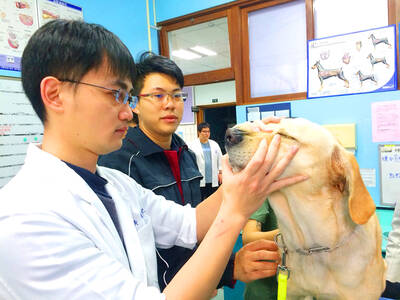
LIKE FAMILY: People now treat dogs and cats as family members. They receive the same medical treatments and tests as humans do, a veterinary association official said The number of pet dogs and cats in Taiwan has officially outnumbered the number of human newborns last year, data from the Ministry of Agriculture’s pet registration information system showed. As of last year, Taiwan had 94,544 registered pet dogs and 137,652 pet cats, the data showed. By contrast, 135,571 babies were born last year. Demand for medical care for pet animals has also risen. As of Feb. 29, there were 5,773 veterinarians in Taiwan, 3,993 of whom were for pet animals, statistics from the Animal and Plant Health Inspection Agency showed. In 2022, the nation had 3,077 pediatricians. As of last
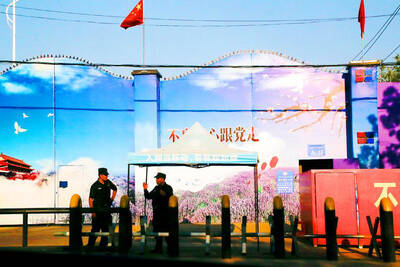
XINJIANG: Officials are conducting a report into amending an existing law or to enact a special law to prohibit goods using forced labor Taiwan is mulling an amendment prohibiting the importation of goods using forced labor, similar to the Uyghur Forced Labor Prevention Act (UFLPA) passed by the US Congress in 2021 that imposed limits on goods produced using forced labor in China’s Xinjiang region. A government official who wished to remain anonymous said yesterday that as the US customs law explicitly prohibits the importation of goods made using forced labor, in 2021 it passed the specialized UFLPA to limit the importation of cotton and other goods from China’s Xinjiang Uyghur region. Taiwan does not have the legal basis to prohibit the importation of goods


 RSS
RSS