


Local psychiatrists have urged people with depression to be vigilant when following prescribed drug regimens in light of a US public-health advisory warning of increased suicide risk for some who use anti-depressants.
"Of the 90,000 psychiatric patients in Taiwan, only about 30 percent return for follow-up appointments with a doctor," said Lee Ming-been (李明濱), superintendent of the Taipei City Psychiatric Center and head of the Taiwan Association Against Depression.
Lee said that patients had recently begun to express reservations about anti-depressants following a US Food and Drug Administration (FDA) health advisory on March 22.
The advisory asked manufacturers of some anti-depressants to include warnings that depression and suicidal tendencies may worsen after patients begin their prescriptions.
"Medication is necessary for serious cases of depression," said Liao Shih-chen (廖士程), a National Taiwan University hospital psychiatrist.
"While drugs can treat symptoms such as the inability to sleep and a loss of appetite, changing a patient's evaluation of his personal situation usually comes last," Liao said.
Lee said that although anti-depressants were effective in treating depression, it was important to be particularly vigilant in observing the emergence of suicidal feelings at the start of a drug program.
"Depression is not like a cold. You cannot take the medication until you feel better and then quit," Lee said.
He said that at no point in the course of a patient's drug regimen should the patient discontinue the prescription without consulting a doctor.
"In Taiwan, patients tend to think that doctors can work miracles. If the drugs that doctors prescribe do not work at first, they go around shopping for other doctors to prescribe different medication," Lee said.
"Changing a patient's drug regimen is a technique and skill in and of itself," Lee said.
"It's important that patients bring records of their previous drug regimens when seeing a new doctor," said Winston Shen (沈武典), head of the psychiatry department at Wanfang Hospital in Taipei.
According to a Taiwan Association Against Depression press release, selective serotonin reuptake inhibitors (SSRIs), including Prozac, Paxil and Zoloft, are presently the most commonly prescribed anti-depressants in Taiwan.
"Despite the FDA's warning, there is so far no scientific evidence showing that SSRIs and other anti-depressants are a direct cause of suicide," Shen said.
Shen added that studies of the causes underlying increased suicidal tendencies among users of anti-depressants were currently being conducted around the world.
Meanwhile, Tsai Hsiang-ping (蔡香蘋), chief of the Life Improving and Loving Association (中華民國生活調適愛心會), said that the association's suicide prevention and crisis hotline often received calls from patients who refused to take medication to treat depression.
"People do not want to take anti-depressants because it is admitting that they are sick and that they have a disease," Tsai said.
Tsai also said that after important events such as the presidential election, the association's hotline receives calls from a new group of people seeking help.
"Judging from the calls that we've been getting, I don't think that the election has had much of an influence on those who have already been diagnosed with a depressive illness," Tsai said.
"However, I predict that in a month or so, new callers will begin calling with election-related problems," Tsai said.

A group of Taiwanese-American and Tibetan-American students at Harvard University on Saturday disrupted Chinese Ambassador to the US Xie Feng’s (謝鋒) speech at the school, accusing him of being responsible for numerous human rights violations. Four students — two Taiwanese Americans and two from Tibet — held up banners inside a conference hall where Xie was delivering a speech at the opening ceremony of the Harvard Kennedy School China Conference 2024. In a video clip provided by the Coalition of Students Resisting the CCP (Chinese Communist Party), Taiwanese-American Cosette Wu (吳亭樺) and Tibetan-American Tsering Yangchen are seen holding banners that together read:

UNAWARE: Many people sit for long hours every day and eat unhealthy foods, putting them at greater risk of developing one of the ‘three highs,’ an expert said More than 30 percent of adults aged 40 or older who underwent a government-funded health exam were unaware they had at least one of the “three highs” — high blood pressure, high blood lipids or high blood sugar, the Health Promotion Administration (HPA) said yesterday. Among adults aged 40 or older who said they did not have any of the “three highs” before taking the health exam, more than 30 percent were found to have at least one of them, Adult Preventive Health Examination Service data from 2022 showed. People with long-term medical conditions such as hypertension or diabetes usually do not
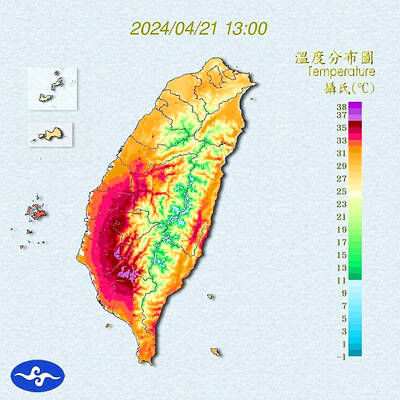
Heat advisories were in effect for nine administrative regions yesterday afternoon as warm southwesterly winds pushed temperatures above 38°C in parts of southern Taiwan, the Central Weather Administration (CWA) said. As of 3:30pm yesterday, Tainan’s Yujing District (玉井) had recorded the day’s highest temperature of 39.7°C, though the measurement will not be included in Taiwan’s official heat records since Yujing is an automatic rather than manually operated weather station, the CWA said. Highs recorded in other areas were 38.7°C in Kaohsiung’s Neimen District (內門), 38.2°C in Chiayi City and 38.1°C in Pingtung’s Sandimen Township (三地門), CWA data showed. The spell of scorching
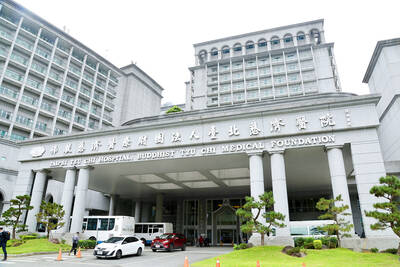
POLICE INVESTIGATING: A man said he quit his job as a nurse at Taipei Tzu Chi Hospital as he had been ‘disgusted’ by the behavior of his colleagues A man yesterday morning wrote online that he had witnessed nurses taking photographs and touching anesthetized patients inappropriately in Taipei Tzu Chi Hospital’s operating theaters. The man surnamed Huang (黃) wrote on the Professional Technology Temple bulletin board that during his six-month stint as a nurse at the hospital, he had seen nurses taking pictures of patients, including of their private parts, after they were anesthetized. Some nurses had also touched patients inappropriately and children were among those photographed, he said. Huang said this “disgusted” him “so much” that “he felt the need to reveal these unethical acts in the operating theater


 RSS
RSS