


Members of the foreign business community said they had no comment on the outcome of yesterday's presidential election, as the situation remained obscure following the pan-blue camp's effort to annul the vote after being defeated at the polls.
"We are stunned by the whole situation," said Richard Vuylsteke, executive director of American Chamber of Commerce in Taipei.
"We have no comment until the loser concedes."
Taiwan's power comes from the strength of its economy and all parties of the nation should start putting the economy back on the agenda after the event is resolved, Vuylsteke said.
"We hope they have national purpose on a road map used to integrate the economy in a productive way with China," he said.
The European Chamber of Commerce Taipei (ECCT) also had no comment about the election, but ECCT Chief Executive Officer Guy Wittich said that members hope the government would push forward on cross-strait links and also lift bans on imports from China and limitations of personnel and capital coming from the other side of the Taiwan Strait.
Direct links across the strait, he said, are the key for Taiwan to become a regional or even global logistics center.
"If there are no direct links, it is much harder to convince the world to invest in Taiwan," Wittich said.
Vuylsteke agreed, adding that stagnant development in this regard has led to foreign companies here to reconsider their business plans.
unfinished business
In a bid to develop Taiwan as a logistics center, the Legislature passed the Statute Governing the Establishment and Management of Free Trade Ports (
The scheme enables foreign imports to be stored or processed without going through customs inspection before being reshipped to third countries or areas, and businesses based there are free from tariffs, several kinds of taxes and port service fees.
The government, however, has yet to provide clear guidelines on tax incentives and custom procedures, Wittich said.
"Developing high-tech industries and a knowledge-based economy, as well as developing R&D centers are the right directions for the government to move toward," Vuylsteke said.
In addition, the nation should strengthen its legal supports on significant issues such as protection of intellectual property rights (IPR) and work permits for foreign talent, he said.
Foreign companies suffering rampant piracy of their products remain disappointed with lax enforcement here.
"The government should get tougher on IPR violators," Vuylsteke said.
Both Wittich and Vuylsteke cited the Government Procurement Agreement, which urges Taiwan to follow through on its promises.
Taiwan has been criticized by the foreign business community for its protectionism and lack of sufficient transparency in the bidding process for major infrastructure projects.
The ECCT also urged the new administration to further deregulate the service sectors, moving towards a more open market.
"We would like to see further liberalization in the service industry, including financial and logistic services," Wittich said.
He said that the move would help lure a wider range of foreign companies to invest in Taiwan.
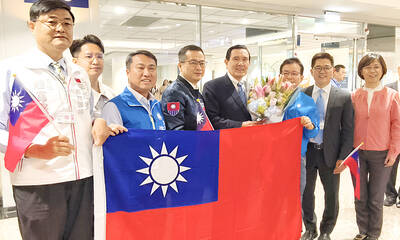
Former president Ma Ying-jeou’s (馬英九) mention of Taiwan’s official name during a meeting with Chinese President Xi Jinping (習近平) on Wednesday was likely a deliberate political play, academics said. “As I see it, it was intentional,” National Chengchi University Graduate Institute of East Asian Studies professor Wang Hsin-hsien (王信賢) said of Ma’s initial use of the “Republic of China” (ROC) to refer to the wider concept of “the Chinese nation.” Ma quickly corrected himself, and his office later described his use of the two similar-sounding yet politically distinct terms as “purely a gaffe.” Given Ma was reading from a script, the supposed slipup
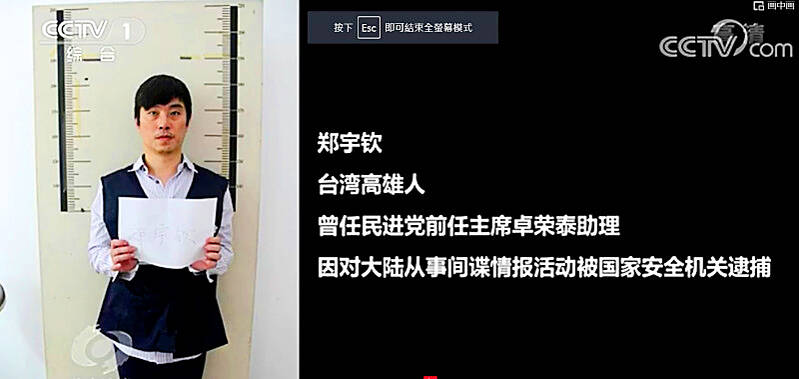
Former Czech Republic-based Taiwanese researcher Cheng Yu-chin (鄭宇欽) has been sentenced to seven years in prison on espionage-related charges, China’s Ministry of State Security announced yesterday. China said Cheng was a spy for Taiwan who “masqueraded as a professor” and that he was previously an assistant to former Cabinet secretary-general Cho Jung-tai (卓榮泰). President-elect William Lai (賴清德) on Wednesday last week announced Cho would be his premier when Lai is inaugurated next month. Today is China’s “National Security Education Day.” The Chinese ministry yesterday released a video online showing arrests over the past 10 years of people alleged to be
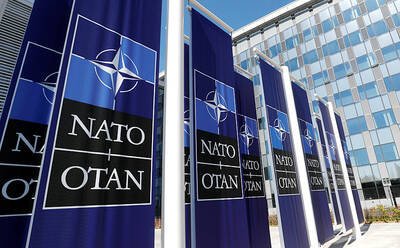
THE HAWAII FACTOR: While a 1965 opinion said an attack on Hawaii would not trigger Article 5, the text of the treaty suggests the state is covered, the report says NATO could be drawn into a conflict in the Taiwan Strait if Chinese forces attacked the US mainland or Hawaii, a NATO Defense College report published on Monday says. The report, written by James Lee, an assistant research fellow at Academia Sinica’s Institute of European and American Studies, states that under certain conditions a Taiwan contingency could trigger Article 5 of NATO, under which an attack against any member of the alliance is considered an attack against all members, necessitating a response. Article 6 of the North Atlantic Treaty specifies that an armed attack in the territory of any member in Europe,
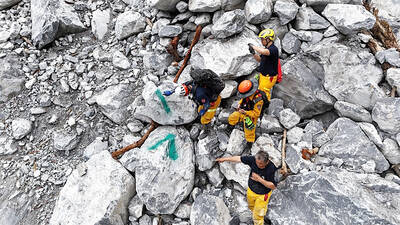
The bodies of two individuals were recovered and three additional bodies were discovered on the Shakadang Trail (砂卡礑) in Taroko National Park, eight days after the devastating earthquake in Hualien County, search-and-rescue personnel said. The rescuers reported that they retrieved the bodies of a man and a girl, suspected to be the father and daughter from the Yu (游) family, 500m from the entrance of the trail on Wednesday. The rescue team added that despite the discovery of the two bodies on Friday last week, they had been unable to retrieve them until Wednesday due to the heavy equipment needed to lift


 RSS
RSS