


Taipei Times: How would you assess the alliance's overall electoral outlook? Southern Taiwan in particular has traditionally been viewed as the Democratic Progressive Party's (DPP) stronghold -- what's your strategy to attract votes for your candidates in this region?
Wang Jin-Pyng (王金平): The outlook in southern Taiwan is firming. I personally feel that the promotion [of presidential and vice presidential candidates] Lien Chan (連戰) and James Soong (宋楚瑜) in this region is improving, meaning that it is easier now to get their message across. Of course, there are still more offensive and defensive maneuvers to be seen in the days ahead, and we have to be alert for any changes at all times.
But central Taiwan is where I think the alliance still holds quite an advantageous position.
The same thing can be said for Taipei City, which is looking good too. A majority of the districts in Taipei City are made up of people who are highly educated, and most of them accept the policies proposed by the alliance. We need to maintain our advantage in this region.
In Taipei County, an electorate that makes up one-quarter of the national vote, I am also confident of the outcome if we keep working hard.
There are three main elements in the campaign. First, the candidates: We need to show off the strengths of both Lien and Soong and let people know about their leadership abilities and have them realize that they possess the ability to govern the nation and are the optimum candidates to hold the nation's top jobs.
What people have not realized in the past, but have become more aware of over the past three years, is how necessary it is for a national leader to be steady and cautious. And that's what we need to let people know -- that the pairing of Lien and Soong possesses these characteristics.
Second, the campaign mat-erial: It must cover all issues, including, for instance, the matter of party assets, and must consist of both defensive and offensive strategies throughout the entire campaign. The need for defensive and offensive strategies on every issue will continue until votes are cast on election day. And that's why we call it a "propaganda war," because the campaign headquarters and the candidates themselves are, at all times, playing vital roles in absorbing and communicating their respective agendas.
The third main element is mobilization. In the past, mobilizing support has been the strong point of the KMT, but now the DPP has also learned to attach importance to this. We must not be complacent in the light of this change.
If we can counter vote-buying and mobilize support successfully, then I think the outlook for us is quite optimistic.
TT: You said that it is easier now to promote Lien and Soong in southern Taiwan. Could you elaborate on this?
Wang: As I have often said, the DPP's biggest asset now is its administrative resources. We don't need to be jealous of that because access to such resources comes with being in government.
The greatest advantage the pan-blue camp has now is public opinion. Many people have grown dissatisfied with the DPP administration over the past three years, and this dissatisfaction is continuing to escalate. It is therefore easier for the alliance to promote its candidates under these circumstances.
In southern Taiwan, the people are really beginning to feel the changes in Lien after witnessing his personal effort and the kindness, confidence and leadership ability which he has demonstrated during campaign rallies. There is also the richness of his campaign speeches and the impression he makes in his delivery.
For example, Lien delivers campaign speeches without need-ing to read from a script. He cogently expresses his ideas, which indicates to the public that he has a sound understanding of national affairs. The size of his vote is getting larger because of it.
Soong has also been convincing in his role [as Lien's running mate], conducting himself in a manner suitable to his status. And by demonstrating his familiarity with infrastructure projects, development and the like, which he picked up during his time as provincial governor, the public has remembered and reconnected with what he contributed.
What we want now is to make them have as much contact with the grassroots as possible, and that's what we have been doing lately, sending them on lots of visits to villages and townships around the country.
TT: This is a joint campaign between the KMT and the PFP. How do you interact with members of the PFP?
Wang: Cooperation between the two parties is much more effective this time than during the 2002 legislative election. We incorporate talents from both parties in our campaign work.
The decision-making body within the national campaign framework consists of myself; the alliance's national executive campaign manager, Ma Ying-jeou (

A group of Taiwanese-American and Tibetan-American students at Harvard University on Saturday disrupted Chinese Ambassador to the US Xie Feng’s (謝鋒) speech at the school, accusing him of being responsible for numerous human rights violations. Four students — two Taiwanese Americans and two from Tibet — held up banners inside a conference hall where Xie was delivering a speech at the opening ceremony of the Harvard Kennedy School China Conference 2024. In a video clip provided by the Coalition of Students Resisting the CCP (Chinese Communist Party), Taiwanese-American Cosette Wu (吳亭樺) and Tibetan-American Tsering Yangchen are seen holding banners that together read:

UNAWARE: Many people sit for long hours every day and eat unhealthy foods, putting them at greater risk of developing one of the ‘three highs,’ an expert said More than 30 percent of adults aged 40 or older who underwent a government-funded health exam were unaware they had at least one of the “three highs” — high blood pressure, high blood lipids or high blood sugar, the Health Promotion Administration (HPA) said yesterday. Among adults aged 40 or older who said they did not have any of the “three highs” before taking the health exam, more than 30 percent were found to have at least one of them, Adult Preventive Health Examination Service data from 2022 showed. People with long-term medical conditions such as hypertension or diabetes usually do not
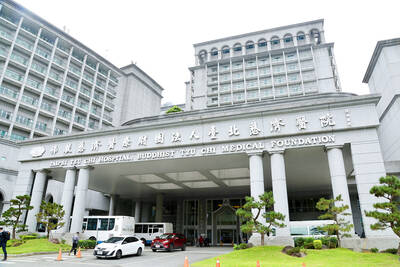
POLICE INVESTIGATING: A man said he quit his job as a nurse at Taipei Tzu Chi Hospital as he had been ‘disgusted’ by the behavior of his colleagues A man yesterday morning wrote online that he had witnessed nurses taking photographs and touching anesthetized patients inappropriately in Taipei Tzu Chi Hospital’s operating theaters. The man surnamed Huang (黃) wrote on the Professional Technology Temple bulletin board that during his six-month stint as a nurse at the hospital, he had seen nurses taking pictures of patients, including of their private parts, after they were anesthetized. Some nurses had also touched patients inappropriately and children were among those photographed, he said. Huang said this “disgusted” him “so much” that “he felt the need to reveal these unethical acts in the operating theater
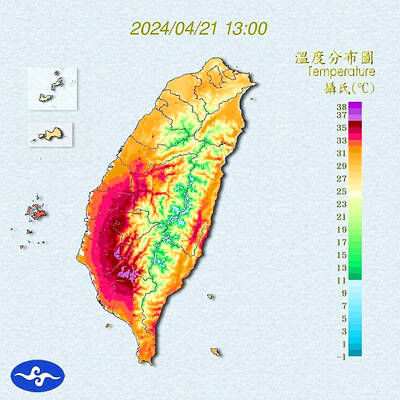
Heat advisories were in effect for nine administrative regions yesterday afternoon as warm southwesterly winds pushed temperatures above 38°C in parts of southern Taiwan, the Central Weather Administration (CWA) said. As of 3:30pm yesterday, Tainan’s Yujing District (玉井) had recorded the day’s highest temperature of 39.7°C, though the measurement will not be included in Taiwan’s official heat records since Yujing is an automatic rather than manually operated weather station, the CWA said. Highs recorded in other areas were 38.7°C in Kaohsiung’s Neimen District (內門), 38.2°C in Chiayi City and 38.1°C in Pingtung’s Sandimen Township (三地門), CWA data showed. The spell of scorching


 RSS
RSS