


Despite being surrounded by countries struggling to deal with bird flu, Taiwan remains unaffected by the devastating disease, the Council of Agriculture (COA) said yesterday.
Chiang Yi-nan (
Earlier this month, 55,000 chickens on two farms in Changhua and Chiayi counties were slaughtered after the discovery of H5N2, a weaker strain of bird flu.
Last week, thousands of chickens were discovered to be sick or dying on three farms in Chiayi County's Liuchiao township. After analyzing samples from the farms, scientists at the Animal Health Research Institute found evidence of both the H5N2 strain and the Newcastle virus, which poses a constant threat to poultry around the world.
A farm in Tainan County's Chia-li township then reported that one-tenth of its 30,000 chickens had died since Jan. 13. Again, both the H5N2 and Newcastle viruses were found on the farm.
"The unusually low temperatures of late have made chickens particularly vulnerable, and some had received the Newcastle virus vaccine. Some of them died from other complications involving bacterial infections," Chiang said at a press conference yesterday.
On Wednesday last week, the government issued a ban on the removal of any animal from its farm. Officials said that all farms affected by infectious diseases would be closely monitored for at least three months.
Bureau Deputy Director General Yeh Ying (
"We don't rule out the possibility that migratory birds or smuggled bird-flu vaccines are involved," Yeh said.
People who smuggle bird-flu vaccines face three years' imprisonment. Those administering bird-flu vaccines to chickens face a fine between NT$6,000 and NT$18,000.
Yeh said that Taiwan had done its best to protect itself from the more prevalent avian influenza, also known as H5N1, which is wreaking havoc in neighboring countries.
Thailand is scheduled to hold a regional summit tomorrow to discuss the outbreak of bird flu. Yeh said that an invitation had been passed onto the bureau by the Ministry of Foreign Affairs.
Yeh said the bureau might send an independent expert as its representative to attend the conference.
"The representative's main responsibility will be clearly informing the international community that avian influenza has not occurred in Taiwan," Yeh told the Taipei Times.
Beginning yesterday, Taiwan has banned imports of birds and bird-related products from Indonesia, where millions of chickens have died due to an outbreak of bird flu.
Officials said the ban would have no impact on poultry supplies to domestic markets because Indonesia, where Newcastle disease has taken hold, was already subject to a boycott.
Pet birds from Indonesia would also be subject to the ban.
Taiwan has also placed bans on bird imports and related products from other countries affected by bird flu.
The countries affected are South Korea, Japan, Vietnam and Thailand.
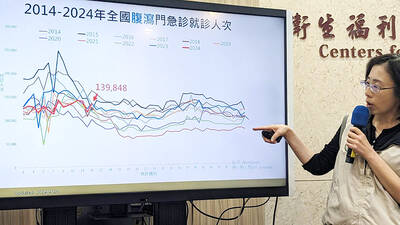
FLU SEASON: Twenty-six severe cases were reported from Tuesday last week to Monday, including a seven-year-old girl diagnosed with influenza-associated encephalopathy Nearly 140,000 people sought medical assistance for diarrhea last week, the Centers for Disease Control (CDC) said on Tuesday. From April 7 to Saturday last week, 139,848 people sought medical help for diarrhea-related illness, a 15.7 percent increase from last week’s 120,868 reports, CDC Epidemic Intelligence Center Deputy Director Lee Chia-lin (李佳琳) said. The number of people who reported diarrhea-related illness last week was the fourth highest in the same time period over the past decade, Lee said. Over the past four weeks, 203 mass illness cases had been reported, nearly four times higher than the 54 cases documented in the same period

A group of Taiwanese-American and Tibetan-American students at Harvard University on Saturday disrupted Chinese Ambassador to the US Xie Feng’s (謝鋒) speech at the school, accusing him of being responsible for numerous human rights violations. Four students — two Taiwanese Americans and two from Tibet — held up banners inside a conference hall where Xie was delivering a speech at the opening ceremony of the Harvard Kennedy School China Conference 2024. In a video clip provided by the Coalition of Students Resisting the CCP (Chinese Communist Party), Taiwanese-American Cosette Wu (吳亭樺) and Tibetan-American Tsering Yangchen are seen holding banners that together read:

UNAWARE: Many people sit for long hours every day and eat unhealthy foods, putting them at greater risk of developing one of the ‘three highs,’ an expert said More than 30 percent of adults aged 40 or older who underwent a government-funded health exam were unaware they had at least one of the “three highs” — high blood pressure, high blood lipids or high blood sugar, the Health Promotion Administration (HPA) said yesterday. Among adults aged 40 or older who said they did not have any of the “three highs” before taking the health exam, more than 30 percent were found to have at least one of them, Adult Preventive Health Examination Service data from 2022 showed. People with long-term medical conditions such as hypertension or diabetes usually do not
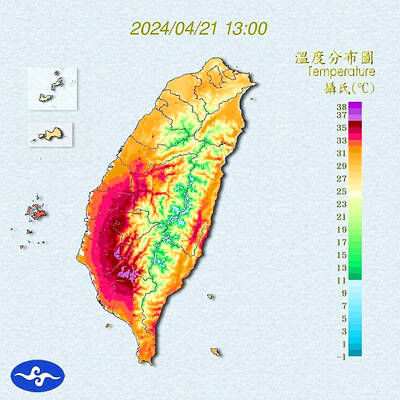
Heat advisories were in effect for nine administrative regions yesterday afternoon as warm southwesterly winds pushed temperatures above 38°C in parts of southern Taiwan, the Central Weather Administration (CWA) said. As of 3:30pm yesterday, Tainan’s Yujing District (玉井) had recorded the day’s highest temperature of 39.7°C, though the measurement will not be included in Taiwan’s official heat records since Yujing is an automatic rather than manually operated weather station, the CWA said. Highs recorded in other areas were 38.7°C in Kaohsiung’s Neimen District (內門), 38.2°C in Chiayi City and 38.1°C in Pingtung’s Sandimen Township (三地門), CWA data showed. The spell of scorching


 RSS
RSS