


At the age of 43, Justine Ko (
"If a marriage becomes something that a person has to endure, there's a high possibility that it'll lead to a crisis," he said. "I know I may sound finicky and selfish and sure I feel obliged to get married and have a family because I'm the oldest child in my family, but I just don't think it's fair to apply one uniform formula to each and every individual."
Getting married may not sound like a horrifying thing for Zhu Li-xi (
Zhu, a 49-year-old college professor, has been married for about 21 years and has no intention whatsoever to add another member to his family. His theory is simple: self-fulfillment outweighs everything else, including raising children.
"Parenting is one hell of a big commitment and a great responsibility which takes at least 20 years of your life," he said. "I don't find it appealing to toil or even waste 20 years of my life to give up my dreams just for the fun of raising a child."
Rebecca Wang (王玉如), a 34-year-old married career woman, said that she does want more than one child if she and her husband are going to have any children at all.
"With bank savings of a little more than NT$500,000, I don't think we can afford to have more than one baby," she said, adding that they are planning to have their first child four years into their marriage.
Late marriages, smaller family sizes and a lower reproduction rate are common social phenomena in Taiwan nowadays, and the deeply trouble demographers.
According to Chang Ming-cheng (
"If the downward trend continues, the nation's population will reach the stage of zero population growth soon, speedily turning into negative growth," he says.
Low population growth means fewer younger people and an increase in the proportion of old people in the population. It means a smaller labor force as a proportion of the population and a higher dependency ratio -- in short fewer productive people and more people needing care, and a host of social problems.
According the Ministry of the Interior, last year saw a record low for new births with only 227,000 babies born, or an 8.3 percent decrease on the previous year.
Senior citizens take up about 9 percent of the nation's total population, more than a 1 percent increase compared to the 1998 figure.
A study conducted by Chang also indicates that the nation's total fertility rate (TFR, children born per woman) declined from 1955's 6.55 to 1.7 in 1997, 1.6 in 2000, 1.45 in 2001, 1.34 in 2002 and then 1.3 last year. When the island-wide "two children" family planning program was introduced in 1964, the TFR was 5.1.
The net reproduction rate (NRR, number of female births per woman) fell to 1 in 1983 and to 0.7 in 2001. The NRR was 2.27 in 1964.
Since 1984 the nation's NRR has been below the replacement rate.
Chang's study also shows that the mean preferred number of children also decreased from 4 in 1965 to about 2.7 in 1980 and then to 2.4 in 1998.
"While only 7 percent of married couples said they wanted to have only one child or no child at all in a 1997 survey, the percentage jumped to 17 percent in 2002," Chang said. He also pointed out that the tendency toward one or no children was greater among younger couples, which means that there is no reason to expect the trend to be reversed.
Chang attributed the declining reproduction rate to various reasons, including the economic factors and the erosion of traditional values.
In Wang's case, family economy plays a pivotal role in her marriage. In her mind, a steady job and a reasonable amount of savings are the two prerequisites for having a baby.
In Ko's and Zhu's cases, the withering of the tradition of getting married and having offspring has prompted them to opt for following their own dreams rather than going down the traditional path like others. A rising age at marriage also has an important effect in reducing birth rates and the total fertility rate, Chang said.
Chang attributed the rising age at marriage to urbanization and the rapid rise in educational levels, especially for women.
"Rising education levels have been important in producing the postponement effect. Various studies have shown that the higher the educational levels, the older people get married," Chang said.
Rising educational levels result in an exodus of young women living in rural areas to big cities, which inject more manpower to the labor market but creates an imbalance in the marriage market.
"Taiwan has a very unique social phenomenon in that the number of eligible men outnumbers their female counterparts, but it's women who find themselves having more trouble finding a husband," Chang said. "A woman with a high educational level tends to prefer a man with an even higher educational background, which usually comes with more financial security."
Statistics show that men take up more than 52 percent of the total population, while women account for 48 percent. The male-to-female ratio last year was 110 to 100, the highest ever.
Apparently, Taiwan is not the only country running into the problem of low reproduction rates and people waiting longer before they get married.
To encourage more births, the Singaporean government, for example, has initiated various measures including organizing trips and activities for eligible men and women and creating a web site where they can meet their potential mates online.
In Taiwan, no such incentives are proposed although the interior ministry is mulling offering monetary incentives to encourage childbirth. Chang, however, casts doubt on the effectiveness of the proposed policy.
"It might have a greater effect for those with lower educational levels or in rural areas, but I doubt that it'll change the core values of those with higher educational levels who value liberalism and self-fulfillment more than raising children," he said.

A group of Taiwanese-American and Tibetan-American students at Harvard University on Saturday disrupted Chinese Ambassador to the US Xie Feng’s (謝鋒) speech at the school, accusing him of being responsible for numerous human rights violations. Four students — two Taiwanese Americans and two from Tibet — held up banners inside a conference hall where Xie was delivering a speech at the opening ceremony of the Harvard Kennedy School China Conference 2024. In a video clip provided by the Coalition of Students Resisting the CCP (Chinese Communist Party), Taiwanese-American Cosette Wu (吳亭樺) and Tibetan-American Tsering Yangchen are seen holding banners that together read:

UNAWARE: Many people sit for long hours every day and eat unhealthy foods, putting them at greater risk of developing one of the ‘three highs,’ an expert said More than 30 percent of adults aged 40 or older who underwent a government-funded health exam were unaware they had at least one of the “three highs” — high blood pressure, high blood lipids or high blood sugar, the Health Promotion Administration (HPA) said yesterday. Among adults aged 40 or older who said they did not have any of the “three highs” before taking the health exam, more than 30 percent were found to have at least one of them, Adult Preventive Health Examination Service data from 2022 showed. People with long-term medical conditions such as hypertension or diabetes usually do not
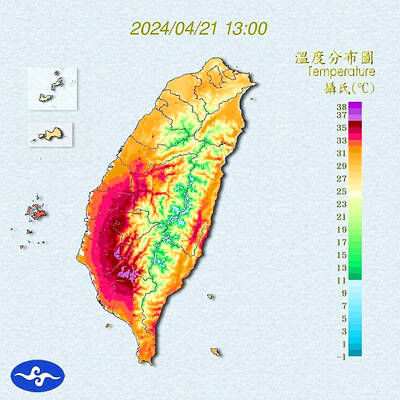
Heat advisories were in effect for nine administrative regions yesterday afternoon as warm southwesterly winds pushed temperatures above 38°C in parts of southern Taiwan, the Central Weather Administration (CWA) said. As of 3:30pm yesterday, Tainan’s Yujing District (玉井) had recorded the day’s highest temperature of 39.7°C, though the measurement will not be included in Taiwan’s official heat records since Yujing is an automatic rather than manually operated weather station, the CWA said. Highs recorded in other areas were 38.7°C in Kaohsiung’s Neimen District (內門), 38.2°C in Chiayi City and 38.1°C in Pingtung’s Sandimen Township (三地門), CWA data showed. The spell of scorching
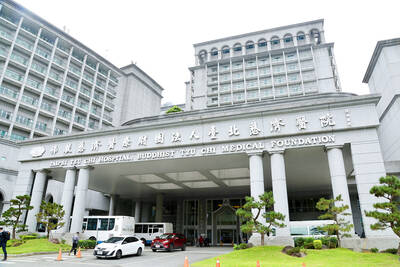
POLICE INVESTIGATING: A man said he quit his job as a nurse at Taipei Tzu Chi Hospital as he had been ‘disgusted’ by the behavior of his colleagues A man yesterday morning wrote online that he had witnessed nurses taking photographs and touching anesthetized patients inappropriately in Taipei Tzu Chi Hospital’s operating theaters. The man surnamed Huang (黃) wrote on the Professional Technology Temple bulletin board that during his six-month stint as a nurse at the hospital, he had seen nurses taking pictures of patients, including of their private parts, after they were anesthetized. Some nurses had also touched patients inappropriately and children were among those photographed, he said. Huang said this “disgusted” him “so much” that “he felt the need to reveal these unethical acts in the operating theater


 RSS
RSS