


Technologies such as the Internet and text messaging are becoming common tools in recruiting young girls to the sex trade, social groups said yesterday.
The groups, including the End Child Prostitution Association in Taiwan (
The survey showed that 40 percent of the girls were lured into the trade by their peers and 20 percent through Internet chat rooms. Only about 10 percent responded to newspaper advertisements or were recruited by employment agencies or through other media, compared with 30.9 percent in 1990. The remainder were recruited in a number of other ways.
While 42.5 percent of the girls knew what they were getting into, 34 percent did not know but could accept the situation afterwards, and 15 percent did not know and could not accept the situation, but could not leave. The others did not respond to the question.
Taipei Women's Rescue Foundation executive director Wu Pei-ling (
The survey also showed that 47.9 percent of these girls had engaged in enjo-kosai, a Japanese term describing the phenomenon of schoolgirls selling their bodies to older men.
The survey quizzed 40 girls who had voluntarily entered the sex trade to understand their motivations. They were given multiple choices and could pick more than one answer.
"Among these girls, 70 percent said they engaged in enjo-kosai because they needed the money, 35 percent said the job paid better than others and 35 percent said it was out of curiosity," Wu said.
Wu said it was worrying that so many young girls would try enjo-kosai simply out of curiosity.
"The Internet and mobile phone short message systems also allow young people to get in touch with the sex industry easily," Wu said.
"With another survey we have done on the Internet, we have found that 37 percent of Internet users encounter pornography every day, 51 percent have viewed information regarding the sex trade and 52 percent of users search for pornography actively, with 15-to-19-year-olds the most keen searchers," Wu said.
Wu said that 85.12 percent of users said they had received sex messages via the Chunghwa Telecom (中華電信), Taiwan Cellular Corp (台灣大哥大) or FarEasTone Telecommunications Co (遠傳電信) networks.
To address the issue the groups urged the government to improve its education program in shelters for teenagers, sex education in schools and its online detective work. They also demanded telecom service providers prevent sex short messages from spreading across their networks.
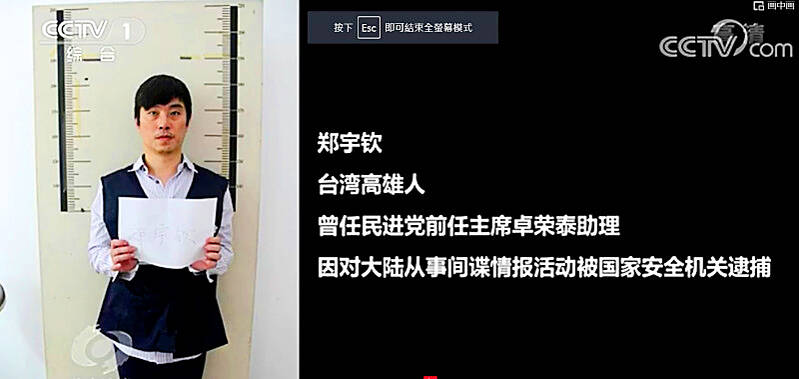
Former Czech Republic-based Taiwanese researcher Cheng Yu-chin (鄭宇欽) has been sentenced to seven years in prison on espionage-related charges, China’s Ministry of State Security announced yesterday. China said Cheng was a spy for Taiwan who “masqueraded as a professor” and that he was previously an assistant to former Cabinet secretary-general Cho Jung-tai (卓榮泰). President-elect William Lai (賴清德) on Wednesday last week announced Cho would be his premier when Lai is inaugurated next month. Today is China’s “National Security Education Day.” The Chinese ministry yesterday released a video online showing arrests over the past 10 years of people alleged to be

THE HAWAII FACTOR: While a 1965 opinion said an attack on Hawaii would not trigger Article 5, the text of the treaty suggests the state is covered, the report says NATO could be drawn into a conflict in the Taiwan Strait if Chinese forces attacked the US mainland or Hawaii, a NATO Defense College report published on Monday says. The report, written by James Lee, an assistant research fellow at Academia Sinica’s Institute of European and American Studies, states that under certain conditions a Taiwan contingency could trigger Article 5 of NATO, under which an attack against any member of the alliance is considered an attack against all members, necessitating a response. Article 6 of the North Atlantic Treaty specifies that an armed attack in the territory of any member in Europe,

LIKE FAMILY: People now treat dogs and cats as family members. They receive the same medical treatments and tests as humans do, a veterinary association official said The number of pet dogs and cats in Taiwan has officially outnumbered the number of human newborns last year, data from the Ministry of Agriculture’s pet registration information system showed. As of last year, Taiwan had 94,544 registered pet dogs and 137,652 pet cats, the data showed. By contrast, 135,571 babies were born last year. Demand for medical care for pet animals has also risen. As of Feb. 29, there were 5,773 veterinarians in Taiwan, 3,993 of whom were for pet animals, statistics from the Animal and Plant Health Inspection Agency showed. In 2022, the nation had 3,077 pediatricians. As of last

XINJIANG: Officials are conducting a report into amending an existing law or to enact a special law to prohibit goods using forced labor Taiwan is mulling an amendment prohibiting the importation of goods using forced labor, similar to the Uyghur Forced Labor Prevention Act (UFLPA) passed by the US Congress in 2021 that imposed limits on goods produced using forced labor in China’s Xinjiang region. A government official who wished to remain anonymous said yesterday that as the US customs law explicitly prohibits the importation of goods made using forced labor, in 2021 it passed the specialized UFLPA to limit the importation of cotton and other goods from China’s Xinjiang Uyghur region. Taiwan does not have the legal basis to prohibit the importation of goods


 RSS
RSS