


Taipei Times: How did you become involved in the human rights movement in Taiwan?
James Seymour: I came here to study in 1961, then I left and I actually did not come back until 1975. Then Amnesty International sent me as a delegate to appeal to the government to release political prisoners. This was at the time of Chiang Kai-shek's (蔣介石) death. A hundred days after his death there would be a jiangxing [(減刑), commutation]. I was asked to ask the government to include the political prisoners in the commutation. And then a second time the same year, I was sent back by Amnesty International to attend the trial of Hsieh Tsung-min (謝聰敏) and some other people. Actually I did not get into the trial so I decided I might as well do something with my time.
I went around and met the young tang wai [(

PHOTO COURTESY OF THE TAIWAN FOUNDATION FOR DEMOCRACY
TT: Were you in Taiwan during the Mei-li Tau Incident?
Seymour: I was not here during the Mei-li Tau Incident. I was here in 1977. I came back after the incident and visited the relatives of [human-rights activists]. Then the government had enough of me, I was blacklisted after that.
TT: How do you think Taiwan has changed since then in terms of the human-rights movement?
Seymour: Well, of course it's very gratifying that Taiwan is now a place where human rights are respected. And those of us who were involved in human rights, our purpose was not to support this party or that party. But just to enable the people of Taiwan to make their own choices. Whatever they choose is not our business.
TT: So you are looking at it from a humanitarian perspective rather than a political perspective. The chairman of the Taiwan Foundation for Democracy (
Seymour: Right. Yes, that's very important to me. Our purpose is not to support the Democratic Progressive Party (DPP). Our purpose is to support democracy in Taiwan. Democracy is in pretty good shape. We are very happy about that.
TT: You think so?
Seymour: Well, I know there are some problems. I've been focusing on China, so I am not up to speed about the situation in Taiwan. But my impression is that the judiciary still has some problems, the court system, some of these trials like Chang Chan-hong (張燦鍙). He returned from exile and became the mayor of Tainan. Of course [Taiwan has] always been a very corrupt place. The prosecutor decided to go for Chang. So far as I know they did not accuse him of any personal gain and I don't know if they have been able to prove that he did anything. But if he did anything it was more negligence than criminal intent. And the latest word is up to seven years' sentence.
So these young prosecutors are tai-li-hai [(太厲害), too smart] sometimes. And the judges are kind of weak. The judges should really make sure that justice is done. There are other cases too. So probably there are some reforms needed in the judiciary. But as far as free press is concerned, it's OK. There are no political prisoners, and people speak through free elections. So that's basically what we want.
TT: How do you think Taiwan compares with other countries in terms of the human-rights movement?
Seymour: Of course this is the world trend. I think the system here is in much better shape than the Russian system. Certainly it is pretty bad in Burma [Myanmar]. The situation here is much better than in Hong Kong, Vietnam. So Taiwan is really up there with the truly democratic countries.
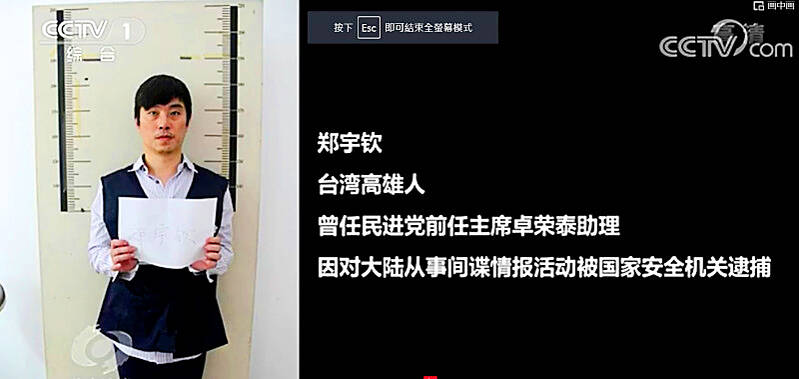
Former Czech Republic-based Taiwanese researcher Cheng Yu-chin (鄭宇欽) has been sentenced to seven years in prison on espionage-related charges, China’s Ministry of State Security announced yesterday. China said Cheng was a spy for Taiwan who “masqueraded as a professor” and that he was previously an assistant to former Cabinet secretary-general Cho Jung-tai (卓榮泰). President-elect William Lai (賴清德) on Wednesday last week announced Cho would be his premier when Lai is inaugurated next month. Today is China’s “National Security Education Day.” The Chinese ministry yesterday released a video online showing arrests over the past 10 years of people alleged to be

THE HAWAII FACTOR: While a 1965 opinion said an attack on Hawaii would not trigger Article 5, the text of the treaty suggests the state is covered, the report says NATO could be drawn into a conflict in the Taiwan Strait if Chinese forces attacked the US mainland or Hawaii, a NATO Defense College report published on Monday says. The report, written by James Lee, an assistant research fellow at Academia Sinica’s Institute of European and American Studies, states that under certain conditions a Taiwan contingency could trigger Article 5 of NATO, under which an attack against any member of the alliance is considered an attack against all members, necessitating a response. Article 6 of the North Atlantic Treaty specifies that an armed attack in the territory of any member in Europe,
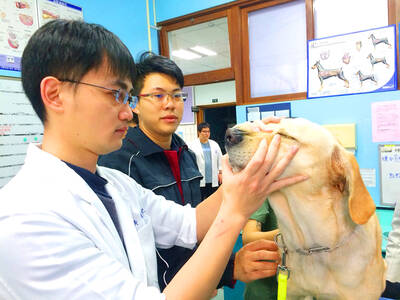
LIKE FAMILY: People now treat dogs and cats as family members. They receive the same medical treatments and tests as humans do, a veterinary association official said The number of pet dogs and cats in Taiwan has officially outnumbered the number of human newborns last year, data from the Ministry of Agriculture’s pet registration information system showed. As of last year, Taiwan had 94,544 registered pet dogs and 137,652 pet cats, the data showed. By contrast, 135,571 babies were born last year. Demand for medical care for pet animals has also risen. As of Feb. 29, there were 5,773 veterinarians in Taiwan, 3,993 of whom were for pet animals, statistics from the Animal and Plant Health Inspection Agency showed. In 2022, the nation had 3,077 pediatricians. As of last
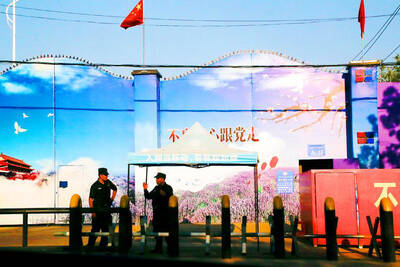
XINJIANG: Officials are conducting a report into amending an existing law or to enact a special law to prohibit goods using forced labor Taiwan is mulling an amendment prohibiting the importation of goods using forced labor, similar to the Uyghur Forced Labor Prevention Act (UFLPA) passed by the US Congress in 2021 that imposed limits on goods produced using forced labor in China’s Xinjiang region. A government official who wished to remain anonymous said yesterday that as the US customs law explicitly prohibits the importation of goods made using forced labor, in 2021 it passed the specialized UFLPA to limit the importation of cotton and other goods from China’s Xinjiang Uyghur region. Taiwan does not have the legal basis to prohibit the importation of goods


 RSS
RSS