


The devastating 921 earthquake four years ago almost ruined Taomi village (
Before the earthquake the majority of Taomi's 1,200 residents made their living from farming around this small village occupying an area of 15km2 at altitudes of 430m to 800m.
Surrounded by beautiful bamboo forests, wetlands, hills, waterfalls and creeks, the village seemed to stand aloof from the world.
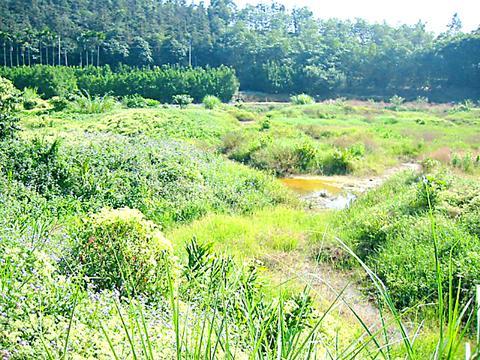
PHOTO: JEWEL HUANG, TAIPEI TIMESN
But everything changed after the massive quake, which measured 7.3 on the Richter scale.
About 62 percent of the buildings in Taomi were destroyed overnight. The bodies of 20 people buried by rubble during the quake were never found.
Residents' lives were suddenly turned upside down. They could not go back to their houses, because these had been reduced to rubble, and they could not farm or grow vegetables due to ruined farmland.
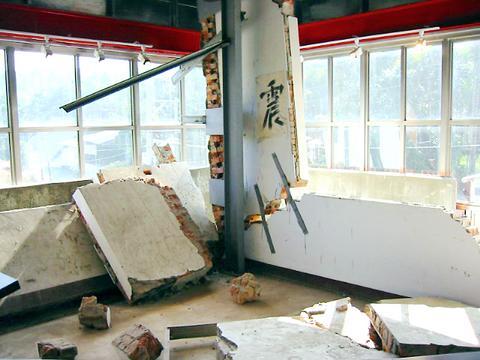
PHOTO: JEWEL HUANG, TAIPEI TIMES
When Taiwan joined the WTO, which led to cheaper agricultural products being imported, it became even more difficult for Taomi residents to return to farming.
Living in friends' homes or the temporary housing units that had been constructed by the government, most of the residents became unemployed and lived on a relief allowance of NT$15,000 per month from the Council of Labor Affairs.
But Taomi's residents knew they had to find a new way to make a living.
With the support of the Council of Agriculture's Taiwan Endemic Species Research Institute (TESRI) and the independent New Homeland Foundation (新故鄉文教基金會), people started attending courses about the village's history and ecosystems -- and the idea of transforming Taomi into an ecological village gradually took shape.
With various habitats and thick vegetation in wetlands, creeks, orchards and forests, Taomi poss-esses the most diverse variety of frogs, dragonflies, damselflies and birds in Taiwan.
According to a TESRI survey, 21 frog species are found around Taomi, which amounts to about 70 percent of the total number of frog species in the country, as well as 45 species of dragonflies out of the 143 that are found here.
One third of Taiwan's bird species can be observed in Taomi.
Realizing that their village had been blessed with a unique ecosystem and diverse wildlife, residents decided to piece their lives back together by transforming Taomi from a traditional rural hamlet into a resort for ecological tourism.
"The ecological village combines conservation with the leisure industry," said Kuan Yu-fu (官裕富), an ecotourism guide at the Taomi Ecological Village, which is the name under which the village is being promoted.
"Taomi residents knew their goal was not only to rebuild their village but also to revitalize it," Kuan said.
With the help of the experts and university professors, Kuan said the residents gradually accepted the concepts of "holistic community building" and the "knowledge economy." They came to believe they could carve out new prospects if they applied their efforts in their community.
After attending over 1,000 hours of educational courses, which took them about one year, 15 residents were certified as professional ecological guides and investigators of frogs, dragonflies, plants and birds.
All the guides were originally farmers, lumberjacks or house-wives, Kuan said.
Some residents who attended tourism-related courses learned about hotel management and gastronomy and remodeled their houses into guesthouses. There are now eight such guesthouses.
Kuan also runs one, named the "Red Tile-Roofed House," from the Kuan family's renovated house.
From August to October, more than 3,000 people visited Taomi Ecological Village, which brought in more than NT$2 million.
In order to protect Taomi's natural resources and surroundings, however, the village limits access to about 120 visitors a day.
"I never expected that my childhood love of frogs would be useful in reconstructing my village," said Chiu Fu-tien (邱富添), a licensed frog guide who has been dubbed the "frog prince" because of his abundant knowledge of frogs.
"Best of all, I can earn a living from it," he said.
Chiu can tell frog species apart by listening to their voices. He is also the owner of the guesthouse called "Green House," that has been remodeled on his property.
"Many changes have taken place in Taomi. There is now a closer relationship among residents and, most importantly, residents' sense of community has improved. We are back to normal life, which is more interesting than before," Chiu said.
To arrange a tour or for more information about the Taomi Ecological Village, visit its Web site at http://myweb.hinet.net/home6/cote/title.htm
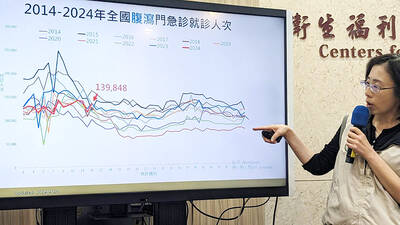
FLU SEASON: Twenty-six severe cases were reported from Tuesday last week to Monday, including a seven-year-old girl diagnosed with influenza-associated encephalopathy Nearly 140,000 people sought medical assistance for diarrhea last week, the Centers for Disease Control (CDC) said on Tuesday. From April 7 to Saturday last week, 139,848 people sought medical help for diarrhea-related illness, a 15.7 percent increase from last week’s 120,868 reports, CDC Epidemic Intelligence Center Deputy Director Lee Chia-lin (李佳琳) said. The number of people who reported diarrhea-related illness last week was the fourth highest in the same time period over the past decade, Lee said. Over the past four weeks, 203 mass illness cases had been reported, nearly four times higher than the 54 cases documented in the same period

A group of Taiwanese-American and Tibetan-American students at Harvard University on Saturday disrupted Chinese Ambassador to the US Xie Feng’s (謝鋒) speech at the school, accusing him of being responsible for numerous human rights violations. Four students — two Taiwanese Americans and two from Tibet — held up banners inside a conference hall where Xie was delivering a speech at the opening ceremony of the Harvard Kennedy School China Conference 2024. In a video clip provided by the Coalition of Students Resisting the CCP (Chinese Communist Party), Taiwanese-American Cosette Wu (吳亭樺) and Tibetan-American Tsering Yangchen are seen holding banners that together read:

UNAWARE: Many people sit for long hours every day and eat unhealthy foods, putting them at greater risk of developing one of the ‘three highs,’ an expert said More than 30 percent of adults aged 40 or older who underwent a government-funded health exam were unaware they had at least one of the “three highs” — high blood pressure, high blood lipids or high blood sugar, the Health Promotion Administration (HPA) said yesterday. Among adults aged 40 or older who said they did not have any of the “three highs” before taking the health exam, more than 30 percent were found to have at least one of them, Adult Preventive Health Examination Service data from 2022 showed. People with long-term medical conditions such as hypertension or diabetes usually do not
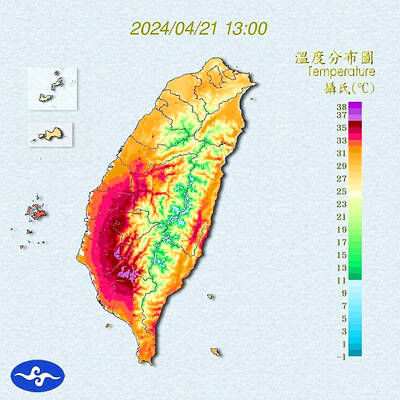
Heat advisories were in effect for nine administrative regions yesterday afternoon as warm southwesterly winds pushed temperatures above 38°C in parts of southern Taiwan, the Central Weather Administration (CWA) said. As of 3:30pm yesterday, Tainan’s Yujing District (玉井) had recorded the day’s highest temperature of 39.7°C, though the measurement will not be included in Taiwan’s official heat records since Yujing is an automatic rather than manually operated weather station, the CWA said. Highs recorded in other areas were 38.7°C in Kaohsiung’s Neimen District (內門), 38.2°C in Chiayi City and 38.1°C in Pingtung’s Sandimen Township (三地門), CWA data showed. The spell of scorching


 RSS
RSS