


The Flying Eye Hospital is exactly what one would assume it to be -- a fully equipped eye clinic in a DC-10 aircraft. This January, the aircraft will take two Taiwanese ophthalmologists to the Philippines where they will spend one week providing medical care to patients and training local healthcare workers.
"Because in Taiwan most preventable cases of blindness are treated, people do not realize how serious a problem blindness is in other areas of the world" said Cliff Chien (
Indeed, 45 million of the world's people are blind and another 135 million have poor vision and are at risk of becoming blind. At the same time, 80 percent of these conditions are avoidable with appropriate treatment and prevention measures.

PHOTO: JOY SU, TAIPEI TIMES
"Unless you have an eye problem, it's hard to understand what it's like. Most of the attention and resources are given to heart surgery or pediatrics. However, I've always believed that the human body is an extension of the eye," said Garth Taylor, a Queen's University professor and ophthalmologist in Ontario, Canada, who has participated in 100 Flying Eye Hospital trips over the past 21 years.
Since its establishment in 1982, the Flying Eye Hospital has visited various developing nations around the world. Taylor explained that the first task upon landing is to select the patients who will be treated during the trip. Patients are chosen according to the educational potential of their condition and the severity of the condition. The rest of the week is dedicated to training local doctors with demonstrations on selected patients.
As a Mandarin-speaking nation, Taiwan has a unique contribution, as 20 percent of the Flying Eye Hospital destinations are in China. In January, Ray Tsai (蔡瑞芳), a Chang Gung Memorial Hospital ophthalmologist and Liu Jung-hung (劉榮宏), director of the Cheng Hsin Rehabilitation Medical Center, will travel to Angeles City in the Philippines as visiting faculty on the Flying Eye Hospital.
"The Flying Eye Hospital teaches people to fish instead of giving them fish," Tsai said.
Taiwan's gain
Tsai went on to explain that while Orbis sought to impart medical skills to developing nations, Taiwan also stood to gain from the international trips.
"The easiest way for Taiwan to gain international recognition is through non-governmental international organizations," said Tsai, explaining that Taiwanese membership in the World Health Organization would be more likely if Taiwan first established itself as an important player in the field of international health.
"Taiwan has developed very quickly in the past few years and is now in a position to help developing nations. It's time for Taiwan to contribute -- be it with monetary or medical assistance," Tsai said.
"Taiwan's medical assistance should take two routes. We should work with international organizations, gaining international recognition in the process. However, Taiwan should also establish its own assistance programs in the future," Tsai said.
In addition, the Flying Eye Hospital is also an opportunity for visiting doctors to learn from medical conditions that do not exist in their home countries.
"In India, eye clinics are divided into two sections: one section for the poor and another for those who can pay," Tsai said.
"In the clinic for the poor, there are maybe four or five doctors for every 200 patients. Taiwan's doctors are skilled, but do you think we could be faster than the Indian doctors? Each [Indian] patient sees the doctor for three minutes. It takes us 20 minutes per patient," Tsai said.
"On one hand, Taiwanese doctors can help provide man power. On the other hand, we're gaining more experience [from the Indian health conditions]," Tsai said.
Taylor also echoed Tsai's sentiments.
"The Flying Eye Hospital has broadened my scope of international ophthalmology ... [while at the same time] shrinking the world of ophthalmology. The [local] doctors also teach me a lot," Taylor said.
Orbis Executive Director Kathy Spahn also agreed, saying, "Flying Eye Hospital visiting doctors learn about other diseases. Diseases are becoming more international. They learn from doctors that have to work with very little, developing low cost solutions," Taylor said.
However, no matter how frugal the solution, Taylor and Tsai both confirmed that corneal transplants were often needed in treating eye conditions.
When the cornea is damaged, light is unable to enter the eye, preventing the patient from seeing, according to Taylor. Among other ophthalmologic conditions, corneal transplants can treat corneal blindness and trachoma, a contagious eye infection that is responsible for 15 percent of blindness worldwide.
"In Taiwan, we are unable to provide other countries with corneas. The only eye bank we have, the Chunghwa Eye Bank Foundation, only imports corneas from abroad for a processing fee," Tsai said, adding that there was also a domestic need for the procurement of corneas for transplants.
In addition, Orbis representatives pointed out that while there were two Taiwanese visiting faculty volunteering on the Flying Eye Hospitals, there were over 30 Canadian doctors.
Taylor explained that the technical standards set for the Flying Eye Hospital faculty were quite high, while Tsai further added that international recommendations were required for visiting faculty.
Chien explained that there were about six Taiwanese candidates who could possibly participate in future Flying Eye Hospital trips, explaining that the doctors were busy.
However, Taylor said that the trips were not arduous for him.
"It's such an easy task for me because it's fun ... I've done just about everything -- including toilet-cleaning -- except for flying the airplane," he said.
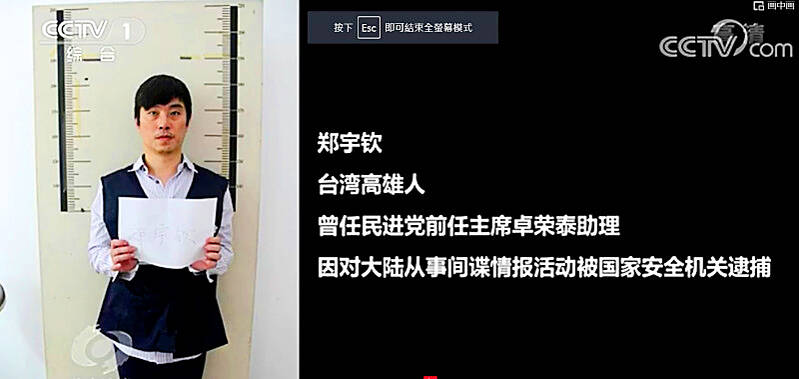
Former Czech Republic-based Taiwanese researcher Cheng Yu-chin (鄭宇欽) has been sentenced to seven years in prison on espionage-related charges, China’s Ministry of State Security announced yesterday. China said Cheng was a spy for Taiwan who “masqueraded as a professor” and that he was previously an assistant to former Cabinet secretary-general Cho Jung-tai (卓榮泰). President-elect William Lai (賴清德) on Wednesday last week announced Cho would be his premier when Lai is inaugurated next month. Today is China’s “National Security Education Day.” The Chinese ministry yesterday released a video online showing arrests over the past 10 years of people alleged to be

THE HAWAII FACTOR: While a 1965 opinion said an attack on Hawaii would not trigger Article 5, the text of the treaty suggests the state is covered, the report says NATO could be drawn into a conflict in the Taiwan Strait if Chinese forces attacked the US mainland or Hawaii, a NATO Defense College report published on Monday says. The report, written by James Lee, an assistant research fellow at Academia Sinica’s Institute of European and American Studies, states that under certain conditions a Taiwan contingency could trigger Article 5 of NATO, under which an attack against any member of the alliance is considered an attack against all members, necessitating a response. Article 6 of the North Atlantic Treaty specifies that an armed attack in the territory of any member in Europe,
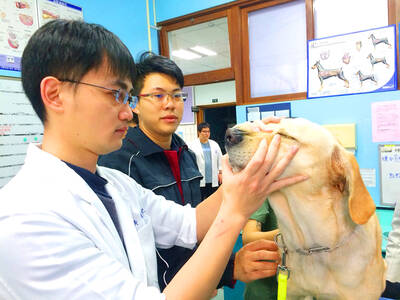
LIKE FAMILY: People now treat dogs and cats as family members. They receive the same medical treatments and tests as humans do, a veterinary association official said The number of pet dogs and cats in Taiwan has officially outnumbered the number of human newborns last year, data from the Ministry of Agriculture’s pet registration information system showed. As of last year, Taiwan had 94,544 registered pet dogs and 137,652 pet cats, the data showed. By contrast, 135,571 babies were born last year. Demand for medical care for pet animals has also risen. As of Feb. 29, there were 5,773 veterinarians in Taiwan, 3,993 of whom were for pet animals, statistics from the Animal and Plant Health Inspection Agency showed. In 2022, the nation had 3,077 pediatricians. As of last

XINJIANG: Officials are conducting a report into amending an existing law or to enact a special law to prohibit goods using forced labor Taiwan is mulling an amendment prohibiting the importation of goods using forced labor, similar to the Uyghur Forced Labor Prevention Act (UFLPA) passed by the US Congress in 2021 that imposed limits on goods produced using forced labor in China’s Xinjiang region. A government official who wished to remain anonymous said yesterday that as the US customs law explicitly prohibits the importation of goods made using forced labor, in 2021 it passed the specialized UFLPA to limit the importation of cotton and other goods from China’s Xinjiang Uyghur region. Taiwan does not have the legal basis to prohibit the importation of goods


 RSS
RSS