


Amid a packed house, former president Lee Teng-hui (
The talk was part of the promotional activities for the release of the book From Taiwan to Taiwan Plus -- Taiwan's Overall National Goals in the 21st Century. The book is a collection of Lee's theses on the nation's future development in terms of building Taiwan's state identity, awareness of China's threats, national security, diplomacy expansion, economic development, promotion of Taiwan-centered education and culture, and reinforcement of democracy.
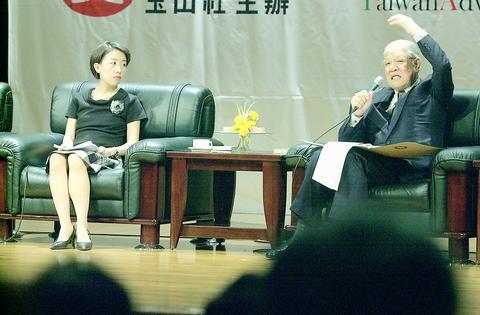
PHOTO: GEORGE TSORNG, TAIPEI TIMES
The three young people in the talk were: Freddy Lin (
In a question and answer session, the former president, in his 80s, spoke passionately about the need for young people to understand this moment of nation building.
Lin asked how it was that Lee Teng-hui had gone from Japanese colonization to the rule of the Chinese Nationalist Party (KMT) dictatorship, to a fervent supporter of independence.
Lee Teng-hui said he has witnessed the grief all Taiwanese feel who have long been unable to be the boss of their own country.
"When I was still in the KMT, I always said Taiwanese people were unfortunate because Taiwan was ruled by an alien regime. Then KMT secretary-general Chiang Yang-shih (
He said the result of Taiwanese people being ruled by alien regimes has been that their mouths have been sealed for fear of improper speeches.
The former president said it is important to understand history and to be firm and consistent in fighting against all odds.
In addition, he said he keeps a strong Christian belief, which has seen him through the darkest times as he pushed for the causes of the country and stood up to fierce opposition and partisan feuding.
"I don't mind that other people have spoken ill of me. I also don't care about the protests and attacks by members of the pro-unification Patriot Association (
"Faith, ethics and justice are the most important characters an individual must bear in face of the fast-changing global society," he said.
Lee Yen-hui asked how young people should strike a balance between the pursuit of individual success and the attention for the state's prosperity.
Lee Teng-hui urged young people to reinforce their national identity, which, he said, should be a premise for personal success.
"Many young people in Taiwan thought they were born in a free and democratic society and have enjoyed much comfort of freedom. However, this is just material freedom. There are many areas showing Taiwan is not entirely free; that is, Taiwan is not completely a free state," he said.
The former president said, for example, that education in the country still lacks a focus on Taiwan's history and geography, as in the past five decades under the KMT, education disproportionately focused on China.
In addition, Lee said, Aboriginals' rights to autonomy should be respected.
"The Aboriginals are the earliest residents of this island, who came to Taiwan about 450 years ago. But they were driven to the mountainous areas and deprived of many of their inherent rights. What they need most is the skills and management abilities to help them out of poverty and relieve their grave unemployment problems. Their indigenous culture and art should be preserved," Lee Teng-hui said.
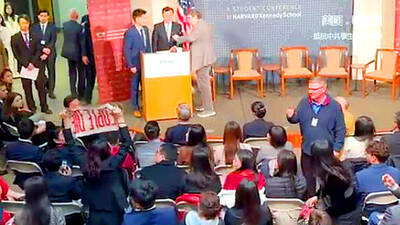
A group of Taiwanese-American and Tibetan-American students at Harvard University on Saturday disrupted Chinese Ambassador to the US Xie Feng’s (謝鋒) speech at the school, accusing him of being responsible for numerous human rights violations. Four students — two Taiwanese Americans and two from Tibet — held up banners inside a conference hall where Xie was delivering a speech at the opening ceremony of the Harvard Kennedy School China Conference 2024. In a video clip provided by the Coalition of Students Resisting the CCP (Chinese Communist Party), Taiwanese-American Cosette Wu (吳亭樺) and Tibetan-American Tsering Yangchen are seen holding banners that together read:

UNAWARE: Many people sit for long hours every day and eat unhealthy foods, putting them at greater risk of developing one of the ‘three highs,’ an expert said More than 30 percent of adults aged 40 or older who underwent a government-funded health exam were unaware they had at least one of the “three highs” — high blood pressure, high blood lipids or high blood sugar, the Health Promotion Administration (HPA) said yesterday. Among adults aged 40 or older who said they did not have any of the “three highs” before taking the health exam, more than 30 percent were found to have at least one of them, Adult Preventive Health Examination Service data from 2022 showed. People with long-term medical conditions such as hypertension or diabetes usually do not
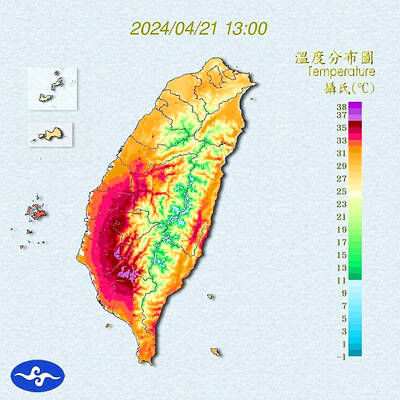
Heat advisories were in effect for nine administrative regions yesterday afternoon as warm southwesterly winds pushed temperatures above 38°C in parts of southern Taiwan, the Central Weather Administration (CWA) said. As of 3:30pm yesterday, Tainan’s Yujing District (玉井) had recorded the day’s highest temperature of 39.7°C, though the measurement will not be included in Taiwan’s official heat records since Yujing is an automatic rather than manually operated weather station, the CWA said. Highs recorded in other areas were 38.7°C in Kaohsiung’s Neimen District (內門), 38.2°C in Chiayi City and 38.1°C in Pingtung’s Sandimen Township (三地門), CWA data showed. The spell of scorching
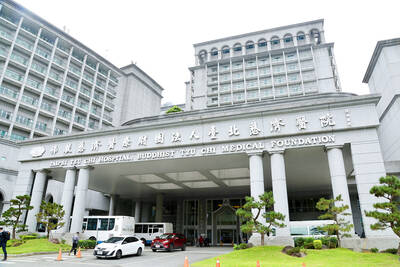
POLICE INVESTIGATING: A man said he quit his job as a nurse at Taipei Tzu Chi Hospital as he had been ‘disgusted’ by the behavior of his colleagues A man yesterday morning wrote online that he had witnessed nurses taking photographs and touching anesthetized patients inappropriately in Taipei Tzu Chi Hospital’s operating theaters. The man surnamed Huang (黃) wrote on the Professional Technology Temple bulletin board that during his six-month stint as a nurse at the hospital, he had seen nurses taking pictures of patients, including of their private parts, after they were anesthetized. Some nurses had also touched patients inappropriately and children were among those photographed, he said. Huang said this “disgusted” him “so much” that “he felt the need to reveal these unethical acts in the operating theater


 RSS
RSS