


Recent discussions pertaining to legislation surrounding the nation's first referendum law have prompted environmentalists to urge the government to have lax laws revised in order to ensure people's environmental rights.
One of the most controversial laws criticized by activists for its failure to prevent foreseeable environmental deterioration is the Environmental Impact Assessment Act (EIA Act, 環境影響評估法). The lack of public participation and access to information provisions have been attributed to protests emerging in an endless stream, activists said.
The Environmental Protection Administration (EPA) came under fire last week after its head, Hau Lung-bin (
Hau was immediately bashed by both legislators and environmentalists. Democratic Progressive Party (DPP) Legislators on Thursday pointed out that Hau, the only Cabinet-level agency chief with pan-blue leanings, was expressing a view opposing the DPP-dominant Cabinet.
According to Hau, the construction of the Fourth Nuclear Power Plant should be completed anyway, because its EIA had been passed in the early 1990s.
DPP Legislator Eugene Jao (
"In the last few years, we've seen the loss of sand on the beach near the plant's wharf. Why was the problem not addressed by the EIA committee?" Jao asked.
In addition, Jao said the capacity for each power-generating unit has been boosted to 1,350 megawatt from 1,000 megawatt by its builder, Taiwan Power Company (Taipower), which did not redo an EIA.
"It's time for us to emulate European people, such as the Germans, who voted to shut down operational nuclear power plants," Jao said.
The EIA system was first utilized by the US in the early 1970s. It soon influenced advanced countries in Europe, as well as New Zealand, Australia, Canada and Japan. Developing countries in Asia did not begin to promote the EIA system until the 1980s. In Taiwan, after spending a decade preparing a draft for the legislature, the government enacted the EIA Act at the end of 1994.
"It's quite sad that the lax law helps process controversial development projects pertaining to industrial complexes, reservoirs and others," said Eric Liou (
Liou said that other examples illustrating sloppy EIAs include two conflicting national projects -- Tainan Science Park and the nation's first high-speed railroad.
The National Science Council (NSC) selected Tainan as the site for Taiwan's second science park in 1994, two years after the Ministry of Transportation and Communications had designated a route for the rail project running through the site. Both EIAs gave project proponents the green light. To date, vibrations caused by the passage of bullet trains remain a minus in the park's attraction to high-tech firms. The invitation for bids for construction pertaining to vibration reduction will be completed in March next year.
In addition, activists said that the lax law gave dishonest developers space to dodge their responsibilities.
Chen Jian-zhi (陳建志), director of the waste policy committee of the Green Citizens' Action Alliance, said scoping out regulations for diverse development projects become tools used by project proponents to avoid processing EIAs.
For example, Chen said, the EIA Act designates that it is not necessary for a project constructing a waste incinerator on less than five hectares of land to have an assessment completed.
"That's why residents in Taoyuan have no alternative but to accept the establishment of a large incinerator, with a daily capacity of 1,350 metric tonnes of waste, on a site covering only three hectares of land. This is just one of many similar cases in Taiwan," Chen said.
Green Formosa Front chairman Wu Tung-jye (
"The EIA system will never gain people's trust if public participation remains unavailable," Wu said.
According to the EIA Act, public hearings only have to be held after the approval of the first phase of the assessment, which gives developers the green light.
Agency officials stressed that the fundamental spirit of the EIA Act is to prevent and mitigate adverse impacts of development activities so as to attain the goal of environmental protection.
"We know the importance of public involvement. But, under economic pressure, the EIA Act is often blamed by developers for the long process of having assessments completed," said Tung Te-po (
Tung said the agency would consider having the law revised by allowing the public to express their opinions before conducting the assessment.
Shih Shin-min (
"The more democracy we have, the better the environment will be protected," Shih said.
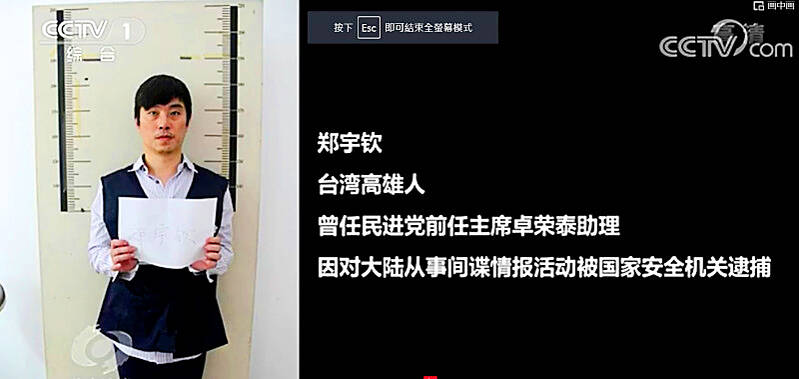
Former Czech Republic-based Taiwanese researcher Cheng Yu-chin (鄭宇欽) has been sentenced to seven years in prison on espionage-related charges, China’s Ministry of State Security announced yesterday. China said Cheng was a spy for Taiwan who “masqueraded as a professor” and that he was previously an assistant to former Cabinet secretary-general Cho Jung-tai (卓榮泰). President-elect William Lai (賴清德) on Wednesday last week announced Cho would be his premier when Lai is inaugurated next month. Today is China’s “National Security Education Day.” The Chinese ministry yesterday released a video online showing arrests over the past 10 years of people alleged to be
THE HAWAII FACTOR: While a 1965 opinion said an attack on Hawaii would not trigger Article 5, the text of the treaty suggests the state is covered, the report says NATO could be drawn into a conflict in the Taiwan Strait if Chinese forces attacked the US mainland or Hawaii, a NATO Defense College report published on Monday says. The report, written by James Lee, an assistant research fellow at Academia Sinica’s Institute of European and American Studies, states that under certain conditions a Taiwan contingency could trigger Article 5 of NATO, under which an attack against any member of the alliance is considered an attack against all members, necessitating a response. Article 6 of the North Atlantic Treaty specifies that an armed attack in the territory of any member in Europe,

LIKE FAMILY: People now treat dogs and cats as family members. They receive the same medical treatments and tests as humans do, a veterinary association official said The number of pet dogs and cats in Taiwan has officially outnumbered the number of human newborns last year, data from the Ministry of Agriculture’s pet registration information system showed. As of last year, Taiwan had 94,544 registered pet dogs and 137,652 pet cats, the data showed. By contrast, 135,571 babies were born last year. Demand for medical care for pet animals has also risen. As of Feb. 29, there were 5,773 veterinarians in Taiwan, 3,993 of whom were for pet animals, statistics from the Animal and Plant Health Inspection Agency showed. In 2022, the nation had 3,077 pediatricians. As of last
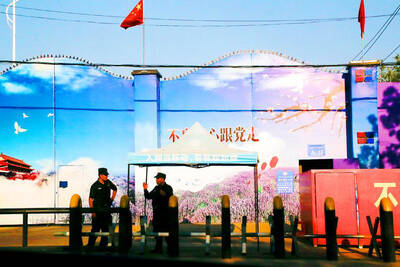
XINJIANG: Officials are conducting a report into amending an existing law or to enact a special law to prohibit goods using forced labor Taiwan is mulling an amendment prohibiting the importation of goods using forced labor, similar to the Uyghur Forced Labor Prevention Act (UFLPA) passed by the US Congress in 2021 that imposed limits on goods produced using forced labor in China’s Xinjiang region. A government official who wished to remain anonymous said yesterday that as the US customs law explicitly prohibits the importation of goods made using forced labor, in 2021 it passed the specialized UFLPA to limit the importation of cotton and other goods from China’s Xinjiang Uyghur region. Taiwan does not have the legal basis to prohibit the importation of goods


 RSS
RSS