


The Alliance of Fairness and Justice, or the pan-purple alliance, yesterday elaborated on their policies to levy higher taxes on enterprises and the rich in order to build a sound taxation system.
However, they said that they were not trying to raise tensions between the rich and the poor, but were rather appealing to the rich to help construct a better society together with others.
The alliance called for the cancellation of the permanent unified tax system, which allowed the tax on a company's revenue to completely cancel out the shareholders' personal income tax.
"The tax on the company should only cancel out one-fifth of the shareholders' income tax, and the system should only run provisionally to allow the government to reflect on the system after a certain period," said Chien Hsi-chieh, the alliance's convener.
The alliance also hoped to cancel the tax benefits of individual shareholders who invest further in the company, as described in the Statute for Upgrading Industries (促進產業升級條例).
They criticized the incremental land-value tax and said it was based on the assessed value of a property, which usually amounted to only 40 percent of the land's actual purchase price.
This furthermore included a 40 percent tax reduction in the top taxable bracket, allowing those who own more properties an even higher reduction.
"Taiwan does not levy tax on land transactions and before the government starts to do so, we hope that it will at least base the incremental tax on the actual purchase price of the land," Chien said.
The alliance also wanted to resurrect the securities-exchange transaction tax.
It said it would only want to tax those who earn more than NT$10 million a year on the stock exchange, and the tax would be separated from normal income tax with a separate tax rate.
Lastly, the alliance hoped to levy a tax on citizens' overseas earnings.
"We hope both the pan-blue and pan-green camps can persuade enterprises and conglomerates to manage Taiwan together," Chien said.
"Only with a reasonable tax system will the government have enough funds to operate smoothly without having to borrow. And with enough money, the government can build a proper social-security network," Chien said.
The alliance yesterday also introduced some of its academic supporters.
Professor Huang Shih-hsin (黃世鑫), from the National Taipei University's department of public finance and Professor Tseng Chu-wei (曾巨威), from the National Chengchi University's department of public finance, pledged to give his support to the alliance and its tax plans.
"I see the alliance as a kind of social movement, and it presents a good opportunity to link tax reformation with the movement," Tseng said.
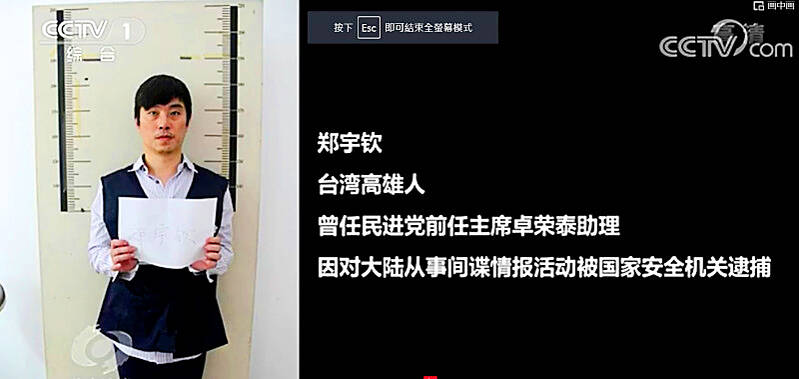
Former Czech Republic-based Taiwanese researcher Cheng Yu-chin (鄭宇欽) has been sentenced to seven years in prison on espionage-related charges, China’s Ministry of State Security announced yesterday. China said Cheng was a spy for Taiwan who “masqueraded as a professor” and that he was previously an assistant to former Cabinet secretary-general Cho Jung-tai (卓榮泰). President-elect William Lai (賴清德) on Wednesday last week announced Cho would be his premier when Lai is inaugurated next month. Today is China’s “National Security Education Day.” The Chinese ministry yesterday released a video online showing arrests over the past 10 years of people alleged to be
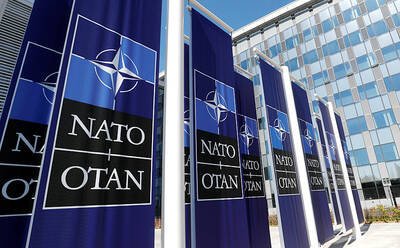
THE HAWAII FACTOR: While a 1965 opinion said an attack on Hawaii would not trigger Article 5, the text of the treaty suggests the state is covered, the report says NATO could be drawn into a conflict in the Taiwan Strait if Chinese forces attacked the US mainland or Hawaii, a NATO Defense College report published on Monday says. The report, written by James Lee, an assistant research fellow at Academia Sinica’s Institute of European and American Studies, states that under certain conditions a Taiwan contingency could trigger Article 5 of NATO, under which an attack against any member of the alliance is considered an attack against all members, necessitating a response. Article 6 of the North Atlantic Treaty specifies that an armed attack in the territory of any member in Europe,
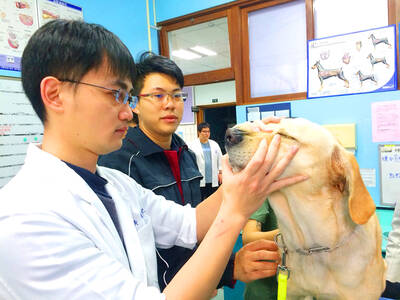
LIKE FAMILY: People now treat dogs and cats as family members. They receive the same medical treatments and tests as humans do, a veterinary association official said The number of pet dogs and cats in Taiwan has officially outnumbered the number of human newborns last year, data from the Ministry of Agriculture’s pet registration information system showed. As of last year, Taiwan had 94,544 registered pet dogs and 137,652 pet cats, the data showed. By contrast, 135,571 babies were born last year. Demand for medical care for pet animals has also risen. As of Feb. 29, there were 5,773 veterinarians in Taiwan, 3,993 of whom were for pet animals, statistics from the Animal and Plant Health Inspection Agency showed. In 2022, the nation had 3,077 pediatricians. As of last
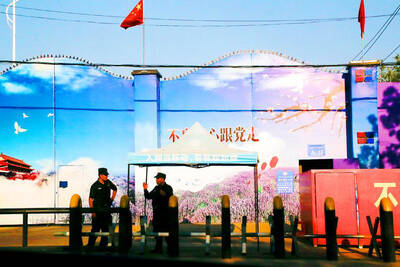
XINJIANG: Officials are conducting a report into amending an existing law or to enact a special law to prohibit goods using forced labor Taiwan is mulling an amendment prohibiting the importation of goods using forced labor, similar to the Uyghur Forced Labor Prevention Act (UFLPA) passed by the US Congress in 2021 that imposed limits on goods produced using forced labor in China’s Xinjiang region. A government official who wished to remain anonymous said yesterday that as the US customs law explicitly prohibits the importation of goods made using forced labor, in 2021 it passed the specialized UFLPA to limit the importation of cotton and other goods from China’s Xinjiang Uyghur region. Taiwan does not have the legal basis to prohibit the importation of goods


 RSS
RSS