


Vocal in their opposition to the Hong Kong government's proposed anti-subversion legislation, two Hong Kong legislative councilors expressed their concerns over the outlook for the territory's press freedom and human rights if Article 23 of its Basic Law is enacted.
"The [Hong Kong] government's proposal of the legislation has many in the Hong Kong publishing industry feeling nervous and sweating about it because [the law would] grant the authorities the power to intervene and control the press under the pretext of protecting national security, said Emily Lau (
Law, made the comments yesterday at a conference held in Taipei by the Taiwan Advocates, a think-tank founded by former president Lee Teng-hui (
Lau, along with fellow Hong Kong legislative councilor James To (
The law would prohibit any act of treason, secession, sedition, subversion against the People's Republic of China or theft of state secrets. It would also ban political organizations and groups in Hong Kong from having contact with similar groups abroad.
Critics say it would also grant the authorities the power to silence political opponents and muzzle the press under the pretext of protecting national security.
Pointing to the ambiguity of definitions in the proposed law, Lau said the law would give the Hong Kong government the power to brand illegal any press reports that it judges to be a threat to China's national security or theft of state confidential information.
"That is to say, individuals or groups that call out slogans or make moves of any sort that China's authorities see as sensitive and pose a challenge to the Chinese Communist Party would risk the possibility of spending time in jail under the new law," To said.
To said that even talking about Taiwan's independence or the need for the US to assist Taiwan in the event of an attack from China could be considered subversive.
"In other words, those who make casual remarks in expressing support for Taiwan could easily find themselves in trouble with the law before they know it," he said.
To slammed the proposed anti-subversion legislation as detrimental to the freedom of the people in Hong Kong.
"Those who wish to hold demonstrations in Hong Kong would be branded for disturbing social stability," To said.
Beijing says that passage of Article 23 of the Basic Law is required under the agreement that saw Hong Kong return to Chinese rule under the "one country, two systems" formula.
Deeming that the proposed law threatens their freedoms and fundamental rights, an estimated 500,000 people took to the streets of Hong Kong on July 1 -- the anniversary of the handover -- to protest against the controversial law.
The mass turn-out prompted Hong Kong's administration to eventually yield and agree to scale back the bill and defer passage of the legislation, which was originally scheduled for a vote last month.
Both Lau and To are democracy activists instrumental in the fight against the proposed law. Lau has been known as a persistent critic of the Hong Kong Chief Executive Tung Chee-hwa (
At yesterday's conference, session Chair Byron Weng (
While expressing gratitude for Taiwan's support so far in their fight against their government's proposed anti-subversion legislation, both Lau and To stressed that the implications for Taiwan cannot be brushed aside and deserve close attention.
"We hope that Taiwan can continue to support us, as well as pay attention to the further development of the proposed law," Lau said.
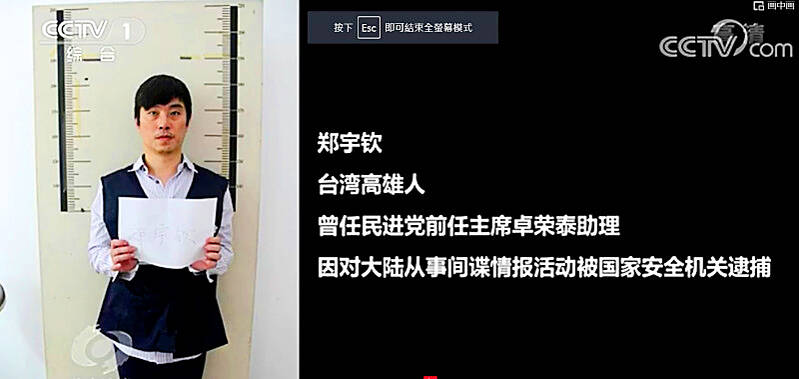
Former Czech Republic-based Taiwanese researcher Cheng Yu-chin (鄭宇欽) has been sentenced to seven years in prison on espionage-related charges, China’s Ministry of State Security announced yesterday. China said Cheng was a spy for Taiwan who “masqueraded as a professor” and that he was previously an assistant to former Cabinet secretary-general Cho Jung-tai (卓榮泰). President-elect William Lai (賴清德) on Wednesday last week announced Cho would be his premier when Lai is inaugurated next month. Today is China’s “National Security Education Day.” The Chinese ministry yesterday released a video online showing arrests over the past 10 years of people alleged to be
THE HAWAII FACTOR: While a 1965 opinion said an attack on Hawaii would not trigger Article 5, the text of the treaty suggests the state is covered, the report says NATO could be drawn into a conflict in the Taiwan Strait if Chinese forces attacked the US mainland or Hawaii, a NATO Defense College report published on Monday says. The report, written by James Lee, an assistant research fellow at Academia Sinica’s Institute of European and American Studies, states that under certain conditions a Taiwan contingency could trigger Article 5 of NATO, under which an attack against any member of the alliance is considered an attack against all members, necessitating a response. Article 6 of the North Atlantic Treaty specifies that an armed attack in the territory of any member in Europe,

LIKE FAMILY: People now treat dogs and cats as family members. They receive the same medical treatments and tests as humans do, a veterinary association official said The number of pet dogs and cats in Taiwan has officially outnumbered the number of human newborns last year, data from the Ministry of Agriculture’s pet registration information system showed. As of last year, Taiwan had 94,544 registered pet dogs and 137,652 pet cats, the data showed. By contrast, 135,571 babies were born last year. Demand for medical care for pet animals has also risen. As of Feb. 29, there were 5,773 veterinarians in Taiwan, 3,993 of whom were for pet animals, statistics from the Animal and Plant Health Inspection Agency showed. In 2022, the nation had 3,077 pediatricians. As of last
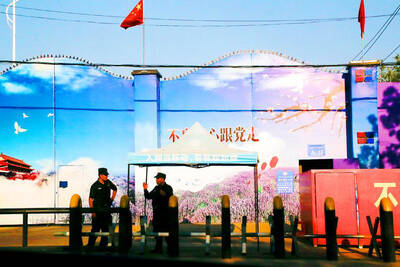
XINJIANG: Officials are conducting a report into amending an existing law or to enact a special law to prohibit goods using forced labor Taiwan is mulling an amendment prohibiting the importation of goods using forced labor, similar to the Uyghur Forced Labor Prevention Act (UFLPA) passed by the US Congress in 2021 that imposed limits on goods produced using forced labor in China’s Xinjiang region. A government official who wished to remain anonymous said yesterday that as the US customs law explicitly prohibits the importation of goods made using forced labor, in 2021 it passed the specialized UFLPA to limit the importation of cotton and other goods from China’s Xinjiang Uyghur region. Taiwan does not have the legal basis to prohibit the importation of goods


 RSS
RSS