


Tungyin Island sits off China's Fujian Province. It has been one of the military's most enigmatic sites and current deployment of advanced missiles to check China's military activities across a narrow strait that separates the two sides adds to the mystery.
Tungyin, 145km northwest of Keelung, used to be the headquarters of the army's "Anti-communist and Country Salvation Corps" for nearly four decades. The corps was deactivated in 1998 as part of the services-wide "Ching Shih" personnel streamlining project.
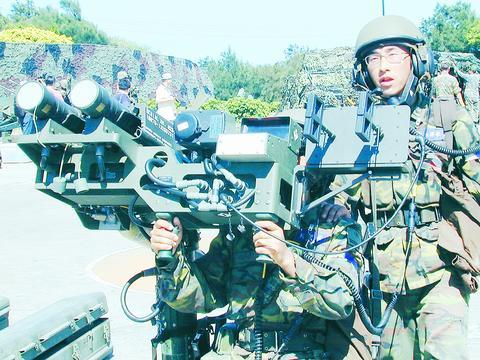
PHOTO: BRIAN HSU
The Anti-communist and Country Salvation Corps was known for raids on China's southeast coast, including Fujian and Zhejiang Provinces, but most of the raids happened before the headquarters was established in Tungyin in 1960.
Although Tungyin was not much involved in the raids on China, which peaked in the 1950s, it keeps a museum on that aspect of its history which the military has been refusing to discuss in public up to date. The museum was opened to the press recently in a tour arranged by the army.
The Anti-communist and Country Salvation Corps had at its height a total of 185,550 soldiers, who were scattered on islands off China's southeast coast that the KMT government still held after losing the civil war with the communists, according to data made public at the museum.
Missing from the museum is information on the background of these anti-communist soldiers. They were known to be mostly outlaws, including pirates and bandits, but the military has never been willing to admit it.
Former CIA agent Frank Holober, who had been in Taiwan to plan and assist the raids on China, exposed the outlaw nature of the anti-communist soldiers in his book Raiders of the China Coast.
The publication sparked negative response from the Ministry of National Defense (MND), which denied that the Anti-communist and Country Salvation Corps was comprised of pirates and bandits.
A retired army general, who had received special operations training to become a member of the Anti-communist and Country Salvation Corps, said what Holober says in the book is true and that the MND was just doing its job to keep the reputation of the corps untainted.
"The corps members were trained to be killers. Their jobs were to occupy land in China. They could do whatever they wanted as long as they were able to keep control of the land they occupied by force. They could be warlords or bandits," the general said.
"Although most of the raids on China from the sea failed, there are still some corps members who survived in China without ever being captured. Some of them might have become bandits," he said.
This past has never been written into military history. As the Anti-communist and Country Salvation Corps was formally activated and headquartered in Tungyin in 1960, there were no longer frequent raids on China.
Tungyin used to be famous for the Anti-communist and Country Salvation Corps but is now known as the site of the military's northernmost missile deployment.
It is armed with two kinds of domestically-developed missiles: the Tienkung II air defense missile and Hsiung Feng-II anti-ship missile.
The deployment of the two types of missiles gives the island the ability to choke China's military activities within a range of 200km.
The Tienkung II is capable of shooting down Chinese fighter planes taking off within a range of around 200km. The Hsiung Feng-II has the same function against Chinese warships.
With these weapons, Tungyin provides a reliable defense for the country in the north, which is one of the reasons that the military keeps investing heavily in it.
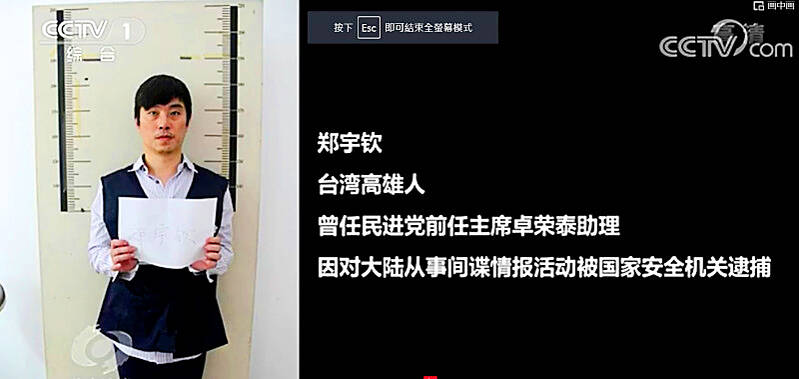
Former Czech Republic-based Taiwanese researcher Cheng Yu-chin (鄭宇欽) has been sentenced to seven years in prison on espionage-related charges, China’s Ministry of State Security announced yesterday. China said Cheng was a spy for Taiwan who “masqueraded as a professor” and that he was previously an assistant to former Cabinet secretary-general Cho Jung-tai (卓榮泰). President-elect William Lai (賴清德) on Wednesday last week announced Cho would be his premier when Lai is inaugurated next month. Today is China’s “National Security Education Day.” The Chinese ministry yesterday released a video online showing arrests over the past 10 years of people alleged to be

THE HAWAII FACTOR: While a 1965 opinion said an attack on Hawaii would not trigger Article 5, the text of the treaty suggests the state is covered, the report says NATO could be drawn into a conflict in the Taiwan Strait if Chinese forces attacked the US mainland or Hawaii, a NATO Defense College report published on Monday says. The report, written by James Lee, an assistant research fellow at Academia Sinica’s Institute of European and American Studies, states that under certain conditions a Taiwan contingency could trigger Article 5 of NATO, under which an attack against any member of the alliance is considered an attack against all members, necessitating a response. Article 6 of the North Atlantic Treaty specifies that an armed attack in the territory of any member in Europe,

LIKE FAMILY: People now treat dogs and cats as family members. They receive the same medical treatments and tests as humans do, a veterinary association official said The number of pet dogs and cats in Taiwan has officially outnumbered the number of human newborns last year, data from the Ministry of Agriculture’s pet registration information system showed. As of last year, Taiwan had 94,544 registered pet dogs and 137,652 pet cats, the data showed. By contrast, 135,571 babies were born last year. Demand for medical care for pet animals has also risen. As of Feb. 29, there were 5,773 veterinarians in Taiwan, 3,993 of whom were for pet animals, statistics from the Animal and Plant Health Inspection Agency showed. In 2022, the nation had 3,077 pediatricians. As of last
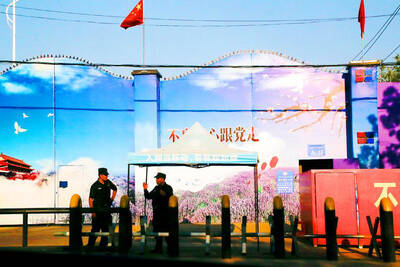
XINJIANG: Officials are conducting a report into amending an existing law or to enact a special law to prohibit goods using forced labor Taiwan is mulling an amendment prohibiting the importation of goods using forced labor, similar to the Uyghur Forced Labor Prevention Act (UFLPA) passed by the US Congress in 2021 that imposed limits on goods produced using forced labor in China’s Xinjiang region. A government official who wished to remain anonymous said yesterday that as the US customs law explicitly prohibits the importation of goods made using forced labor, in 2021 it passed the specialized UFLPA to limit the importation of cotton and other goods from China’s Xinjiang Uyghur region. Taiwan does not have the legal basis to prohibit the importation of goods


 RSS
RSS