


Environmentalists and residents against incineration of waste yesterday urged the government to prevent the public from being poisoned by persistent organic pollutants (POPs) by updating environmental and health regulations.
Responding to yesterday's 716 Global Day of Action campaign by the Global Alliance for Incinerator Alternatives, a dozen environmental groups and communities yesterday held a press conference to raise their voices against incinerator waste-management policies.
Over 375 groups and communities from 77 countries fighting for the environment are involved with the 716 Global Day of Action campaign.
Anti-incinerator activists said, public health has been place in harm's way due to the overuse of incinerators in Taiwan.
"We've seen more and more skin allergies and respiratory diseases in children and young people living near incinerators and among workers at such plants," George Cheng (鄭益明), secretary-general of the Taiwan Watch Institution, said at a press conference.
Cheng said cancer patients in Taiwan were getting younger, adding that on average one cancer case was discovered among 10,000 children under the age of 15 annually.
DPP Legislator Eugene Jao (
POPs are chemicals that remain in the environment for extremely long periods. These chemicals may spread widely, accumulate in the fatty tissue of living organisms and are toxic to humans and wildlife.
There are 12 chemicals on the treaty's list, known as "the dirty dozen," including dioxins, PCBs, DDT and other pesticides. According to the UN Environment Programme, 69 percent of dioxins come from waste-incinerator emissions.
Jao said that in 2011, when the 32 incinerators that the Environmental Protection Administration (EPA) expects to complete are finished, about 38 percent of the total 23,300-tonne daily capacity will be unnecessary.
Eric Liou (
Taking the Seventh Intergovernmental Negotiating Committee meeting of the convention held from July 14 to July 18 in Geneva as an example, Liou said it was a shame that Taiwan was absent.
"To regulate POPs effectively, Taiwan needs to reach out to get the whole picture of the Basel, Rotterdam and Stockholm Conventions and their inter-relationship clearly," Liou said.
The Rotterdam Convention establishes a first line of defense by giving importing countries the tools and information they need to identify potential hazards and exclude chemicals they cannot manage safely.
The Basel Convention regulates the control of trans-boundary movements of hazardous wastes and their disposal.
In implementing the Stockholm Convention, governments take measures to eliminate or reduce the release of POPs.
Green Formosa Front chairman Wu Tung-jye (
"The last thing we want to see is the appearance of any road or any community contaminated by dioxins," Wu said.
The EPA plans to use incinerator soot to build roads.
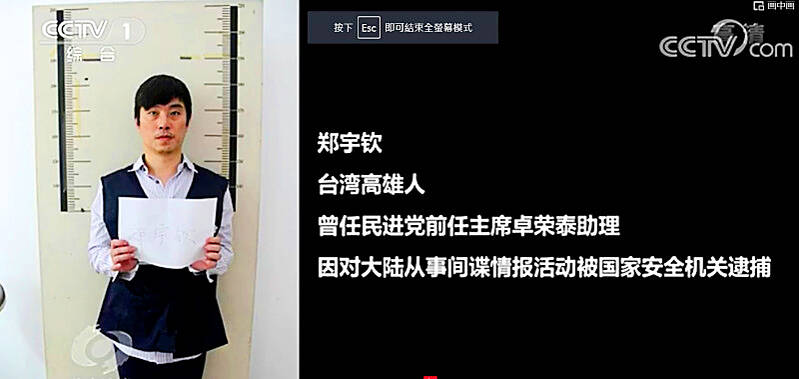
Former Czech Republic-based Taiwanese researcher Cheng Yu-chin (鄭宇欽) has been sentenced to seven years in prison on espionage-related charges, China’s Ministry of State Security announced yesterday. China said Cheng was a spy for Taiwan who “masqueraded as a professor” and that he was previously an assistant to former Cabinet secretary-general Cho Jung-tai (卓榮泰). President-elect William Lai (賴清德) on Wednesday last week announced Cho would be his premier when Lai is inaugurated next month. Today is China’s “National Security Education Day.” The Chinese ministry yesterday released a video online showing arrests over the past 10 years of people alleged to be

THE HAWAII FACTOR: While a 1965 opinion said an attack on Hawaii would not trigger Article 5, the text of the treaty suggests the state is covered, the report says NATO could be drawn into a conflict in the Taiwan Strait if Chinese forces attacked the US mainland or Hawaii, a NATO Defense College report published on Monday says. The report, written by James Lee, an assistant research fellow at Academia Sinica’s Institute of European and American Studies, states that under certain conditions a Taiwan contingency could trigger Article 5 of NATO, under which an attack against any member of the alliance is considered an attack against all members, necessitating a response. Article 6 of the North Atlantic Treaty specifies that an armed attack in the territory of any member in Europe,
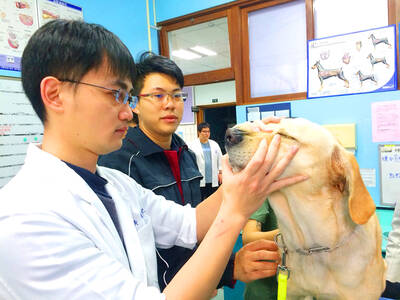
LIKE FAMILY: People now treat dogs and cats as family members. They receive the same medical treatments and tests as humans do, a veterinary association official said The number of pet dogs and cats in Taiwan has officially outnumbered the number of human newborns last year, data from the Ministry of Agriculture’s pet registration information system showed. As of last year, Taiwan had 94,544 registered pet dogs and 137,652 pet cats, the data showed. By contrast, 135,571 babies were born last year. Demand for medical care for pet animals has also risen. As of Feb. 29, there were 5,773 veterinarians in Taiwan, 3,993 of whom were for pet animals, statistics from the Animal and Plant Health Inspection Agency showed. In 2022, the nation had 3,077 pediatricians. As of last

XINJIANG: Officials are conducting a report into amending an existing law or to enact a special law to prohibit goods using forced labor Taiwan is mulling an amendment prohibiting the importation of goods using forced labor, similar to the Uyghur Forced Labor Prevention Act (UFLPA) passed by the US Congress in 2021 that imposed limits on goods produced using forced labor in China’s Xinjiang region. A government official who wished to remain anonymous said yesterday that as the US customs law explicitly prohibits the importation of goods made using forced labor, in 2021 it passed the specialized UFLPA to limit the importation of cotton and other goods from China’s Xinjiang Uyghur region. Taiwan does not have the legal basis to prohibit the importation of goods


 RSS
RSS