


In the wake of Taiwan's removal from the World Health Organiza-tion's (WHO) list of SARS-affected areas, the Environmental Protec-tion Administration (EPA) yesterday urged people to keep using soap to wash their hands as a disease-prevention measure rather than using bleach to clean their houses.
Among self-protection measures to be commonly taken in post-SARS era, using soap to wash hands could be more environmentally friendly than others, agency officials said yesterday.
"People should do their best to avoid abusing bleach and other disinfectants because the long-term environmental impact such substances have remains uncertain," EPA Secretary-General Chen Yeong-ren (陳永仁) said.
The agency's SARS relief task force was established in early May to assist with comprehensive epidemic-prevention work.
In addition to focusing on special disposal measures for medical and residential waste, the task force also urged local environmental agencies across the country to initiate environmental clean-up and disinfection measures.
Most SARS-affected regions, especially in Taipei City, were heavily sprayed with bleach by military personnel.
At the time, however, EPA officials urged caution in disposing of waste bleach, urging people to diluting it with lots of water and leaving the mixture sealed for a while before disposing of it. They were worried that high concentrations of chlorine -- ionized from bleach -- would kill microorganisms, disabling the activated-sludge processes in septic tanks, sanitary sewers and sewage-treatment plants.
The discharge of untreated wastewater containing high levels of chlorine from sewage-treatment plants, officials said, could contaminate aquatic products, including seafood.
According to Chen, who is also the executive-general of the EPA SARS relief task force, the agency launched a comprehensive investigation in early May into the distribution of chlorine in the environment.
The discharge of waste bleach will increase the concentration of chlorine in the environment, Chen said.
Chen said the agency's water-quality monitoring stations nationwide have been reporting on the concentrations of chlorine accumulated in rivers.
The agency has also been sampling wastewater discharged from hospitals and quarantined residential areas to identify how much chlorine it contains.
"So far, we have not seen any significant impact made on the environment due to the heavy use of bleach," Chen said.
He said the investigation would continue for several months, although initial results would be released in early September.
On Thursday, Chen said, the task force would convene to review strategies taken over the last two months.
However, Chen said ionic chlorine released from bleach would not cause as much environmental impact as organic-chlorine compounds do.
Organic-chlorine compounds have been linked to pollution in soil, water and in aquatic products.

A group of Taiwanese-American and Tibetan-American students at Harvard University on Saturday disrupted Chinese Ambassador to the US Xie Feng’s (謝鋒) speech at the school, accusing him of being responsible for numerous human rights violations. Four students — two Taiwanese Americans and two from Tibet — held up banners inside a conference hall where Xie was delivering a speech at the opening ceremony of the Harvard Kennedy School China Conference 2024. In a video clip provided by the Coalition of Students Resisting the CCP (Chinese Communist Party), Taiwanese-American Cosette Wu (吳亭樺) and Tibetan-American Tsering Yangchen are seen holding banners that together read:

UNAWARE: Many people sit for long hours every day and eat unhealthy foods, putting them at greater risk of developing one of the ‘three highs,’ an expert said More than 30 percent of adults aged 40 or older who underwent a government-funded health exam were unaware they had at least one of the “three highs” — high blood pressure, high blood lipids or high blood sugar, the Health Promotion Administration (HPA) said yesterday. Among adults aged 40 or older who said they did not have any of the “three highs” before taking the health exam, more than 30 percent were found to have at least one of them, Adult Preventive Health Examination Service data from 2022 showed. People with long-term medical conditions such as hypertension or diabetes usually do not
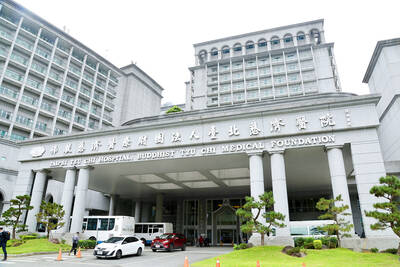
POLICE INVESTIGATING: A man said he quit his job as a nurse at Taipei Tzu Chi Hospital as he had been ‘disgusted’ by the behavior of his colleagues A man yesterday morning wrote online that he had witnessed nurses taking photographs and touching anesthetized patients inappropriately in Taipei Tzu Chi Hospital’s operating theaters. The man surnamed Huang (黃) wrote on the Professional Technology Temple bulletin board that during his six-month stint as a nurse at the hospital, he had seen nurses taking pictures of patients, including of their private parts, after they were anesthetized. Some nurses had also touched patients inappropriately and children were among those photographed, he said. Huang said this “disgusted” him “so much” that “he felt the need to reveal these unethical acts in the operating theater
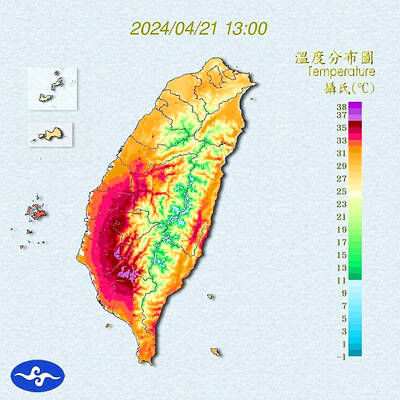
Heat advisories were in effect for nine administrative regions yesterday afternoon as warm southwesterly winds pushed temperatures above 38°C in parts of southern Taiwan, the Central Weather Administration (CWA) said. As of 3:30pm yesterday, Tainan’s Yujing District (玉井) had recorded the day’s highest temperature of 39.7°C, though the measurement will not be included in Taiwan’s official heat records since Yujing is an automatic rather than manually operated weather station, the CWA said. Highs recorded in other areas were 38.7°C in Kaohsiung’s Neimen District (內門), 38.2°C in Chiayi City and 38.1°C in Pingtung’s Sandimen Township (三地門), CWA data showed. The spell of scorching


 RSS
RSS