


Taipei County's Shihsanhang Museum of Archaeology (
The museum, built directly on the relics site, displays the remains of the Aboriginal Shihsanhang people, who existed between 500 and 1,800 years ago in the current Pali township near the estuary of Tamsui River. It is the only prehistoric archeological museum in northern Taiwan.
Director of the museum Lin Ming-mei (
The construction of the museum started in 2000 and the facility was originally scheduled to open to the public on April 24. A total of NT$380 million was spent on the construction, Lin said.
The museum staff explained yesterday that the Shihsanhang Aborigines were named after the Shihsanhang village, where their prehistoric civilization was discovered.
Shihsanhang, which means "13 stores" in Chinese, was a port city in which extensive commerce and trade was conducted during the Qing dynasty.
As evidenced by the large quantity of iron-smelting relics which have been unearthed and other forms of archeological dating, the Shihsanhang people lived at the beginning of the Iron Age.
"Judging from the remains we unearthed, Shihsanhang people appeared during the later part of the Neolithic Age and the beginning of the Iron Age. It is one of the earliest human civilizations to master iron smelting," the museum staff said.
The anthropological and ethnographic characteristics also suggest that the Shihsanhang people originated from the Austronesian people, as did the indigenous Malay people.
The archeologists inferred that the Shihsanhang people could be a related to the indigenous Iban Group of Sarawak in Malaysia, in terms of their habitation styles.
It remains a mystery why the Shihsanhang people disappeared after living in Pali for almost 1,000 years. But archaeologists suggested strong ties between the Shihsanhang people and the Pingpu (平埔族) and Ketagalan (凱達格蘭族) Aborigines in Taiwan.
The Shihsanhang Museum of Archeology exhibits pottery with designs of human faces, iron utensils, weaving materials, architecture and other decorations made of shell and wood that were used in the daily lives of the Shihsanhang people.
The museum is located at No. 200, Museum Road, Pali Township, Taipei County. Traffic information: take the MRT to the Kuandu station, and from there take the Red 22 bus to the museum. More information can be found at the museum's Web site (www.sshm.gov.tw)
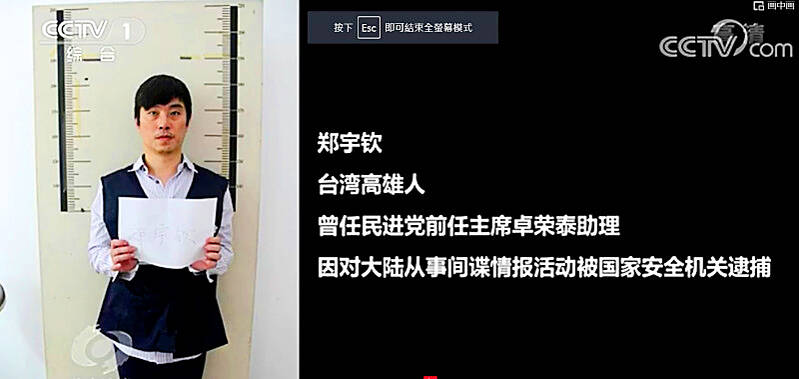
Former Czech Republic-based Taiwanese researcher Cheng Yu-chin (鄭宇欽) has been sentenced to seven years in prison on espionage-related charges, China’s Ministry of State Security announced yesterday. China said Cheng was a spy for Taiwan who “masqueraded as a professor” and that he was previously an assistant to former Cabinet secretary-general Cho Jung-tai (卓榮泰). President-elect William Lai (賴清德) on Wednesday last week announced Cho would be his premier when Lai is inaugurated next month. Today is China’s “National Security Education Day.” The Chinese ministry yesterday released a video online showing arrests over the past 10 years of people alleged to be

THE HAWAII FACTOR: While a 1965 opinion said an attack on Hawaii would not trigger Article 5, the text of the treaty suggests the state is covered, the report says NATO could be drawn into a conflict in the Taiwan Strait if Chinese forces attacked the US mainland or Hawaii, a NATO Defense College report published on Monday says. The report, written by James Lee, an assistant research fellow at Academia Sinica’s Institute of European and American Studies, states that under certain conditions a Taiwan contingency could trigger Article 5 of NATO, under which an attack against any member of the alliance is considered an attack against all members, necessitating a response. Article 6 of the North Atlantic Treaty specifies that an armed attack in the territory of any member in Europe,
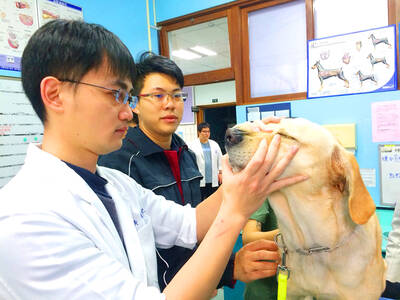
LIKE FAMILY: People now treat dogs and cats as family members. They receive the same medical treatments and tests as humans do, a veterinary association official said The number of pet dogs and cats in Taiwan has officially outnumbered the number of human newborns last year, data from the Ministry of Agriculture’s pet registration information system showed. As of last year, Taiwan had 94,544 registered pet dogs and 137,652 pet cats, the data showed. By contrast, 135,571 babies were born last year. Demand for medical care for pet animals has also risen. As of Feb. 29, there were 5,773 veterinarians in Taiwan, 3,993 of whom were for pet animals, statistics from the Animal and Plant Health Inspection Agency showed. In 2022, the nation had 3,077 pediatricians. As of last

XINJIANG: Officials are conducting a report into amending an existing law or to enact a special law to prohibit goods using forced labor Taiwan is mulling an amendment prohibiting the importation of goods using forced labor, similar to the Uyghur Forced Labor Prevention Act (UFLPA) passed by the US Congress in 2021 that imposed limits on goods produced using forced labor in China’s Xinjiang region. A government official who wished to remain anonymous said yesterday that as the US customs law explicitly prohibits the importation of goods made using forced labor, in 2021 it passed the specialized UFLPA to limit the importation of cotton and other goods from China’s Xinjiang Uyghur region. Taiwan does not have the legal basis to prohibit the importation of goods


 RSS
RSS