


Anti-nuclear activists of Kungliao, Taipei County, are prepared to seek clarification from Premier Yu Shyi-kun as to why the Cabinet allowed Taiwan Power Company (Taipower) to build a wharf that led to "jetty effect" erosion of nearby Fulung Beach (
In mid-January, Yu established a task force composed of experts and officials from related Cabinet-level agencies to investigate whether erosion can be attributed to stresses on the environment caused by construction of the wharf, which was built to facilitate construction of the Fourth Nuclear Power plant.
Last month, the task force concluded that the "jetty effect" had occurred as a result of construction of the wharf. Civil engineers often manage currents and thereby control coastal erosion by taking advantage of the effect, but in this case it caused damage. The wharf, which was designed to accommodate heavy machines on their way to the plant under construction, is eroding Fulung Beach, the task force said.
The Atomic Energy Council, which is in charge of the investigation, said possible solutions to the environmental harm done include transferring sand to the beach and scrapping the wharf.
At a meeting held last Friday by the Environmental Protection Administration (EPA), Taipower, the builder and future operator of the plant, ordered studies analyzing the environmental impact of transferring sea sand from the wharf to the beach. The sea sand pumped by Taipower is currently dumped near the wharf.
The idea, however, provoked representatives of Kungliao attending the Environmental Impact Assessment (EIA) meeting last Friday. Wu Shuen-liang (吳順良), a Kungliao Township representative, pounded on a pane of glass violently during the meeting and hurt himself, leaving bloodstains on the table.
The EPA eventually bowed to pressure by the residents and did not approve Taipower's proposal, citing a dearth of information pertaining to the environmental impact of the proposal.
"How could Taipower decide to carry out the project by itself without discussing it with other stakeholders?" said Wu Wen-tung (吳文通), head of the Kungliao-based Yenliao Anti-Nuclear Self-Help Association.
Wu said key stakeholders include the association, Kungliao Township Office, Taipei County Government and the Northeast Coast National Scenic Area Administration Tourism Bureau, which manages the beach.
According to the EPA, con-sruction was approved in 1997 to store about 210,000m3 of construction sand pumped from the sea nearby on land.
According to Wu, Taipower's research shows that it actually consumed more than 300,000m3 of sea sand to build caissons, while in left sea sand exceeding 500,000m3 on land.
Wu said yesterday that the EPA should not endorse Taipower's proposal because it would allow the company to pump more sand, now stuck by breakwaters built for the wharf.
"As long as the wharf exists, the jetty effect, will not stop," Wu said.
EPA officials said that the EPA said in 1997 that Taipower could use the sand for diverse purposes, ranging from building road bases to mixing it with soil in fish farms nearby.
Officials said that Taipower is not allowed to carry out the project of transferring sand to the beach without receiving the approval from the EPA, according to the EIA Act.
This week, Kungliao residents will seek for an answer from Premier Yu, who promised in January to scrap any construction that has caused coastal erosion.
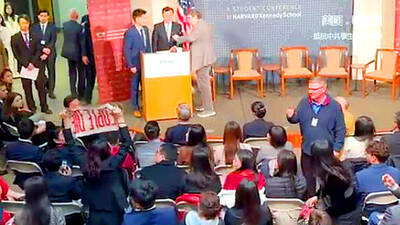
A group of Taiwanese-American and Tibetan-American students at Harvard University on Saturday disrupted Chinese Ambassador to the US Xie Feng’s (謝鋒) speech at the school, accusing him of being responsible for numerous human rights violations. Four students — two Taiwanese Americans and two from Tibet — held up banners inside a conference hall where Xie was delivering a speech at the opening ceremony of the Harvard Kennedy School China Conference 2024. In a video clip provided by the Coalition of Students Resisting the CCP (Chinese Communist Party), Taiwanese-American Cosette Wu (吳亭樺) and Tibetan-American Tsering Yangchen are seen holding banners that together read:

UNAWARE: Many people sit for long hours every day and eat unhealthy foods, putting them at greater risk of developing one of the ‘three highs,’ an expert said More than 30 percent of adults aged 40 or older who underwent a government-funded health exam were unaware they had at least one of the “three highs” — high blood pressure, high blood lipids or high blood sugar, the Health Promotion Administration (HPA) said yesterday. Among adults aged 40 or older who said they did not have any of the “three highs” before taking the health exam, more than 30 percent were found to have at least one of them, Adult Preventive Health Examination Service data from 2022 showed. People with long-term medical conditions such as hypertension or diabetes usually do not
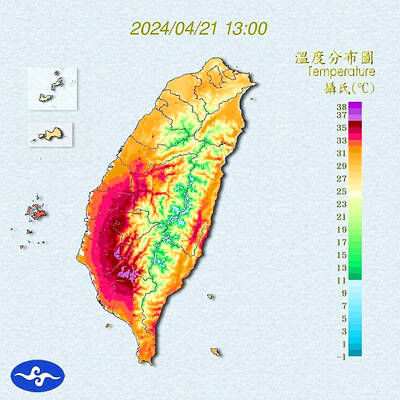
Heat advisories were in effect for nine administrative regions yesterday afternoon as warm southwesterly winds pushed temperatures above 38°C in parts of southern Taiwan, the Central Weather Administration (CWA) said. As of 3:30pm yesterday, Tainan’s Yujing District (玉井) had recorded the day’s highest temperature of 39.7°C, though the measurement will not be included in Taiwan’s official heat records since Yujing is an automatic rather than manually operated weather station, the CWA said. Highs recorded in other areas were 38.7°C in Kaohsiung’s Neimen District (內門), 38.2°C in Chiayi City and 38.1°C in Pingtung’s Sandimen Township (三地門), CWA data showed. The spell of scorching
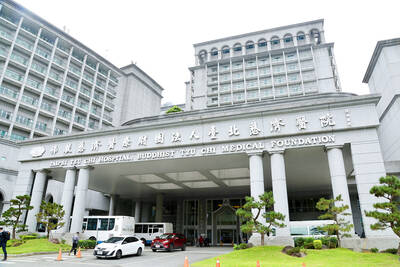
POLICE INVESTIGATING: A man said he quit his job as a nurse at Taipei Tzu Chi Hospital as he had been ‘disgusted’ by the behavior of his colleagues A man yesterday morning wrote online that he had witnessed nurses taking photographs and touching anesthetized patients inappropriately in Taipei Tzu Chi Hospital’s operating theaters. The man surnamed Huang (黃) wrote on the Professional Technology Temple bulletin board that during his six-month stint as a nurse at the hospital, he had seen nurses taking pictures of patients, including of their private parts, after they were anesthetized. Some nurses had also touched patients inappropriately and children were among those photographed, he said. Huang said this “disgusted” him “so much” that “he felt the need to reveal these unethical acts in the operating theater


 RSS
RSS