


Non-governmental organizations (NGOs) highlighted yesterday the need to include this country in the Environmental Sustainability Index (ESI), a measure of environmental progress adopted by 142 countries.
"If Taiwan's data was included, our environmental achievements could be further understood by the international community despite our status as a non-UN member," Eric Liou (劉銘龍), secretary-general of the Environmental Quality Protection Foundation, said at a press conference yesterday.
The index is the result of collaboration among the World Economic Forum's Global Leaders for Tomorrow Environment Task Force, the Yale Center for Environmental Law and Policy (YCELP) and the Columbia University Center for International Earth Science Information Network (CIESIN).
Since 2000, when the index was first released, it has been internationally regarded an important environmental reference, according to Yeh Shin-cheng (葉欣誠), associate professor of the Graduate Institute of Environmental Education at the National Kaohsiung Normal University.
According to Yeh, the index reflects a country's environmental performance, points out factors leading to success or failure of policies, standardizes environmental achievements and evaluates the relationship between environmental achievement and economic development.
From 2001 to last year, the number of countries listed by the ESI rankings was increased from 122 from 142 countries, Yeh said.
"Unfortunately, Taiwan's absence from the UN makes it difficult for researchers to collect raw data, leading to its exclusion from the ESI rankings," Yeh said.
Data from other countries in the rankings is included in UN-dominated research projects.
Yeh said that the ESI scores are based upon a set of 20 core indicators, each of which combines two to eight variables for a total of 68 underlying variables in all.
The index evaluates a country's ability from the perspectives of environmental systems, reducing stress, reducing human vulnerability, global stewardship, as well as social and institutional capacity, Yeh said.
Yeh's research team independently converted raw data from this country into the ESI, obtaining results which suggest that the nation is ranked 119th in last year's rankings.
Both Daniel Esty, ESI project director of YCELP and Marc Levy, ESI team leader of CIESIN of Columbia University, recognize Yeh's efforts to build on the ESI base and fill a gap in the ESI coverage.
"Many countries take the index seriously because, for many countries, it has a positive correlation with the Current Competitiveness Index [CCI]," Yeh said.
The CCI, in which Taiwan is included, examines conditions that support a high level of sustainable productivity and prosperity.
Oddly, Yeh said, the nation slotted into 119th place in the ESI but is ranked 21st in last year's CCI.
"The difference between the two indices could be attributed to the long-term promoting of economic development at a cost to the environment," Yeh said.
In addition, Yeh attributed the nation's low scores in global stewardship to its existing diplomatic predicament, which further increases the gap between it and environmentally advanced countries.
DPP Legislator Eugene Jao (
"To increase Taiwan's visibility on the world stage, the government should stop adopting a Santa Clause-style diplomatic strategy -- putting taxpayers' money into corrupt political powers," Jao said.
That leads to nothing but a damaged reputation," Jao said.
Although the ESI permits cross-national comparisons, Yu Yue-hwa (於幼華), an environmental engineering professor at the National Taiwan University, said the Western-designed evaluation mechanism loses a degree of accuracy when evaluating Asian countries or nations with particular environmental conditions.
Last year, Japan ranked 78th in the index with the UK posting 91st place.
In the same year, Finland, Norway, Sweden, Canada and Switzerland were ranked the five most environmentally advanced countries.
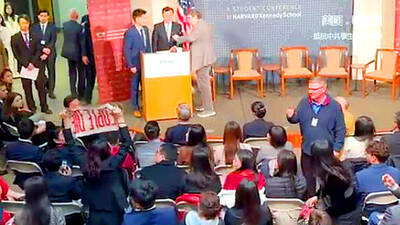
A group of Taiwanese-American and Tibetan-American students at Harvard University on Saturday disrupted Chinese Ambassador to the US Xie Feng’s (謝鋒) speech at the school, accusing him of being responsible for numerous human rights violations. Four students — two Taiwanese Americans and two from Tibet — held up banners inside a conference hall where Xie was delivering a speech at the opening ceremony of the Harvard Kennedy School China Conference 2024. In a video clip provided by the Coalition of Students Resisting the CCP (Chinese Communist Party), Taiwanese-American Cosette Wu (吳亭樺) and Tibetan-American Tsering Yangchen are seen holding banners that together read:

UNAWARE: Many people sit for long hours every day and eat unhealthy foods, putting them at greater risk of developing one of the ‘three highs,’ an expert said More than 30 percent of adults aged 40 or older who underwent a government-funded health exam were unaware they had at least one of the “three highs” — high blood pressure, high blood lipids or high blood sugar, the Health Promotion Administration (HPA) said yesterday. Among adults aged 40 or older who said they did not have any of the “three highs” before taking the health exam, more than 30 percent were found to have at least one of them, Adult Preventive Health Examination Service data from 2022 showed. People with long-term medical conditions such as hypertension or diabetes usually do not
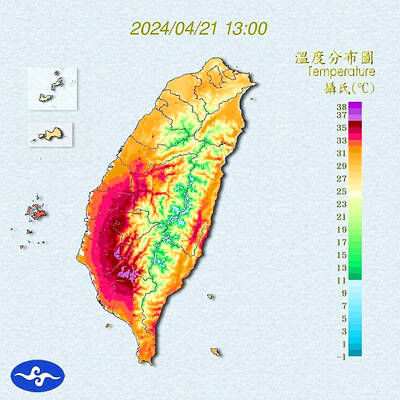
Heat advisories were in effect for nine administrative regions yesterday afternoon as warm southwesterly winds pushed temperatures above 38°C in parts of southern Taiwan, the Central Weather Administration (CWA) said. As of 3:30pm yesterday, Tainan’s Yujing District (玉井) had recorded the day’s highest temperature of 39.7°C, though the measurement will not be included in Taiwan’s official heat records since Yujing is an automatic rather than manually operated weather station, the CWA said. Highs recorded in other areas were 38.7°C in Kaohsiung’s Neimen District (內門), 38.2°C in Chiayi City and 38.1°C in Pingtung’s Sandimen Township (三地門), CWA data showed. The spell of scorching
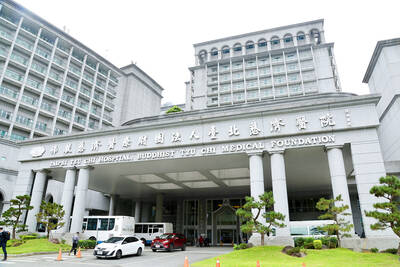
POLICE INVESTIGATING: A man said he quit his job as a nurse at Taipei Tzu Chi Hospital as he had been ‘disgusted’ by the behavior of his colleagues A man yesterday morning wrote online that he had witnessed nurses taking photographs and touching anesthetized patients inappropriately in Taipei Tzu Chi Hospital’s operating theaters. The man surnamed Huang (黃) wrote on the Professional Technology Temple bulletin board that during his six-month stint as a nurse at the hospital, he had seen nurses taking pictures of patients, including of their private parts, after they were anesthetized. Some nurses had also touched patients inappropriately and children were among those photographed, he said. Huang said this “disgusted” him “so much” that “he felt the need to reveal these unethical acts in the operating theater


 RSS
RSS