


The adoption of eco-friendly strategies at the Putzu river in southern Taiwan, one of Taiwan's most polluted rivers, has improved water quality, officials of the Environmental Protection Administration (EPA) said yesterday. Improvement of the Putzu is a major objective for the EPA with treatment programs costing NT$3 billion at nine major rivers also being carried out over the next three years.
During a field trip to the Putzu yesterday, environmental officials said most sources of pollution had disappeared.
The 76km river runs through the urban communities and industrial zones of Chiayi County and was one of the most polluted rivers in Taiwan due to illegal waste dumping and industrial waste discharge.
According to the EPA, household waste accounts for 75 percent of pollutants, with animal husbandry sewage adding 13 percent and industrial waste 7 percent.
"Sources of industrial waste water were less than before due to stricter inspections and the recent economic recession," said Lin Rong-her (林榮和), director of the Bureau of Environmental Protection of Chiayi County Government.
To decrease pollution caused by household waste water the EPA pumped 2,000 tonnes of river water a day during dry season to higher grassland in a bid to filter out impurities.
At the most polluted section of the river, special cleaning machines have been installed.
Lin said that the lack of a sewer system in Chiayi makes river treatment more challenging.
The EPA is researching biotechnologies from Japan to help treat sewage discharge from urban communities.
Officials claimed that, since September last year, 24 percent of animal husbandry sewage has been cut by relocating pig farms distributed along the river.
According to the director-general of the EPA's Bureau of Water Quality Protection Cheng Shean-rong (鄭顯榮) the river was the first one the EPA encouraged local government to treat by adopting eco-friendly technologies.
To preserve the biodiversity of the river, environmental education programs to survey ecological systems and train 600 volunteers have been carried out this year.
Along the river, two recreation parks were built to provide local residents with access to the river with six more under construction.
EPA officials said that the experience gained in treating the Putzu would be applied to other rivers.
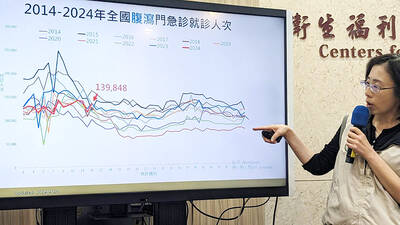
FLU SEASON: Twenty-six severe cases were reported from Tuesday last week to Monday, including a seven-year-old girl diagnosed with influenza-associated encephalopathy Nearly 140,000 people sought medical assistance for diarrhea last week, the Centers for Disease Control (CDC) said on Tuesday. From April 7 to Saturday last week, 139,848 people sought medical help for diarrhea-related illness, a 15.7 percent increase from last week’s 120,868 reports, CDC Epidemic Intelligence Center Deputy Director Lee Chia-lin (李佳琳) said. The number of people who reported diarrhea-related illness last week was the fourth highest in the same time period over the past decade, Lee said. Over the past four weeks, 203 mass illness cases had been reported, nearly four times higher than the 54 cases documented in the same period

A group of Taiwanese-American and Tibetan-American students at Harvard University on Saturday disrupted Chinese Ambassador to the US Xie Feng’s (謝鋒) speech at the school, accusing him of being responsible for numerous human rights violations. Four students — two Taiwanese Americans and two from Tibet — held up banners inside a conference hall where Xie was delivering a speech at the opening ceremony of the Harvard Kennedy School China Conference 2024. In a video clip provided by the Coalition of Students Resisting the CCP (Chinese Communist Party), Taiwanese-American Cosette Wu (吳亭樺) and Tibetan-American Tsering Yangchen are seen holding banners that together read:

UNAWARE: Many people sit for long hours every day and eat unhealthy foods, putting them at greater risk of developing one of the ‘three highs,’ an expert said More than 30 percent of adults aged 40 or older who underwent a government-funded health exam were unaware they had at least one of the “three highs” — high blood pressure, high blood lipids or high blood sugar, the Health Promotion Administration (HPA) said yesterday. Among adults aged 40 or older who said they did not have any of the “three highs” before taking the health exam, more than 30 percent were found to have at least one of them, Adult Preventive Health Examination Service data from 2022 showed. People with long-term medical conditions such as hypertension or diabetes usually do not
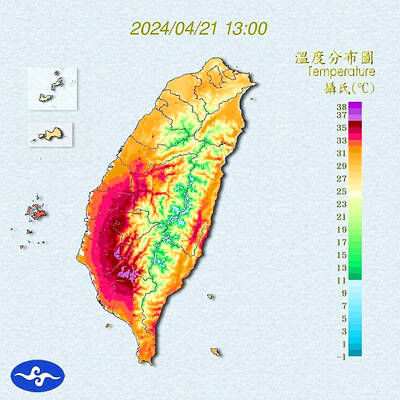
Heat advisories were in effect for nine administrative regions yesterday afternoon as warm southwesterly winds pushed temperatures above 38°C in parts of southern Taiwan, the Central Weather Administration (CWA) said. As of 3:30pm yesterday, Tainan’s Yujing District (玉井) had recorded the day’s highest temperature of 39.7°C, though the measurement will not be included in Taiwan’s official heat records since Yujing is an automatic rather than manually operated weather station, the CWA said. Highs recorded in other areas were 38.7°C in Kaohsiung’s Neimen District (內門), 38.2°C in Chiayi City and 38.1°C in Pingtung’s Sandimen Township (三地門), CWA data showed. The spell of scorching


 RSS
RSS