


Responding to the government's encouragement of renewable energy, Taiwan Power Company (Taipower) yesterday announced a three-year wind-power project worth NT$4.5 billion.
After Taiwan's recent participation in the UN World Summit on Sustainable Development, the Cabinet announced on Monday that energy policies would be adjusted to keep up with international trends and boost Taiwan's competitiveness. Part of its plan includes encouraging investment in alternative energy sources.
Participants at the Johannesburg summit agreed to make efforts to increase energy efficiency and the use of renewable energy. In addition, nations would work on phasing out inappropriate energy subsidies.
Taipower's announcement yesterday could be regarded as an example of changing attitudes toward energy in Taiwan.
Under Taipower's plan, about 60 wind turbines generating 100.8 kilowatts would be set up over the next three years at six locations -- the Changpin Industrial Complex, Taichung Harbor, Taichung Thermal Power Plant, Tatan Power Plant in Taoyuan, the First Nuclear Power Plant in Taipei County, and the Third Nuclear Power Plant in Pingtung County.
Wind turbines are used to convert the wind's kinetic energy into mechanical power or electricity.
Over the next decade, Taipower officials said, at least 200 wind turbines will be set up on Taiwan and outlying islands such as Penghu. Officials said that a large number of wind turbines will be built in Hsinchu, which is known for its wind.
Due to Taipower's promotion of renewable energy, the state-run company will receive subsidies from the Energy Commission under the Ministry of Economic Affairs.
The subsidies will be awarded based on various conditions, such as the performance of the wind field and the cost of establishing the transmission and distribution systems for the new source of power.
"The installation of wind turbines will be carried out with respect to the potential impact on the ecosystem, birds, transportation, noise and landscape," said Ho Chien-hui (
Taipower officials said that wind power should be an ideal source of energy for Taiwan because of strong northeasterly winds in the winter.
According to Taipower, the nation boasts about 2,000km2 where the average wind speed is more than 18kph per second and has the potential to supply 1 million kilowatts of electricity.
Company officials said, however, that the electricity generated in the Hsinchu area would not be supplied to the Hsinchu Science-based Industrial Park, where a steady supply of electricity is demanded.

A group of Taiwanese-American and Tibetan-American students at Harvard University on Saturday disrupted Chinese Ambassador to the US Xie Feng’s (謝鋒) speech at the school, accusing him of being responsible for numerous human rights violations. Four students — two Taiwanese Americans and two from Tibet — held up banners inside a conference hall where Xie was delivering a speech at the opening ceremony of the Harvard Kennedy School China Conference 2024. In a video clip provided by the Coalition of Students Resisting the CCP (Chinese Communist Party), Taiwanese-American Cosette Wu (吳亭樺) and Tibetan-American Tsering Yangchen are seen holding banners that together read:

UNAWARE: Many people sit for long hours every day and eat unhealthy foods, putting them at greater risk of developing one of the ‘three highs,’ an expert said More than 30 percent of adults aged 40 or older who underwent a government-funded health exam were unaware they had at least one of the “three highs” — high blood pressure, high blood lipids or high blood sugar, the Health Promotion Administration (HPA) said yesterday. Among adults aged 40 or older who said they did not have any of the “three highs” before taking the health exam, more than 30 percent were found to have at least one of them, Adult Preventive Health Examination Service data from 2022 showed. People with long-term medical conditions such as hypertension or diabetes usually do not
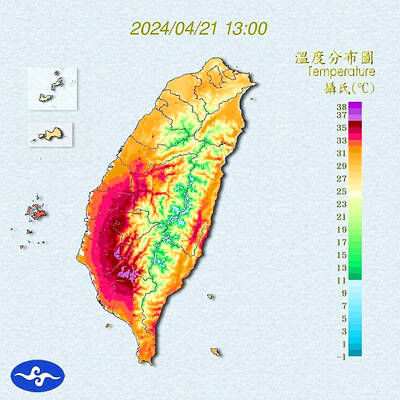
Heat advisories were in effect for nine administrative regions yesterday afternoon as warm southwesterly winds pushed temperatures above 38°C in parts of southern Taiwan, the Central Weather Administration (CWA) said. As of 3:30pm yesterday, Tainan’s Yujing District (玉井) had recorded the day’s highest temperature of 39.7°C, though the measurement will not be included in Taiwan’s official heat records since Yujing is an automatic rather than manually operated weather station, the CWA said. Highs recorded in other areas were 38.7°C in Kaohsiung’s Neimen District (內門), 38.2°C in Chiayi City and 38.1°C in Pingtung’s Sandimen Township (三地門), CWA data showed. The spell of scorching
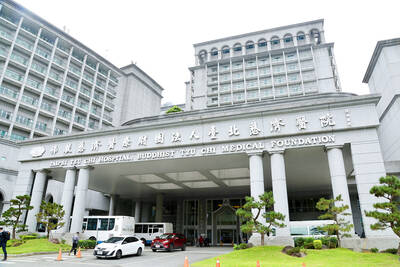
POLICE INVESTIGATING: A man said he quit his job as a nurse at Taipei Tzu Chi Hospital as he had been ‘disgusted’ by the behavior of his colleagues A man yesterday morning wrote online that he had witnessed nurses taking photographs and touching anesthetized patients inappropriately in Taipei Tzu Chi Hospital’s operating theaters. The man surnamed Huang (黃) wrote on the Professional Technology Temple bulletin board that during his six-month stint as a nurse at the hospital, he had seen nurses taking pictures of patients, including of their private parts, after they were anesthetized. Some nurses had also touched patients inappropriately and children were among those photographed, he said. Huang said this “disgusted” him “so much” that “he felt the need to reveal these unethical acts in the operating theater


 RSS
RSS